


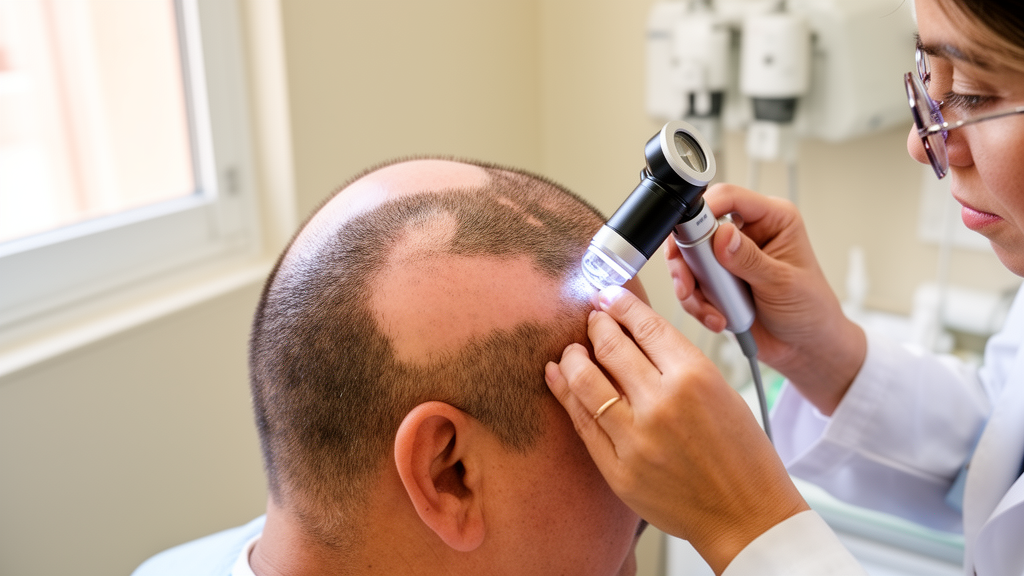
Alopecia areata, an autoimmune disease that strips the scalp, face, and body of hair without scarring, imposes a heavier and less well-treated burden on patients in Mexico than the country’s healthcare system has been able to see, according to a secondary analysis of real-world survey data published in Dermatology and Therapy. The study, drawn from Adelphi Real World’s AA II Mexico Disease Specific Programme, collected linked physician and patient data between October 2024 and April 2025 and included 319 adults with the condition. Its central finding is stark: despite the recent approval of targeted Janus kinase inhibitors in Mexico, most patients across every severity level were still being managed with traditional corticosteroid therapies, and satisfaction with those treatments dropped steeply as disease severity rose.
The survey enrolled dermatologists who were required to specialize in dermatology, be actively involved in alopecia areata management, and carry a minimum monthly workload of eight adults with the disease. Each physician completed patient record forms for eight consecutively consulting patients within prespecified severity quotas of three mild, three moderate, and two severe or very severe cases. The final cohort comprised 123 patients with mild disease, 112 with moderate disease, and 84 with severe or very severe disease. Patients whose information was recorded were invited to complete a voluntary self-completion survey containing validated Mexican Spanish versions of the Hospital Anxiety and Depression Scale, the Alopecia Areata Patient Priority Outcomes instrument, and the Skindex-16 AA questionnaire. Physicians could refer to medical records when completing the forms, which captured demographics, diagnosis, disease severity, symptoms, concomitant conditions, current treatments, and treatment history.
The overall mean age of participants was 38.0 years with a standard deviation of 13.9, and 55.5 percent were female. Demographics, including age, sex, and employment status, were similar across severity groups. Clinical characteristics, however, diverged sharply. Disease duration differed significantly across severity levels, with patients with severe or very severe disease having lived with the condition for a mean of 4.6 years, compared with 3.0 years for moderate and 1.1 years for mild disease. The percentage of scalp hair loss also varied significantly: 95.0 percent of patients with mild disease had 0 to 20 percent scalp hair loss, 80.9 percent of those with moderate disease fell in the 21 to 49 percent range, and 70.7 percent of those with severe or very severe disease experienced 50 to 100 percent scalp hair loss.
Nonscalp hair loss, involving the eyebrows, eyelashes, body hair, and pubic hair, increased significantly with severity as well. Current alopecia subtypes reflected this gradient: alopecia monolocularis was most common among patients with mild disease at 69.1 percent, alopecia multilocularis predominated in the moderate group at 55.4 percent, and diffuse alopecia areata, alopecia totalis, alopecia universalis, and ophiasis were all more frequent in the severe or very severe group, at 23.8, 19.1, 15.5, and 13.1 percent respectively. Hair regrowth at consultation was reported in 88.0 percent of patients with mild disease, 81.7 percent with moderate disease, and 70.7 percent with severe or very severe disease, and the majority of all reported regrowth, 92.4 percent, was attributed to treatment.
Treatment patterns revealed a heavy reliance on conventional therapies. Intralesional, topical, and oral corticosteroids were the most commonly prescribed current treatments across all severity groups. Use of intralesional and topical corticosteroids declined as severity rose, falling from 62.3 and 61.5 percent respectively in the mild group to 30.5 and 35.4 percent in the severe or very severe group. In contrast, systemic therapies increased with severity: oral corticosteroids were used by 46.3 percent of patients with severe or very severe disease, systemic immunosuppressants by 26.8 percent, and JAK inhibitors by 29.3 percent, compared with 6.6, 4.1, and 3.3 percent respectively among patients with mild disease. The mean number of treatment lines also rose with severity, from 1.3 in the mild group to 1.9 in the severe or very severe group, and mean current treatment duration increased from 9.1 to 15.3 months, although the latter difference was not statistically significant.
Satisfaction with treatment told a more troubling story. Physician-reported satisfaction fell from 89.4 percent among patients with mild disease to 65.2 percent among those with moderate disease and 35.7 percent among those with severe or very severe disease, a difference that was highly significant. Patient-reported satisfaction followed the same pattern: only 23.0 percent of patients with moderate disease and 29.0 percent of those with severe or very severe disease were satisfied with their current treatment and believed the best control had been achieved, compared with 60.6 percent of patients with mild disease. Among all patients, the most common reasons for dissatisfaction were inadequate improvement, cited by 62.5 percent, and slow onset of action from medication, cited by 50.0 percent. Many patients with moderate disease, 70.5 percent, or severe or very severe disease, 47.3 percent, felt better control could be achieved than with their current treatment.
The psychosocial burden of the disease tracked closely with severity. Physician assessments of anxiety and depression, which were based on clinical judgment rather than formal psychiatric diagnoses, showed significant differences across severity groups. Moderate and severe anxiety were reported in 44.6 and 21.7 percent respectively of patients with severe or very severe disease, compared with 21.3 and 6.6 percent of those with mild disease. Moderate and severe depression were recorded in 32.9 and 23.2 percent of the severe or very severe group, against 13.9 and 4.1 percent of the mild group. Mean Hospital Anxiety and Depression Scale scores were numerically higher in the severe or very severe group, at 7.3 for anxiety and 5.3 for depression, than in the mild group, at 6.2 and 3.6 respectively, but these differences did not reach statistical significance and the authors caution they should be interpreted cautiously.
Patient-reported quality-of-life measures reinforced the gradient of burden. Mean Alopecia Areata Patient Priority Outcomes scores differed significantly across severity groups for scalp hair loss, eyebrow hair loss, eyelash hair loss, body hair loss, and activity limitations domains, with the severe or very severe group scoring highest in each. Skindex-16 AA emotions and overall scores were also significantly different across groups, with patients with severe or very severe disease recording a mean emotions score of 49.4 and an overall score of 32.7, compared with 32.9 and 21.7 respectively in the mild group. The most common physician treatment goals across all severity groups were reducing scalp hair loss, cited by 89.3 to 94.6 percent of physicians, followed by improving quality of life and reducing psychological impact, with goals for patients with severe or very severe disease more frequently focused on long-term disease control and minimizing adverse events.
The authors note that the continued reliance on intralesional corticosteroids in patients with severe disease, alongside the relatively low use of JAK inhibitors, may reflect restricted access to newer targeted therapies within the Mexican healthcare system. Advanced therapies can be difficult to obtain in Mexico and other Latin American countries because of limited availability in public healthcare systems, reimbursement and formulary restrictions, high out-of-pocket costs, limited access to dermatologists, and potentially limited familiarity with newer agents. Ritlecitinib, an oral selective JAK3 and TEC family kinase inhibitor, was approved in Mexico in 2024, and baricitinib, an oral JAK1 and JAK2 inhibitor, followed in 2025, yet neither appears to have penetrated routine care to a substantial degree among the patients surveyed.
The study carries important limitations. The dermatologists formed a convenience sample, and although they were asked to report on consecutively consulting patients, the requirement to fill a fixed severity distribution may limit how representative the severity breakdown is of the broader alopecia areata population in Mexico. Physician-assessed severity relied on clinical judgment without standardized criteria, and no patient selection verification procedures were applied. Some data were self-reported and captured retrospectively, introducing potential recall bias, and the cross-sectional design precludes causal inference. Observations from multiple patients enrolled by the same physician may not have been fully independent, and the analyses did not account for physician-level clustering, which may have underestimated standard errors. Even so, the findings paint a consistent picture of a disease whose clinical and psychosocial weight grows with severity while the tools deployed against it remain largely traditional, underscoring what the authors describe as a substantial unmet need for comprehensive, patient-centered care and policy initiatives to improve access to approved advanced treatments within Mexico’s healthcare system.
Subject of Research: Real-world disease burden and treatment patterns among adults with alopecia areata in Mexico
Article Title: Describing Patient Characteristics, Treatment Patterns, and Disease Burden Among Patients with Alopecia Areata in Mexico: A Secondary Analysis of the Adelphi Real World Alopecia Areata Disease Specific Programme
Article References: Sanchez-Duenas, L. E., Cha-Silva, A. S., Anderson, P., Aceves-Villalvazo, M. A., Guajardo-Barron, V. J., Barrera-Ochoa, C. A., Becerra-Cerecedo, R. A., Barragan Garfias, J. A., Jones, W., Kurosky, S. K., & Espinoza-Gonzalez, N. A. (2026). Describing Patient Characteristics, Treatment Patterns, and Disease Burden Among Patients with Alopecia Areata in Mexico: A Secondary Analysis of the Adelphi Real World Alopecia Areata Disease Specific Programme. Dermatology and Therapy, 16(11), 5761-5776. https://doi.org/10.1007/s13555-026-01943-3
Image Credits: AI Generated
DOI: 10.1007/s13555-026-01943-3
Keywords: alopecia areata, Mexico, dermatology, autoimmune disease, hair loss, corticosteroids, JAK inhibitors, treatment satisfaction, quality of life, anxiety, depression, real-world evidence
News Source: Glenn Wilkins. (October 30, 2026). Alopecia Areata in Mexico: Steroid Reliance and Low Treatment Satisfaction Persist Across Disease Severity. Scienmag.



