


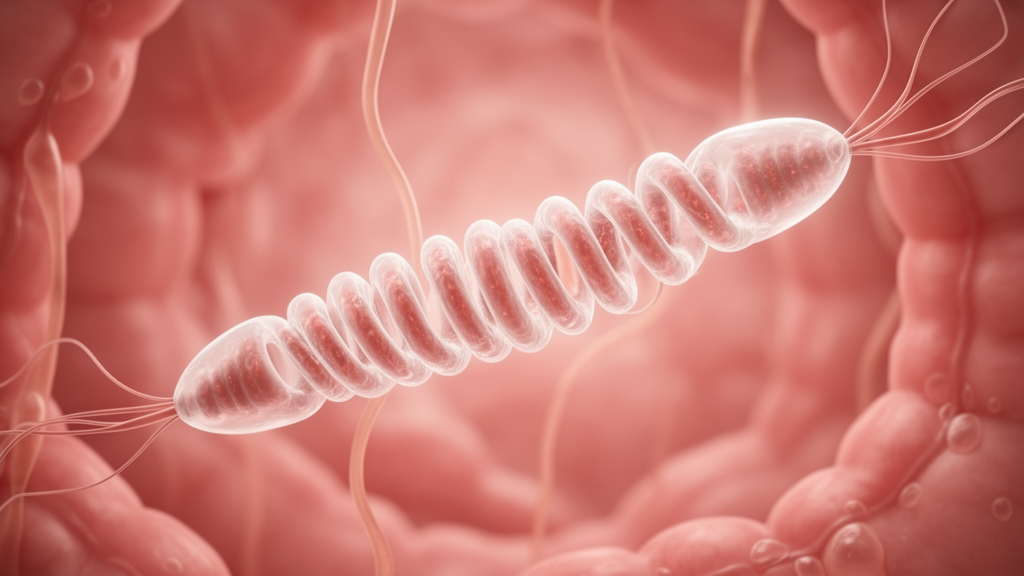
A previously unrecognized intestinal spirochete has been formally described as Brachyspira burroughii sp. nov., after isolates recovered from pigs at two separate swine farms turned up during routine swine dysentery surveillance at the Iowa State University Veterinary Diagnostic Laboratory. The discovery, published in BMC Microbiology, underscores how easily novel Brachyspira species can slip past standard diagnostic workflows and why combining genomic analyses with classical phenotyping matters for detecting them.
Swine dysentery is classically caused by Brachyspira hyodysenteriae, but strongly beta-hemolytic relatives such as B. hampsonii and B. suanatina can also produce SD-like disease, complicating surveillance and diagnosis. When fecal samples from the two farms were processed, the resulting isolates were only weakly beta-hemolytic. MALDI-TOF mass spectrometry identified them as B. hyodysenteriae or other Brachyspira species, but with low confidence scores of 1.80 to 1.90, and PCR assays targeting known species were likewise inconclusive. That pattern of ambiguous results prompted the team to pursue a full genomic and phenotypic characterization.
The two isolates shared an identical biochemical and enzymatic profile that differed clearly from both B. hyodysenteriae and B. pilosicoli. Under the microscope, the cells fell within the expected size and structural range for the genus, each carrying 8 to 11 periplasmic flagella. These phenotypic features confirmed the isolates as bona fide members of Brachyspira while hinting that they were not any of the established species.
Genome-based comparisons settled the question. Average nucleotide identity analysis showed only 76.5 to 91 percent similarity between the isolates and recognized Brachyspira species, well below the thresholds used to delineate bacterial species and supporting their designation as something new. Interestingly, the pairwise ANI between the two isolates themselves was 94.5 percent, slightly below the traditional species cutoff, a detail the authors report openly rather than glossing over.
Phylogenetic analyses reinforced the picture. A core-genome SNP phylogeny placed the isolates in a distinct, well-supported clade, and a nox-based phylogeny supported the same placement. By contrast, 16S and 23S rRNA gene analyses showed lower discriminatory resolution among some Brachyspira species, illustrating why single-gene markers can fail to separate closely related spirochetes and why whole-genome approaches are increasingly valuable in this genus.
The practical significance lies in the diagnostic gap the case exposes. Both MALDI-TOF and species-specific PCR returned inconclusive or low-confidence results, meaning a novel species circulating in commercial herds could evade detection by the very tools relied upon for swine dysentery surveillance. The authors argue that the recognition of B. burroughii highlights the importance of combining genomic analyses with classical phenotyping to improve detection and accurate identification of novel Brachyspira species.
The study also carries a note of caution for interpretation. Because the two isolates came from surveillance submissions at two separate farms and were characterized as part of diagnostic workup rather than a designed prevalence survey, the findings establish that this species exists and can be recovered from pigs, but they do not by themselves establish how widespread it is, how often it causes disease, or what role, if any, it plays in swine dysentery-like illness. Those questions would require broader sampling and further study.
For now, the description of Brachyspira burroughii adds a new name to the growing list of intestinal spirochetes found in pigs and serves as a concrete example of what routine surveillance can uncover when ambiguous results are followed up with genome sequencing rather than dismissed. As strongly beta-hemolytic Brachyspira species continue to complicate swine dysentery diagnosis, the case suggests that laboratories may need to keep an open mind about weakly hemolytic isolates that refuse to fit known species profiles.
Subject of Research: Discovery and characterization of a novel intestinal spirochete species, Brachyspira burroughii, isolated from pigs during swine dysentery surveillance.
Article Title: Brachyspira burroughii sp. nov., a novel intestinal spirochete isolated from pigs during swine dysentery surveillance: genomic and phenotypic characteristics
Article References: Hakimi, M., Hu, X., Stewart, T., Stinman, C., Saxena, A., Bradner, L., Macedo, N., Sahin, O., & Li, G. (2026). Brachyspira burroughii sp. nov., a novel intestinal spirochete isolated from pigs during swine dysentery surveillance: genomic and phenotypic characteristics. BMC Microbiology. https://doi.org/10.1186/s12866-026-05853-4
Image Credits: AI Generated
DOI: 10.1186/s12866-026-05853-4
Keywords: Brachyspira burroughii, swine dysentery, spirochete, Brachyspira hyodysenteriae, average nucleotide identity, MALDI-TOF, core-genome phylogeny, veterinary diagnostics, pigs, novel species, genomic surveillance, Brachyspira
News Source: Juliet Wilcox. (October 30, 2026). Novel Pig Gut Spirochete Brachyspira burroughii Identified During Swine Dysentery Surveillance. Scienmag.



