


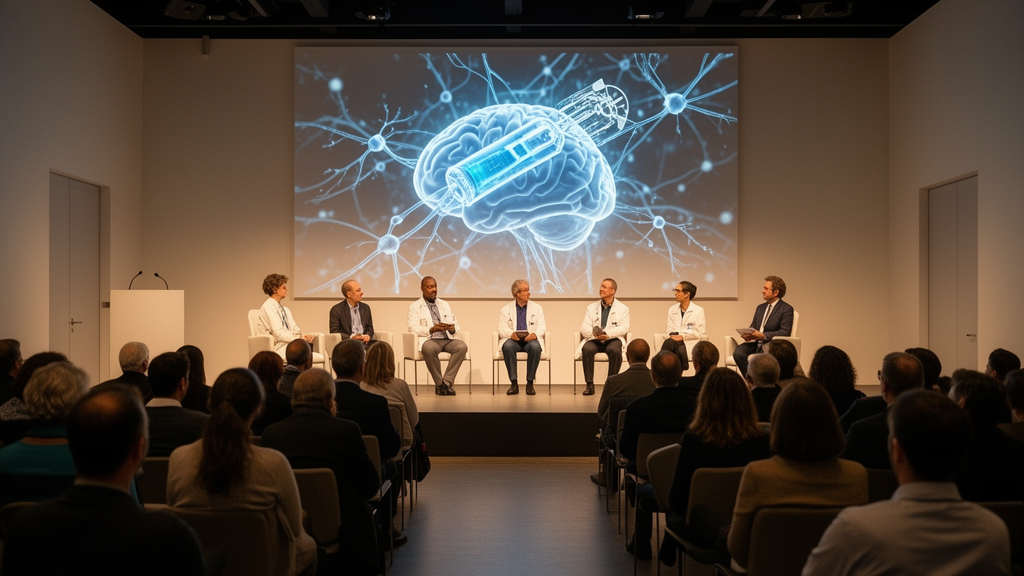
The Sixth Bioelectronic Medicine Summit, held on March 4 and 5, 2025 at the Garden City Hotel in Garden City, New York, brought together more than 40 invited speakers and panelists from academia, clinical medicine, industry, and research foundations under the banner “Neurotechnologies for Individuals and Communities.” Co-hosted by the Feinstein Institutes for Medical Research, Northwell Health, and the University of Minnesota, and co-chaired by Dr. Stavros Zanos and Dr. Hubert Lim, the two-day meeting framed a field in rapid transition: device-based activation of neural circuits is moving from laboratory concept toward approved therapies for autoimmune, cardiovascular, and metabolic disorders.
Kevin J. Tracey, President and CEO of the Feinstein Institutes, opened the summit by positioning bioelectronic medicine at the convergence of neuroscience, engineering, and the molecular mechanisms of disease. The timing of his framing was pointed. In 2025, after the summit took place, the first implantable vagus nerve stimulation system for rheumatoid arthritis received U.S. FDA approval, a milestone the meeting’s conclusions singled out as evidence that neuroimmune modulation has crossed from proof of principle into clinical practice. In July 2025, vagus nerve stimulation was approved to treat moderate-to-severe rheumatoid arthritis in patients refractory to methotrexate and biologic therapy.
The keynote address by John Rogers of the Querrey Simpson Institute for Bioelectronics at Northwestern University showcased how far implantable hardware has shrunk and softened. His laboratory’s flexible, skin-like, bio-integrated electronics include injectable cellular-scale devices, stretchable silicon nanoribbon sensors, and millimeter-scale wireless wearables. The centerpiece was bioresorbable electronics: transient systems engineered to dissolve safely in the body after therapeutic use. Rogers described controlled hydrolysis of silicon under physiological conditions, supported by a curated library of degradable semiconductors, dielectrics, interconnects, and substrates such as silk and PLGA. Among the products of this materials platform is what his team reports as the world’s smallest bioresorbable pacemaker, shown to pace a rat heart before fully degrading. Rogers sketched a future of personalized, closed-loop systems that are wireless, miniaturized, and woven into real-time clinical feedback.
Neuroimmune mechanisms featured prominently in the session on inflammatory disorders. Jared Huston of the Feinstein Institutes presented work on the “neural tourniquet,” a strategy that uses vagus nerve stimulation to rapidly reduce bleeding by engaging reflexive neuroimmune pathways. In preclinical models of hemophilia A, brief cervical stimulation primed circulating platelets and accelerated hemostasis at wound sites. Mechanistic studies traced the effect through an intact spleen, cholinergic T cells, and platelet α7 nicotinic acetylcholine receptors. Critically, the pro-hemostatic response was localized: thrombin–antithrombin complex formation rose at the wound without evidence of systemic hypercoagulability or thromboembolic complications. Platelets harvested from stimulated mice were sufficient to transfer the hemostatic benefit to untreated recipients, underscoring a brain–spleen–platelet reflex arc. Huston noted that early human studies of non-invasive transcutaneous auricular stimulation are beginning to show similar signatures of platelet priming and clot stabilization, with potential relevance to trauma care, perioperative bleeding, and coagulation disorders.
The gut–brain axis occupied another session. Helen Vuong of the University of Minnesota reviewed how microbial communities and their metabolites shape neurodevelopment, synaptic function, and neuroimmune tone. She highlighted early-life evidence that maternal and infant microbiomes influence thalamocortical wiring and behavioral trajectories relevant to autism spectrum disorders, and discussed gut microbes mediating the antiseizure effects of the ketogenic diet by shifting hippocampal excitability through the GABA/glutamate balance. Dysbiosis has also been implicated in Parkinson’s and Alzheimer’s disease through peripheral immunity, microglial priming, and protein aggregation dynamics such as α-synuclein misfolding, while microbial influences on serotonin metabolism, vagal signaling, and hypothalamic–pituitary–adrenal axis regulation connect the microbiome to mood disorders. Vuong concluded that the microbiome is both a mechanistic driver and a potential therapeutic target across neurological disease.
Cardiovascular bioelectronic medicine received a detailed treatment from Marat Fudim of Duke University, who examined heart failure with preserved ejection fraction, a heterogeneous condition whose prevalence is rising alongside obesity rates and in which traditional therapies have largely failed to show consistent benefit. He described the condition’s systemic inflammation, endothelial dysfunction, and microvascular disease, and discussed interleukin-6 as a potent prognostic marker linked in recent analyses to higher mortality and heart failure hospitalization. Anti-inflammatory strategies including IL-1β and IL-6 inhibition, referenced through trials such as CANTOS and HERMES, were reviewed alongside the hemodynamic consequences of obesity. Substantial weight loss achieved with GLP-1 receptor agonists including semaglutide and tirzepatide can improve filling pressures, symptoms, and quality of life. Fudim argued that future therapies must target extracardiac contributors, especially obesity and inflammation, rather than myocardial mechanics alone.
Spinal cord stimulation drew some of the meeting’s most urgent discussion. Leslie Morse led a session stressing that spinal cord injury affects more than 15 million people worldwide, yet real-world implementation of stimulation therapies remains slow and inequitable despite promising science. Evidence presented included the Up-LIFT trial of transcutaneous spinal cord stimulation, which showed clinically significant gains in upper limb function, and emerging brain–computer interface technologies enabling digital control and ambulation in individuals with paralysis. Panelists, including voices of lived experience, wrestled with managing hope versus hype in patient communication, redefining success to include pain relief and autonomy rather than motor metrics alone, and empowering the spinal cord injury community to co-design research. The panel issued a call for cross-sector collaboration among industry, philanthropy, and federal funders, noting that high implant costs, missing reimbursement structures, and regulatory complexity inhibit translation. Looking forward, speakers pointed to combination approaches pairing stimulation with gene therapy, regenerative biomaterials, and AI-guided personalized protocols.
Commercialization ran through the program as a practical thread. Jacob Robinson presented Motif Neurotech’s pea-sized “DOT” stimulator, powered wirelessly through magnetoelectric coupling, whose early human data demonstrated the feasibility of digitally programmable, minimally invasive implants for psychiatric and neurological disorders. Cameron McIntyre described translating academic computational modeling into Intelect Medical, a company whose stimulation-optimization software was ultimately acquired by industry. Erika Ross Ellison outlined ONWARD Medical’s path to the first FDA-cleared therapy for spinal cord injury and ongoing trials of implantable and non-invasive platforms. A commercialization panel covered regulatory pathways, venture strategy, trial design, and payer navigation.
Gamma-frequency stimulation emerged as a headline clinical program. Ralph Kern, chief medical officer of Cognito Therapeutics, explored 40 Hz gamma-frequency sensory neuromodulation as a non-invasive, physics-based approach to neurodegenerative disease, built on the idea that sensory-evoked gamma oscillations induce biological activities supporting synaptic maintenance, myelination, neuroimmune and neurovascular function, and glymphatic waste clearance. The company’s investigational Spectris AD device delivers stimulation engineered to elicit gamma oscillations in brain networks. In the randomized, sham-controlled OVERTURE feasibility study of 74 participants, the intervention was associated with a 76–77% slowing of cognitive and functional decline and a 69% reduction in brain volume loss, with no serious treatment-limiting adverse events; a 12-month open-label extension reported a favorable adverse event profile and durable effects on activities of daily living and structural brain measures. A pivotal randomized trial, HOPE, enrolled 673 patients with mild-to-moderate Alzheimer’s disease and was fully enrolled at the time of the presentation, with top-line data anticipated in mid-2026.
The meeting closed with the NIH SPARC program’s infrastructure for autonomic neuromodulation, including the REVA human vagus nerve atlas, computational frameworks for predicting nerve-fiber activation, and the COSMIIC open-source implantable neuroprosthesis, already implanted in people with spinal cord injury in a first-in-human study. Poster awards recognized work on neuroimmune modulation for rheumatoid arthritis, facial movement biomarkers after brain injury, and imaging-based prediction of placebo responders. Across bioresorbable pacemakers, ultrasound-powered bladder implants, and closed-loop rehabilitation stimulation, the summit’s throughline was precision and access: tailoring therapies to individual neural circuitry while expanding the therapeutic footprint to underserved populations, as the field advances from research prototypes toward approved therapies.
Subject of Research: A meeting report on the Sixth Bioelectronic Medicine Summit covering neuromodulation technologies, clinical translation, and access to bioelectronic therapies.
Article Title: The sixth bioelectronic medicine summit: Neurotechnologies for individuals and communities
Article References: Bahadir, S., Robinson, J. T., Morse, L. R., Yoo, P. B., Kern, R., Makowski, N. S., Kozai, T. D. Y., Fudim, M., Barbe, M. F., Lim, H. H., Chang, E. H., & Zanos, S. (2026). The sixth bioelectronic medicine summit: Neurotechnologies for individuals and communities. Bioelectronic Medicine, 12(1), Article 3. https://doi.org/10.1186/s42234-025-00195-4
Image Credits: AI Generated
DOI: 10.1186/s42234-025-00195-4
Keywords: bioelectronic medicine, neuromodulation, vagus nerve stimulation, spinal cord injury, Alzheimer's disease, gamma-frequency stimulation, bioresorbable electronics, gut-brain axis, SPARC program, FDA approval, neuroimmune modulation, medical devices
News Source: Cassandra Pierce. (October 30, 2026). Bioelectronic Medicine Summit Charts Neurotechnologies for Patients and Communities. Scienmag.



