


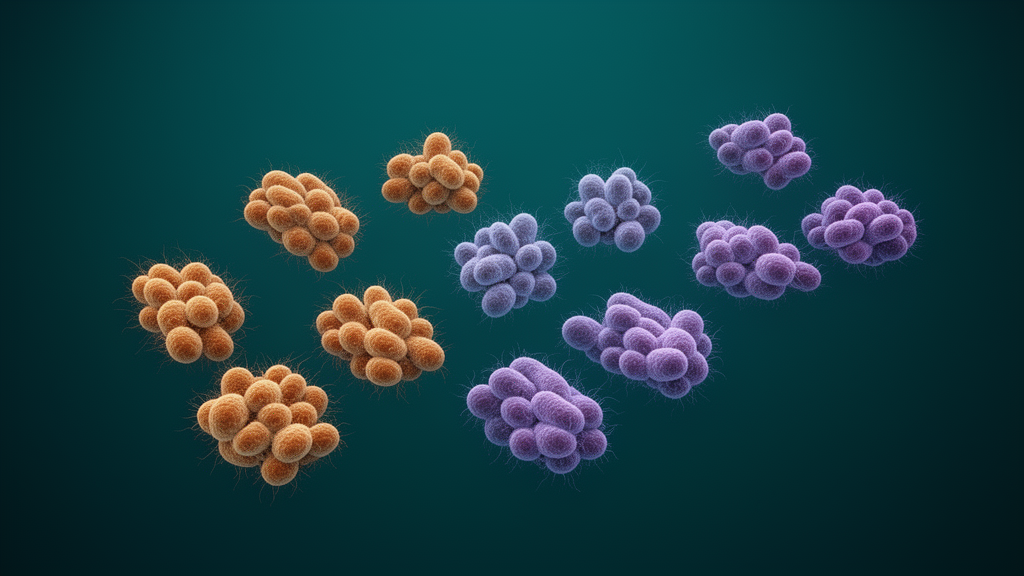
Ancient methane-eating microbes called ANME-1 archaea turn out to be far more diverse than their sparse genome record suggested. A new comparative phylogenomic study published in Environmental Microbiome analyzed 132 metagenome-assembled genomes recovered from hydrothermal vents, cold seeps, and other marine and terrestrial habitats, and resolved them into 14 distinct genus-level phylogenetic clusters organized within three monophyletic subclades: ANME-1a, ANME-1b, and ANME-1c.
ANME archaea are pivotal regulators of the global carbon cycle because they oxidize methane anaerobically, in partnership with the deep anoxic zones of oceans and sediments. Yet the genomic basis underlying their ecological diversification and broad environmental distribution has remained poorly understood, which is precisely what the new analysis set out to address by substantially expanding the genomic representation of the clade.
Each of the three subclades shows distinct biogeographic patterns and habitat preferences. The available ANME-1c genomes are associated with hydrothermal environments and display the highest predicted optimum growth temperatures, with a median of 71.6 degrees Celsius. In contrast, ANME-1a and ANME-1b show broader predicted pH and salinity ranges, consistent with their wider representation across both marine and non-marine habitats.
One of the study’s most striking findings concerns formaldehyde metabolism. Across nearly all ANME-1 genomes, the canonical mer gene is absent, yet the researchers identified a conserved Fae-Hps gene configuration that offers a candidate route for processing formaldehyde.
The genomes also reveal lineage-associated differences in acetate metabolism. Genes encoding ADP-forming acetyl-CoA synthetase, or acs, were detected in ANME-1a and ANME-1b but not reported across the clade as a whole, pointing to lineage-associated differences in the potential to activate acetate as a metabolic substrate.
At the core of this metabolic architecture lies a conserved pathway for the anaerobic oxidation of methane, shared across the clade. Wrapped around that conserved core, however, is a set of lineage-variable electron transport systems, including Rnf complexes, Ehb, and multiheme cytochromes, or MHCs. The authors suggest this modular design may contribute to the niche differentiation and broad ecological distribution of ANME-1 across Earth’s diverse anoxic habitats.
The study relied entirely on 132 ANME-1 metagenome-assembled genomes spanning hydrothermal vents, cold seeps, and other marine and terrestrial habitats. That approach is what allowed the researchers to capture diversity from hydrothermal vents, cold seeps, and terrestrial settings in a single comparative framework, but it also means the findings rest on predicted gene content and inferred physiological traits rather than direct laboratory measurements.
Even so, the expanded genomic catalog gives microbiologists a much sharper map of who lives where and what genetic tools each lineage carries. The temperature, pH, and salinity predictions align with the habitats in which each subclade is found, supporting the idea that metabolic modularity, rather than a single universal toolkit, underpins the success of these methane oxidizers from deep-sea seeps to geothermally heated sediments.
The new work frames the clade not as a single biochemical archetype but as a family of closely related specialists, each tuned by its own complement of electron transport modules and accessory pathways to exploit a particular slice of Earth’s anoxic real estate.
Subject of Research: Comparative genomics and evolutionary diversification of anaerobic methanotrophic ANME-1 archaea
Article Title: Evolutionary diversification and metabolic adaptations of ANME-1 archaea
Article References: Su, L., Teske, A. P., Marshall, I. P. G., Qi, W., Liu, W., Zhou, K., & Li, J. (2026). Evolutionary diversification and metabolic adaptations of ANME-1 archaea. Environmental Microbiome. https://doi.org/10.1186/s40793-026-00968-7
Image Credits: AI Generated
DOI: 10.1186/s40793-026-00968-7
Keywords: ANME-1 archaea, methane oxidation, metagenome-assembled genomes, hydrothermal vents, cold seeps, phylogenomics, formaldehyde metabolism, acetyl-CoA synthetase, electron transport, carbon cycle, Environmental Microbiome, Evolutionary
News Source: Juliet Wilcox. (October 30, 2026). ANME-1 Archaea Split Into 14 Genus-Level Clusters, Genomic Study Finds. Scienmag.



