


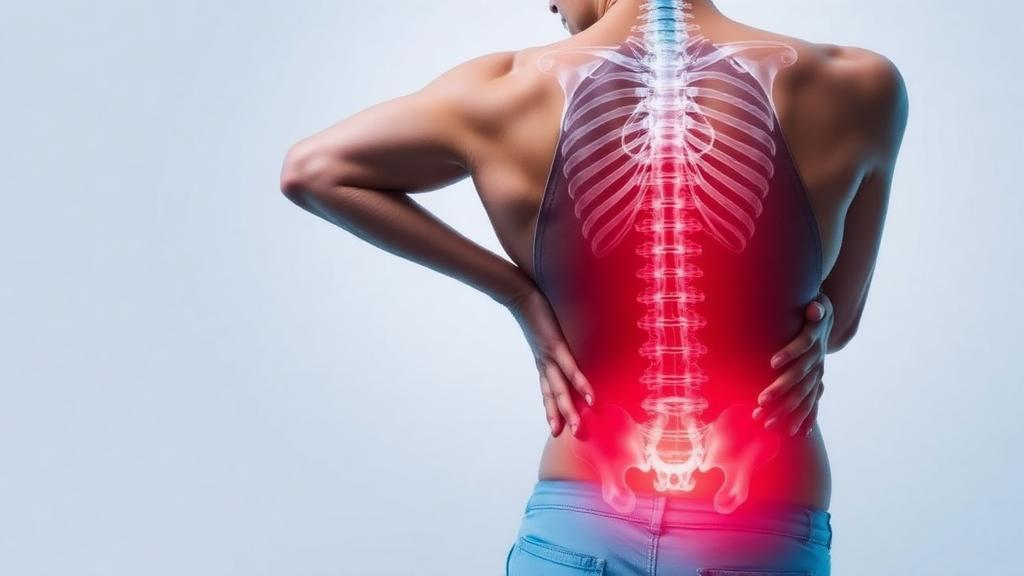
People with chronic low back pain driven by the sacroiliac joint may gain lasting relief from cooled radiofrequency ablation, according to a prospective cohort study of 153 patients published in BMC Musculoskeletal Disorders. The procedure, which uses cooled radiofrequency energy to create larger lesions along the lateral branch nerves that supply the sacroiliac joint, was associated with statistically significant improvements in pain, physical function, and health-related quality of life that persisted for a full year after treatment.
Researchers assessed participants at baseline, six weeks, three months, six months, and one year using a battery of patient-reported measures: the Visual Analogue Scale for back and leg pain, the Oswestry Disability Index, the Roland–Morris Disability Questionnaire, and the EQ-5D-5L index and health VAS. Back pain scores fell from a mean of 6.72 at baseline to 5.36 at six weeks and 4.54 at one year. Leg pain improved more markedly, dropping from 6.22 to 4.02 at six weeks and 3.54 at one year, with both trajectories reaching statistical significance.
Function followed a similar course. The Oswestry Disability Index, a standard measure of how back pain limits daily life, declined from 48.8 at baseline to 37.7 at six months and 37.2 at one year. The Roland–Morris Disability Questionnaire improved from 13.69 at baseline to 10.06 at six weeks and 8.9 at one year. On the EQ-5D-5L health VAS, patients rated their overall health at 50.25 before the procedure and 67.15 a year afterward. Domain-level responses suggested the Pain/Discomfort domain improved most, falling from 3.61 at baseline to 2.86 at one year, while the Usual Activities domain improved from 3.28 to 2.66.
The study also reported a favorable safety profile, with no serious procedure-related complications observed. The authors conclude that cooled radiofrequency ablation was associated with clinically meaningful multidimensional improvements, supporting its role as a promising minimally invasive option for well-selected patients with sacroiliac joint–mediated pain. As a single-arm prospective cohort study without a control group, the findings reflect associations in treated patients rather than proof of efficacy over sham or alternative treatments, and longer-term follow-up in broader populations would help confirm the durability of these outcomes.
Subject of Research: Cooled radiofrequency ablation outcomes for sacroiliac joint–mediated low back pain
Article Title: Short- and long-term outcomes of cooled radiofrequency ablation for SI joint–mediated low back pain: a prospective study of 153 patients using multidimensional patient-reported measures
Article References: Li, W., Petersingham, G., Jamali, H., & Rao, P. J. (2026). Short- and long-term outcomes of cooled radiofrequency ablation for SI joint–mediated low back pain: a prospective study of 153 patients using multidimensional patient-reported measures. BMC Musculoskeletal Disorders. https://doi.org/10.1186/s12891-026-10196-2
Image Credits: AI Generated
DOI: 10.1186/s12891-026-10196-2
Keywords: cooled radiofrequency ablation, sacroiliac joint, low back pain, chronic pain, patient-reported outcomes, Oswestry Disability Index, EQ-5D-5L, minimally invasive treatment, prospective cohort study, pain management, Short-, long-term
News Source: Ophelia Keating. (October 30, 2026). Cooled radiofrequency ablation eases SI joint back pain in 153-patient study. Scienmag.



