

• HOME
  • NEWS
  • EXPLORE
    • CAREER
      • Companies
      • Jobs
    • EVENTS
    • iGEM
      • News
      • Team
    • PHOTOS
    • VIDEO
    • WIKI
  • BLOG
  • COMMUNITY
    • FACEBOOK
    • INSTAGRAM
    • TWITTER
Sunday, November 1, 2026
BIOENGINEER.ORG
No Result
View All Result
  • Login
  • HOME
  • NEWS
  • EXPLORE
    • CAREER
      • Companies
      • Jobs
        • Lecturer
        • PhD Studentship
        • Postdoc
        • Research Assistant
    • EVENTS
    • iGEM
      • News
      • Team
    • PHOTOS
    • VIDEO
    • WIKI
  • BLOG
  • COMMUNITY
    • FACEBOOK
    • INSTAGRAM
    • TWITTER
No Result
View All Result
Bioengineer.org
No Result
View All Result
Home NEWS Science News Health

Injuries Linked to Higher Reported Disaster Health Impacts Among Older Indians

by
October 29, 2026
in Health
Reading Time: 2 mins read
0
Injuries Linked to Higher Reported Disaster Health Impacts Among Older Indians

Injuries Linked to Higher Reported Disaster Health Impacts Among Older Indians

Share on FacebookShare on TwitterShare on LinkedinShare on RedditShare on Telegram

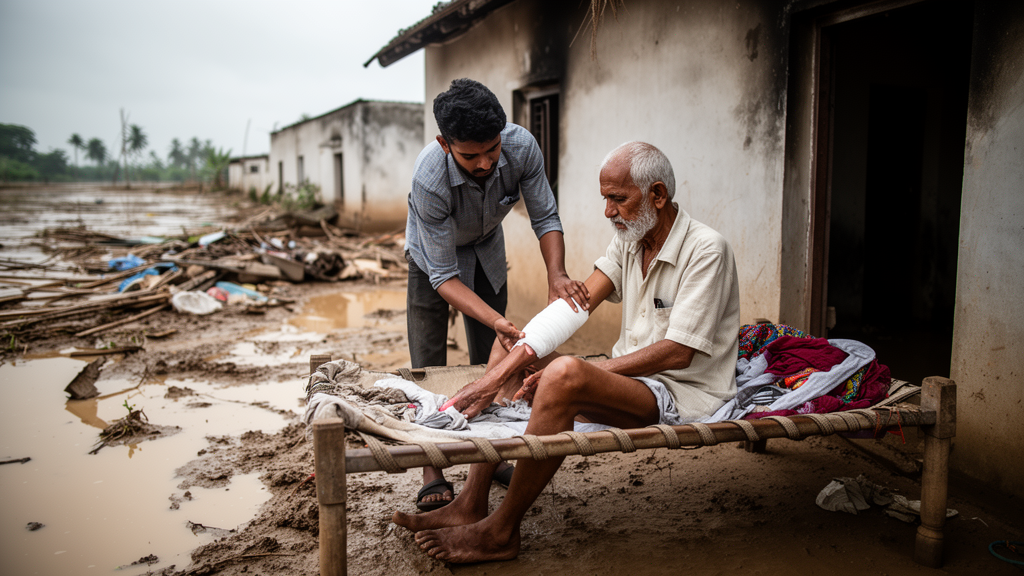
Older and middle-aged adults in India who have been injured report significantly more health impacts from disasters than those without injuries, according to a large cross-sectional analysis of national survey data published in BMC Public Health.

The study drew on Wave 1 of the Longitudinal Ageing Study in India (LASI), collected in 2017-18, and included 66,200 individuals aged 45 years and above. Researchers examined whether a person’s injury status was associated with self-reported disaster-related health impacts, defined as severe health effects resulting from natural or human-made disasters during the preceding five years.

Overall, 3.3 percent of respondents reported disaster-related health impacts. The prevalence varied sharply by injury status: 2.9 percent among respondents with no injury, 5.1 percent among those with fall-related injuries, and 10.2 percent among those reporting other injuries.

After adjusting for socio-demographic, socioeconomic, behavioural, and health-related characteristics, the associations persisted. Respondents with fall-related injuries had significantly higher odds of reporting disaster-related health impacts than those without injuries, with an adjusted odds ratio of 1.48 (95 percent confidence interval: 1.29 to 1.69). Those reporting other injuries had more than three times higher odds, with an adjusted odds ratio of 3.08 (95 percent confidence interval: 2.64 to 3.59).

The analysis used weighted descriptive statistics and Rao-Scott chi-square tests to describe sample characteristics and examine bivariate associations, and binary logistic regression models to estimate adjusted odds ratios and confidence intervals. Injury status was categorised as no injury, fall-related injury, and other injuries.

Beyond injury status, several other factors were significantly associated with reporting disaster-related health impacts. These included rural residence, lower educational attainment, poor self-rated health, and residence in the central, eastern, north-eastern, and western regions of India.

The authors note that the cross-sectional design does not permit conclusions about temporal or causal relationships between injury and disaster-related health impacts. The outcome measure was self-reported, capturing respondents’ own accounts of severe health effects from disasters in the previous five years rather than clinically verified outcomes.

The researchers frame the findings as identifying adults with injuries as a population that reports greater disaster-related health impacts, and argue that they support the need for age-inclusive disaster preparedness, injury prevention, and resilient public health systems to address the needs of vulnerable older populations in India, where population ageing and disaster risks are increasing simultaneously.

Subject of Research: The association between injury status and self-reported disaster-related health impacts among middle-aged and older adults in India

Article Title: Exploring the Association of Injury and Disaster among Older Adults in India: Insight from the Longitudinal Ageing Study in India (LASI), 2017-18

Article References: Pal, A. K. (2026). Exploring the Association of Injury and Disaster among Older Adults in India: Insight from the Longitudinal Ageing Study in India (LASI), 2017-18. BMC Public Health. https://doi.org/10.1186/s12889-026-29770-3

Image Credits: AI Generated

DOI: 10.1186/s12889-026-29770-3

Keywords: India, LASI, older adults, injury, disasters, public health, cross-sectional study, fall-related injury, disaster preparedness, health impacts, Exploring, Association

News Source: Ophelia Keating. (October 29, 2026). Injuries Linked to Higher Reported Disaster Health Impacts Among Older Indians. Scienmag.


Tags: AssociationCross-sectional StudyDisaster preparednessdisastersExploringfall-related injuryhealth impactsIndiainjuryLASIolder adultsPublic Health
Share12Tweet7Share2ShareShareShare1

Related Posts

ZNF207 shields glutamine transporter ASCT2 from degradation to fuel liver cancer growth

ZNF207 shields glutamine transporter ASCT2 from degradation to fuel liver cancer growth

October 30, 2026
Most Ethiopian HIV patients on dolutegravir therapy show good knowledge, survey finds

Most Ethiopian HIV patients on dolutegravir therapy show good knowledge, survey finds

October 30, 2026

Serum and urine protein biomarkers may sharpen prostate cancer detection beyond PSA

October 30, 2026

One gene locus flags atrial fibrillation risk after major surgery, UK Biobank study finds

October 30, 2026

POPULAR NEWS

  • Microbial Sources and Stress Shape the Hidden Endophytes of an Invasive Plant

    Microbial Sources and Stress Shape the Hidden Endophytes of an Invasive Plant

    29 shares
    Share 12 Tweet 7
  • Firebreaks Leave Lasting Scars in Grasslands While Wildfire Heals Fast

    29 shares
    Share 12 Tweet 7
  • ZNF207 shields glutamine transporter ASCT2 from degradation to fuel liver cancer growth

    29 shares
    Share 12 Tweet 7
  • Systematic review maps sustainability tensions in offshore wind development

    29 shares
    Share 12 Tweet 7

About

We bring you the latest biotechnology news from best research centers and universities around the world. Check our website.

Follow us

Recent News

Microbial Sources and Stress Shape the Hidden Endophytes of an Invasive Plant

Firebreaks Leave Lasting Scars in Grasslands While Wildfire Heals Fast

ZNF207 shields glutamine transporter ASCT2 from degradation to fuel liver cancer growth

Subscribe to Blog via Email

Enter your email address to subscribe to this blog and receive notifications of new posts by email.

Join 86 other subscribers
  • Contact Us

Bioengineer.org © Copyright 2023 All Rights Reserved.

Welcome Back!

Login to your account below

Forgotten Password?

Retrieve your password

Please enter your username or email address to reset your password.

Log In
No Result
View All Result
  • Homepages
    • Home Page 1
    • Home Page 2
  • News
  • National
  • Business
  • Health
  • Lifestyle
  • Science

Bioengineer.org © Copyright 2023 All Rights Reserved.
