


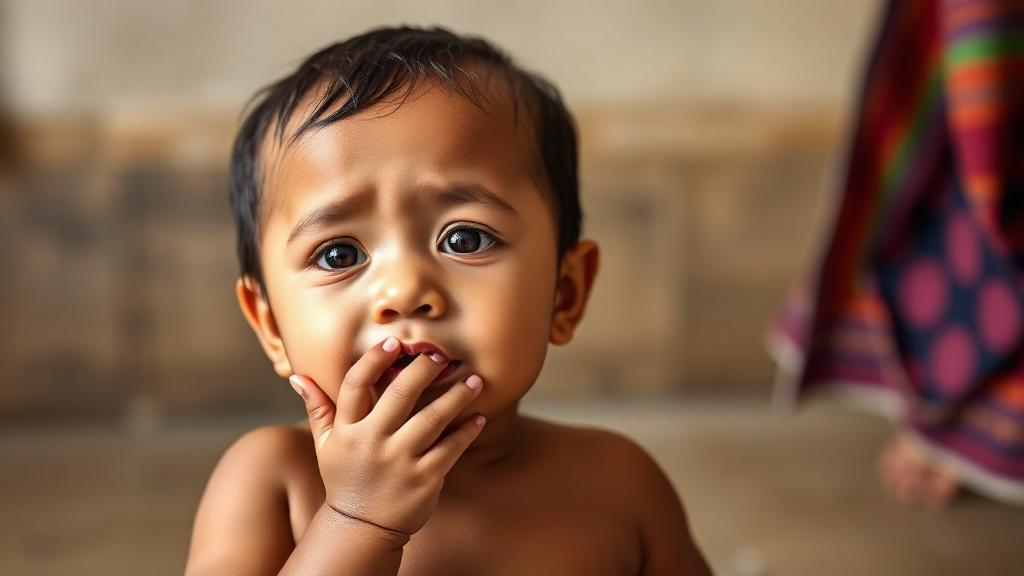
Diarrhoeal disease affects roughly one in eight children under five in South and Southeast Asia at any given two-week period, according to a systematic review and meta-analysis published in BMC Infectious Diseases. The pooled estimate of 13 percent, drawn from 33 studies covering more than one million children, comes with an important caveat: after adjusting for possible publication bias, the true regional figure may be closer to 10 percent.
The research team, led by Vaibhavkumar N. Shrivastav and colleagues, searched five bibliographic databases for studies published between January 2000 and December 2024. They included cross-sectional, cohort, surveillance and baseline randomised-trial data that reported diarrhoea prevalence among under-fives using the World Health Organization definition. The protocol was registered prospectively in PROSPERO, and the team graded the certainty of the evidence using GRADE while appraising study quality with the Joanna Briggs Institute checklist for prevalence studies.
Pooling the data with a random-effects model revealed extreme between-study heterogeneity, with an I-squared value of 99.7 percent. The 95 percent prediction interval stretched from 3 to 42 percent, meaning the prevalence in any individual setting could plausibly fall anywhere within that wide range. Funnel plot asymmetry was detected, and a trim-and-fill adjustment lowered the pooled estimate to approximately 10 percent, suggesting the unadjusted figure of 13 percent may overstate the true burden.
Country-level estimates varied dramatically, ranging from 5 percent in the Maldives to 44 percent in Nepal. However, the authors caution that the estimates for Nepal, Bhutan, the Maldives and Timor-Leste each rest on a single study and should be treated as exploratory. Prevalence also differed by income level and setting: pooled estimates were lower in upper-middle-income countries at 10 percent than in lower-middle-income countries at 13 percent, although the confidence intervals overlapped, and urban settings showed higher prevalence at 17 percent compared with 13 percent in rural areas.
The COVID-19 pandemic appears to have left a mark on reported diarrhoea patterns. Prevalence was estimated at 13 percent before the pandemic, 16 percent during it, and 7 percent after it ended. The post-pandemic figure, however, is based on only four studies and the authors urge caution in interpreting it. Hospital-based studies and those using consecutive or convenience sampling were associated with higher estimates, which may partly explain the heterogeneity across the evidence base.
Beyond headline prevalence, the analysis identified factors consistently linked to higher odds of diarrhoeal disease. Children aged 12 to 23 months had twice the odds of diarrhoea compared with younger infants, with an odds ratio of 2.00, and those aged 24 to 35 months had an odds ratio of 2.19. Maternal lack of education was associated with a 30 percent increase in odds, with an odds ratio of 1.30. These pooled analyses were based on two to five studies per factor, and the authors stress that the associations should not be interpreted as causal, given the predominantly cross-sectional evidence base.
The authors conclude that diarrhoeal disease among young children in the region remains high, but with substantial disparities across geographic and socioeconomic characteristics. They suggest that age-targeted case management, maternal education, strengthened surveillance and integrated water, sanitation and hygiene programmes are plausible priorities, while calling for higher-quality, standardised prospective studies to sharpen future estimates.
Published on 29 October 2026 as an open-access article, the review is being shared early as a citable, peer-reviewed accepted version that will be replaced by the final Version of Record.
Subject of Research: Pooled prevalence of diarrhoeal disease and associated factors among children under five in South and Southeast Asia
Article Title: Prevalence of and factors associated with diarrheal disease among under-five children in South and Southeast Asian communities: a systematic review and meta-analysis
Article References: Shrivastav, V. N., Kakaiya, V., Bobde, S., & Sakurkar, M. (2026). Prevalence of and factors associated with diarrheal disease among under-five children in South and Southeast Asian communities: a systematic review and meta-analysis. BMC Infectious Diseases. https://doi.org/10.1186/s12879-026-14714-4
Image Credits: AI Generated
DOI: 10.1186/s12879-026-14714-4
Keywords: diarrhoeal disease, under-five children, South and Southeast Asia, systematic review, meta-analysis, prevalence, public health, WASH, maternal education, child health, BMC Infectious Diseases, factors
News Source: Phoebe Ingram. (October 29, 2026). Diarrhoea affects one in eight young children across South and Southeast Asia, review finds. Scienmag.



