


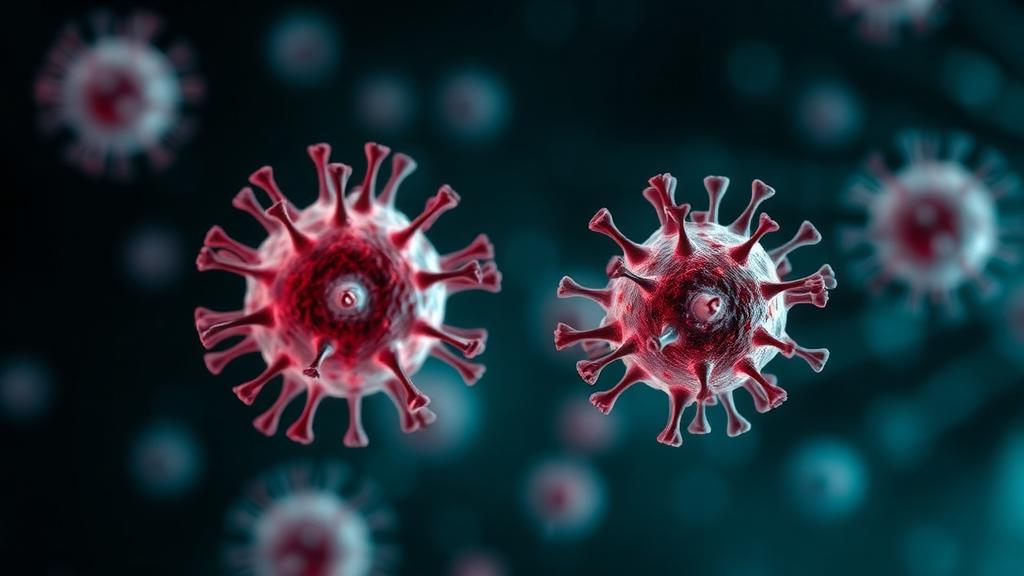
Picobirnaviruses, small RNA viruses routinely detected in human and animal stool samples, have long been assumed to infect vertebrate hosts. A new study published in Nature Microbiology overturns that assumption by demonstrating, for the first time, that at least one picobirnavirus infects bacteria. The finding establishes the family Picobirnaviridae as only the third known clade of RNA bacteriophages, alongside the leviviruses and cystoviruses, and suggests that one of the most commonly detected virus groups in the human gut may have been misclassified for decades.
The research team, led by investigators including Tianyu Gan and David Wang, began by screening stool samples from an existing case-control cohort of patients with inflammatory bowel disease using next-generation sequencing. They focused on two samples from healthy control participants that contained previously unreported picobirnaviruses, which they named PBV/human/GBR/18941/2016 and PBV/human/GBR/19022/2016, shortened to PBV-18941 and PBV-19022. Complete genomes of both segments of both viruses were obtained through a combination of sequencing and rapid amplification of cDNA ends. Notably, every open reading frame in both viruses was preceded by a conserved bacterial ribosome binding site, an early hint of a bacterial connection.
Because there was no way to know whether picobirnavirus RNA in stool represented infectious virions, and no culture system existed to propagate these viruses, the researchers turned to germ-free mice as a closer physiological mimic of the human gut. Three germ-free mice were gavaged with each human stool sample, and stool pellets were collected daily or every other day for 23 days. Both viruses increased substantially in RNA quantity in at least one mouse: PBV-18941 rose 107-fold and PBV-19022 rose 106-fold, and both persisted through day 23. The abundance of the two RNA segments of each virus was highly correlated, allowing the team to track segment 2 as a proxy thereafter. The bacterial communities that engrafted in the mice were less complex than those of the original human stool.
To test whether the amplified viruses could be passaged further, the team performed a second faecal microbiota transplantation using PBV-19022-positive mouse stool as donor material. Four germ-free mice were gavaged, and PBV-19022 grew with consistent kinetics over the first seven days in all four animals, demonstrating that propagation in mice was reproducible. Treatment with the antibiotic neomycin produced a sharp decrease in virus levels, a brief rebound, and eventual elimination of PBV-19022. The authors note this could mean the virus infects a neomycin-sensitive bacterium, that the virus itself is directly inhibited by antibiotics as reported for other RNA phages, or that it could be a mammalian virus dependent on bacteria for infection.
The decisive experiments came from in vitro culture. Mouse stool pellets positive for PBV-18941 were homogenized, inoculated into brain heart infusion medium supplemented with mucin, and incubated anaerobically at 37 degrees Celsius, with daily passages at a 1:10 dilution. Although PBV-19022 did not grow under these conditions, PBV-18941 grew and persisted for 20 passages, providing the first demonstration of in vitro growth of a picobirnavirus. The anaerobic conditions also ruled out any residual murine cell as a possible host. Antibiotic treatments sharpened the picture: ampicillin, kanamycin, chloramphenicol and tetracycline did not stop viral growth, whereas neomycin, vancomycin and metronidazole eliminated PBV-18941, suggesting its host was a bacterium targeted by those three drugs.
To determine directly where the virus resided, the researchers used RNA fluorescence in situ hybridization with probes targeting both viral segments and universal bacterial 16S rRNA. The signals from PBV-18941 segment 1 and segment 2 colocalized with each other and with the bacterial probe inside cells that generally had a diplobacillus shape. No viral signal appeared in any cells from a virus-negative culture. These data demonstrate directly that PBV-18941 RNA is present inside bacterial cells, making it an RNA phage.
Identifying the specific host required enrichment. The team used fluorescence-activated cell sorting to isolate the cells with the highest viral signal from a positive culture. In the sorted community, the most abundant bacterial amplicon sequence variant, making up 70 percent of reads, was an Anaerotignum species sharing 96 percent identity in the 16S rRNA V4 region with its closest relative, Anaerotignum aminivorans. The genus Anaerotignum, first proposed in 2017, comprises obligate anaerobic rods with Gram-positive cell walls. Following the International Code of Nomenclature of Prokaryotes, the researchers proposed the name ‘Candidatus Anaerotignum faecalis’ for this previously unreported species. Enterococcus avium and Hungatella hathewayi were the second and third most abundant bacteria in the sorted community, but species-specific FISH probes showed viral RNA localized only with ‘Ca. A. faecalis’.
Supporting evidence placed the host and virus together consistently. TaqMan quantitative PCR confirmed ‘Ca. A. faecalis’ in the original human stool specimen and persistently present in faecal pellets from mice showing viral growth. In culture, the bacterium was present exactly at the time points and antibiotic conditions where PBV-18941 was detected, and absent where the virus had been eliminated. Flow cytometry of a FISH-stained positive culture showed ‘Ca. A. faecalis’ at roughly 0.3 percent of the total bacterial community, with about 10 percent of those cells infected. Strikingly, the known RNA phage lineages, leviviruses and cystoviruses, have only been shown to infect Gram-negative bacteria, whereas PBV-18941 infects a Gram-positive one.
The team also addressed whether viral persistence reflected true infectious cycles or vertical transmission without extracellular particles. They generated four virus-naive bacterial communities by serial dilution of a positive culture and challenged them with a virus-containing filtrate. Two communities were permissive and supported PBV-18941 infection, showing that infectious particles were produced and that naive communities can be infected de novo. In those two permissive communities, the abundance of ‘Ca. A. faecalis’ decreased roughly tenfold as the virus grew, and amplicon sequencing confirmed a drop in its relative abundance. In the two non-permissive communities, the virus did not grow, and low-level detection of the bacterium after challenge was attributed to residual bacterial DNA in the filtrate.
The implications extend well beyond one virus. Since picobirnaviruses were first discovered in human stool in 1988, nearly identical sequences found in multiple animal hosts have fuelled speculation about zoonotic transmission. The authors propose an alternative explanation: both animals may simply harbour the same bacterial species, which in turn carries the same virus. They cannot rule out that some picobirnaviruses infect eukaryotic hosts, but they note that no known viral family infects both prokaryotic and eukaryotic hosts. If all picobirnaviruses are RNA phages, they would be by far the most prevalent and abundant RNA phages in the human body, since they are frequently detected in samples where no leviviruses or cystoviruses are found. Established associations between picobirnaviruses and several human diseases would then need reinterpretation, with future functional studies required to determine any causative roles and with bacterial hosts incorporated into experimental designs. The study has limitations: ‘Ca. A. faecalis’ could not be isolated in axenic culture, both viruses grew in only a subset of gavaged mice, and the host range of PBV-18941 beyond this species remains unknown. Still, the work offers an experimental roadmap for propagating gut phages and assigning them hosts, a critical step for the vast majority of gut viruses that currently have none.
Subject of Research: Discovery that a human gut-associated picobirnavirus infects a Gram-positive gut bacterium, establishing Picobirnaviridae as the third clade of RNA bacteriophages
Article Title: A human gut-associated picobirnavirus establishes the Picobirnaviridae as the third clade of RNA bacteriophages
Article References: Gan, T., Rosen, A. L., Wang, L., Vernon, S., Droit, L., Pinski, A. N., Wu, G., Chica Cardenas, L. A., Mihindukulasuriya, K. A., Paredes, A., Pios, Z., Baldridge, M. T., Rimmer, J. E., Parkes, M., Dinsdale, E. A., Edwards, R. A., Segall, A. M., Handley, S. A., Kau, A. L., & Wang, D. (2026). A human gut-associated picobirnavirus establishes the Picobirnaviridae as the third clade of RNA bacteriophages. Nature Microbiology. https://doi.org/10.1038/s41564-026-02523-z
Image Credits: AI Generated
DOI: 10.1038/s41564-026-02523-z
Keywords: picobirnavirus, RNA phage, gut virome, Candidatus Anaerotignum faecalis, germ-free mice, anaerobic culture, RNA FISH, faecal microbiota transplantation, bacteriophage host identification, Nature Microbiology, antibiotic susceptibility, Gram-positive bacteria
News Source: Kristina Jarvis. (October 29, 2026). Gut Virus Long Thought to Infect Humans Turns Out to Be a Bacterial Virus. Scienmag.



