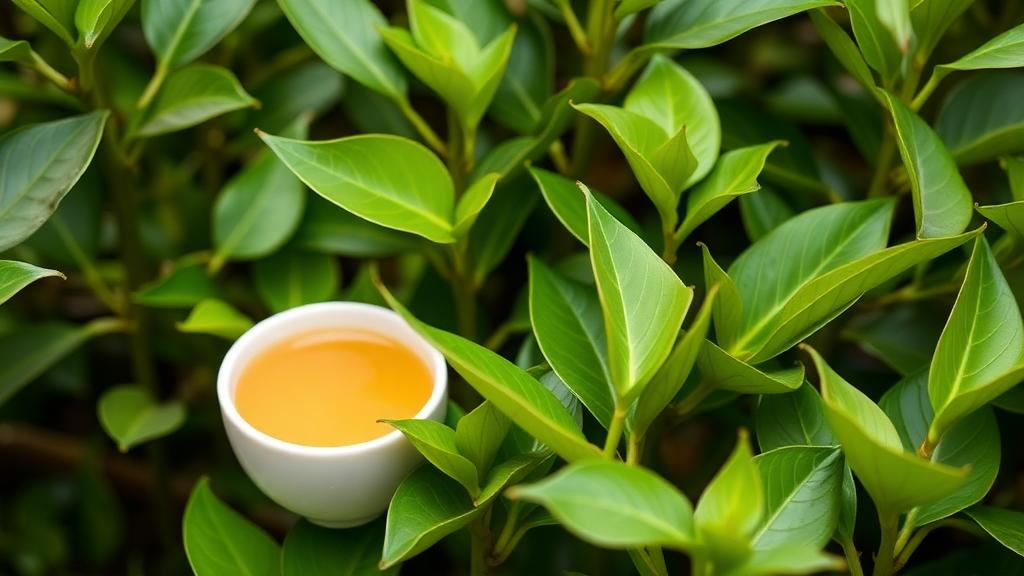
A new study in Chemical and Biological Technologies in Agriculture reports that corn steep liquor (CSL), a byproduct of the corn processing industry, can strengthen tea plants (Camellia sinensis) against drought stress, apparently by protecting the lipids in cell membranes and reestablishing the cell’s internal redox balance.
The research team set out to investigate how CSL regulates drought tolerance in tea plants, a mechanism that had remained unclear. The work fits into a broader push in global agriculture to find uses for organic waste streams in sustainable farming, and CSL has previously been flagged as a candidate for regulating plant stress resistance.
In the study, tea plants were subjected to drought stress, and one group was supplied with CSL at a concentration of 0.5 milliliters per liter. According to the results, the CSL-treated plants maintained stronger physiological and photosynthetic performance under drought compared with untreated plants.
A key difference lay in the accumulation of reactive oxygen species (ROS). Drought typically drives ROS production, which damages cells. The CSL-treated plants showed lower levels of ROS and less oxidative damage to the cell membrane, suggesting the treatment blunted the oxidative burst that normally accompanies water shortage.
The membrane itself appears to be a central target of the protective effect. CSL treatment induced a rise in unsaturated fatty acids, which the authors report helped maintain cell membrane integrity. Because membrane lipids are vulnerable to ROS-induced oxidative damage, keeping them in a more unsaturated state may preserve membrane function when water is scarce.
The study also traced the effect to the plant’s antioxidant machinery. CSL elevated the reduced forms of ascorbic acid (AsA) and glutathione (GSH), two central antioxidants, and enhanced the efficiency of the AsA-GSH cycle by boosting the activities of its key enzymes. Together, these changes restored cellular redox homeostasis in the CSL-treated tea plants under drought stress.
The authors conclude that CSL enhances drought tolerance in tea plants through two linked routes: promoting fatty acid synthesis and increasing unsaturated fatty acid levels, and protecting membrane lipids from ROS-induced oxidative damage through regulation of antioxidant systems, including the AsA-GSH cycle.
Because the findings come from a controlled study of tea plants under experimentally imposed drought, they describe a mechanism rather than a field-proven practice; the reported dose of 0.5 milliliters per liter and the physiological outcomes are specific to this experimental setup.
Subject of Research: How corn steep liquor, an industrial byproduct, enhances drought tolerance in tea plants
Article Title: Industrial byproduct corn steep liquor enhanced drought tolerance by preserve membrane lipids and reestablishing redox homeostasis in tea plants (Camellia sinensis)
Article References: Liang, X., Jiang, Y., Dai, P., Shao, Y., Liu, Y., Duan, Y., Wang, S., Lu, Y., Feng, H., & Ruan, L. (2026). Industrial byproduct corn steep liquor enhanced drought tolerance by preserve membrane lipids and reestablishing redox homeostasis in tea plants (Camellia sinensis). Chemical and Biological Technologies in Agriculture. https://doi.org/10.1186/s40538-026-01119-3
Image Credits: AI Generated
DOI: 10.1186/s40538-026-01119-3
Keywords: corn steep liquor, tea plants, Camellia sinensis, drought stress, reactive oxygen species, unsaturated fatty acids, AsA-GSH cycle, antioxidant enzymes, membrane lipids, redox homeostasis, organic waste, sustainable agriculture
News Source: Alan Morgan. (October 29, 2026). Corn Steep Liquor, a Corn Industry Byproduct, Boosts Drought Tolerance in Tea Plants. Scienmag.