Chemists at the University of Würzburg have achieved a goal that has eluded synthetic chemists for more than 60 years: the preparation and isolation of stable oxoboranes, compounds featuring boron-oxygen triple bonds. Writing in the journal Nature Chemistry, the team led by Professor Holger Braunschweig describes a method for making a range of these molecules, which were long thought to be simply too unstable to exist as isolable compounds. Computational support for the study came from the group of Professor Ashwini K. Phukan at Tezpur University in India.
The significance of the result lies in the nature of the chemical bond involved. For Braunschweig, the challenge has been a personal one: his group has spent more than 15 years making molecules that contain triple bonds to boron. In 2012, the team reported the first molecule with a boron-boron triple bond, and in 2025 it reported the first neutral molecule with a boron-carbon triple bond. Within the first row of the periodic table’s p-block, only one target remained: organic oxoboranes, the compounds with boron-oxygen triple bonds.
Oxoboranes have been synthetic targets since at least the early 1960s, attracting repeated attempts from inorganic and organic chemists around the world. Over those decades, the molecules were trapped and detected under extreme conditions, their existence was inferred from chemical reactions, and a number of derivatives were made. What remained out of reach was the isolation of stable examples that could be handled and studied as discrete compounds. The new work reports that this barrier has finally been crossed.
Perhaps the most striking aspect of the discovery is how it came about. Doctoral students Lukas Lubczyk and Christian Markl combined a molecule called a diboracumulene with different ketones, which are standard reagents in organic chemistry. Working independently, each of them noticed that the reactions had produced unusual orange or yellow solids. The products turned out to be the long-sought oxoboranes, formed as the main products of the reactions rather than as minor or transient species.
The serendipity of the outcome was not lost on the researchers. “The discovery was a pleasant surprise. I never thought the diboracumulene would react the way it did, let alone with multiple different, simple substrates. And when Christian came to me with his compound, I knew we were onto something,” Lubczyk said. Out of many seemingly more likely reaction outcomes, and despite decades of failed attempts worldwide, the oxoboranes emerged spontaneously and proved stable enough to be studied in detail.
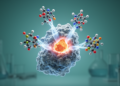
Braunschweig described the team’s astonishment at seeing the compounds form and persist. “Nearly everybody in the field had given up on oxoboranes, as they were thought to be just too unstable to be isolated. So we were stunned to see them spontaneously form in these reactions and stick around long enough that we could study them,” he said. The image accompanying the release shows the structure, bonding and electronic aspects of one of the newly prepared oxoboranes, work credited to Lubczyk, Markl, Dr. Thomas Kupfer and Dr. Rian Dewhurst of the University of Würzburg.
In total, three oxoboranes were prepared using the new method, demonstrating that it is not a one-off curiosity but a general route that could lead to many new oxoboranes in the future. The team reports that it is now exploring how far the method can be pushed, with the aim of preparing other elusive molecules across the periodic table. The study is classified as an experimental study, and the findings were published online on 27 October 2026 under the title “Synthesis and isolation of stable oxoboranes.”
The work was published in collaboration with the Phukan group at Tezpur University, whose computational contributions supported the experimental findings. Funding was provided by the German Research Foundation (DFG), the German Academic Exchange Service (DAAD) and the Department of Science & Technology (DST) of India. The research carries the DOI 10.1038/s41557-026-02272-w.
For a field that had largely written off oxoboranes as unisolable, the Würzburg results mark a turning point. A target that stood for over 60 years has been met not through heroic conditions or exotic intermediates, but through an unexpected reaction between a diboracumulene and simple ketones, yielding stable orange and yellow solids that chemists can now finally hold, analyse and build upon.
Subject of Research: Synthesis and isolation of stable oxoboranes with boron-oxygen triple bonds
Article Title: A 60-Year search is over: Würzburg chemists isolate long-elusive molecules
Article References: A 60-Year search is over: Würzburg chemists isolate long-elusive molecules. Original publication (Bibliographic details unavailable.)
Image Credits: AI Generated
DOI: Not provided
Keywords: oxoboranes, boron, triple bonds, Nature Chemistry, University of Würzburg, synthetic chemistry, diboracumulene, ketones, inorganic chemistry, main group chemistry, Year, search
News Source: Bethany Barker. (October 29, 2026). Chemists finally isolate stable oxoboranes after six decades of failure. Scienmag.