


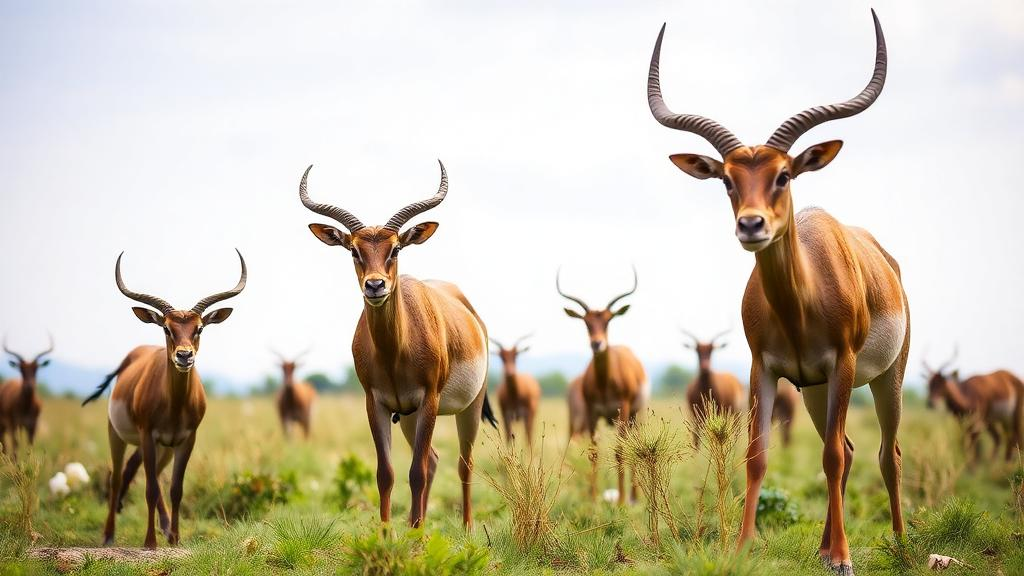
Crimean-Congo hemorrhagic fever virus, a tick-borne zoonotic pathogen of growing global concern, is increasingly being detected in wild ungulates across Africa, Europe and Asia, according to a new review published in the journal Animal Diseases. The review, authored by Aziz Ul-Rahman and published on 21 July 2026, compiles evidence of natural and experimental infection in wild animal species with a particular emphasis on ungulates, and concludes that these animals should be viewed primarily as ecologically relevant hosts and sentinel species rather than as long-term reservoirs of the virus.
Crimean-Congo hemorrhagic fever virus is an enveloped, single-stranded RNA virus belonging to the genus Orthonairovirus within the family Nairoviridae. The disease it causes is widely distributed across Africa, the Middle East, Asia and parts of Europe. In nature, the virus is maintained through a complex enzootic cycle involving ixodid ticks, particularly those of the genus Hyalomma, and a wide range of vertebrate hosts. Immature ticks commonly parasitize small mammals and ground-dwelling birds, while adult ticks preferentially infest larger mammals, including domestic livestock and wild ungulates. By feeding on multiple host species across developmental stages, Hyalomma ticks facilitate viral persistence and circulation in diverse ecological settings, and both questing and engorged ticks collected from wildlife and livestock have tested positive for viral RNA.
Livestock species such as sheep, goats and cattle are recognized as important amplifying hosts because they develop transient viremia without overt clinical disease and frequently serve as the principal source of human exposure through tick bites or contact with infected blood and tissues during animal handling and slaughter. Wild ungulates differ from both domestic small ruminants and small mammals in ecologically significant ways: they can sustain large numbers of adult Hyalomma ticks, occupy extensive geographic ranges, migrate across ecological and political boundaries, and interact indirectly with livestock at wildlife-livestock interfaces. These characteristics suggest that wild ungulates may contribute to the maintenance and dispersal of infected tick populations, although their precise contribution to long-term viral maintenance remains incompletely understood.
A central quantitative finding of the review comes from a synthesis of nearly 19,979 samples from 42 wildlife species, which revealed an overall seroprevalence of 33.5 percent. At the family level, Cercopithecidae exhibited the highest positivity at 100 percent, followed by Rhinocerotidae at 61.2 percent and Bovidae at 52.7 percent. Considering only naturally acquired exposure, positivity rates ranged from 1.4 percent in springbok to 92.4 percent in Iberian ibex. Elevated rates were also detected in rhinoceros at 61.2 percent, red deer at 61.1 percent and fallow deer at 60.0 percent, whereas relatively low rates were found in impala at 3.1 percent, warthog at 3.6 percent and Iberian pigs at 2.8 percent.
The geographic picture varies considerably by region. Early serological surveys in southern Africa during the 1960s to 1980s provided the first indications of viral circulation in free-ranging species such as impala, red hartebeest, springbok, greater kudu and African buffalo, with seroprevalence ranging from 1.4 percent in springbok to 50 percent in kudu and 20 percent in buffalo. In Kenya, a high seroprevalence of 75.3 percent was observed in African buffalo, alongside evidence in giraffe, waterbuck and oryx. In Europe, the most pronounced expansion has occurred in the Iberian Peninsula and parts of France. In Spain and Portugal, high seroprevalence has been reported in red deer, fallow deer, roe deer, Iberian ibex and wild boar, with red deer often exceeding 70 percent seropositivity. Between 2014 and 2020, seroprevalence exceeded 90 percent in Iberian ibex and mouflon, while wild boar generally remained below 20 percent, though with wide site-specific variation from about 2 percent to more than 60 percent. In France, antibodies in roe deer and mouflon have spread northward into temperate regions once considered nonendemic.
The review is careful to emphasize that most of the available evidence from wildlife is serological. Seropositivity reflects previous exposure rather than definitive proof of reservoir competence or sustained transmission capability. The detection of anti-CCHFV antibodies confirms prior exposure but does not demonstrate active infection, the duration of viremia, the capacity to infect feeding ticks, or any long-term contribution to viral maintenance. Although these animals rarely exhibit clinical disease and there is currently no evidence that they directly initiate human outbreaks, their high seroprevalence and ecological association with Hyalomma ticks suggest a potentially important role in virus circulation and dissemination.
Mechanistically, the transmission cycle is maintained primarily by hard ticks of the genus Hyalomma, which function as both biological vectors and long-term maintenance hosts. Vertebrate hosts can be categorized into four epidemiological groups: competent reservoir hosts, which maintain infection and enable sustained onward transmission; amplifying hosts, which develop transient viremia sufficient to infect feeding ticks; incidental or dead-end hosts such as humans; and sentinel hosts, which provide evidence of local viral circulation through seroconversion. Current evidence suggests that most wild ungulates fall into the latter ecological categories. Viral persistence in tick populations is facilitated by transstadial transmission, in which infection is maintained from one developmental stage to the next, and by transovarial transmission, in which the virus passes from infected adult females to eggs, enabling maintenance within tick populations even without continuous vertebrate viremia.
An important epidemiological nuance highlighted in the review concerns which tick stages drive amplification. Adult Hyalomma ticks typically feed only once before detaching to molt or reproduce, so adult feeding on wildlife or livestock is often an epidemiological endpoint rather than a direct amplification step. The critical amplification phase occurs during the larval and nymphal stages, when ticks acquire infection from transiently viremic vertebrates and subsequently maintain and disseminate the virus through transstadial transmission. Infected nymphs and adults can then bridge infection to livestock or humans during subsequent blood meals. Wild ungulates may nonetheless influence the system indirectly by sustaining high densities of Hyalomma ticks, particularly in habitats where wildlife, livestock and vectors overlap, and their seasonal movements and aggregation behavior can increase tick dispersal across landscapes.
Several interacting ecological and anthropogenic drivers are reshaping the distribution of the virus. Climate change has emerged as a major determinant of Hyalomma distribution, particularly Hyalomma marginatum and Hyalomma rufipes, the principal vectors in Europe, Asia and Africa. Rising temperatures, milder winters and altered rainfall patterns have been associated with prolonged seasonal tick activity, improved overwinter survival and the northward expansion of suitable habitats, with Hyalomma ticks increasingly reported beyond their historical range in southern and central Europe. The detection of autochthonous human cases in Spain in 2016 demonstrated the westward expansion of the virus into previously unaffected regions of Western Europe. Agricultural intensification, deforestation, habitat fragmentation and peri-urban expansion alter wildlife movement patterns and increase overlap between domestic animals, wildlife and human populations, creating new transmission interfaces. Migratory birds further contribute by transporting immature Hyalomma ticks from Africa into southern Europe during seasonal movements, although birds are not competent reservoirs of the virus. Human-mediated changes, including reduced predator abundance and modified hunting regulations, have also contributed to increased densities of deer and wild boar, which serve as important blood-meal hosts for adult ticks.
The review identifies substantial knowledge gaps and cautions against premature management responses. It remains unclear which wild ungulate species develop viremia of sufficient magnitude and duration to infect feeding ticks under natural conditions, quantitative data on viral kinetics are largely unavailable for most wildlife species, and direct evidence linking ungulate movement to long-range geographic spread of the virus remains circumstantial. There is currently no strong evidence that the virus directly alters wildlife population size, species distribution or demographic stability, and the author warns that precautionary responses such as localized culling could disrupt ecosystems without evidence of benefit. Instead, the review advocates a One Health approach integrating wildlife, livestock, vector and human surveillance, combining serological monitoring, molecular diagnostics of ticks collected from wildlife, geospatial modeling of host-vector dynamics, longitudinal surveillance, controlled experimental infection studies and standardized serological protocols, with surveillance outputs linked directly to targeted tick control, occupational risk communication and public health preparedness for this World Health Organization priority pathogen.
Subject of Research: Ecological roles of wild ungulates in the transmission and geographic expansion of Crimean-Congo hemorrhagic fever virus
Article Title: Crimean-Congo hemorrhagic fever virus in wild ungulates: a global portrait of host range expansion and implications for zoonotic transmission
Article References: Ul-Rahman, A. (2026). Crimean-Congo hemorrhagic fever virus in wild ungulates: a global portrait of host range expansion and implications for zoonotic transmission. Animal Diseases, 6(1), Article 45. https://doi.org/10.1186/s44149-026-00258-2
Image Credits: AI Generated
DOI: 10.1186/s44149-026-00258-2
Keywords: Crimean-Congo hemorrhagic fever virus, CCHFV, wild ungulates, Hyalomma ticks, seroprevalence, zoonotic transmission, One Health, tick-borne disease, reservoir competence, wildlife surveillance, climate change, Iberian Peninsula
News Source: Kristina Jarvis. (October 29, 2026). Wild ungulates emerge as key sentinels in Crimean-Congo hemorrhagic fever spread. Scienmag.



