

• HOME
  • NEWS
  • EXPLORE
    • CAREER
      • Companies
      • Jobs
    • EVENTS
    • iGEM
      • News
      • Team
    • PHOTOS
    • VIDEO
    • WIKI
  • BLOG
  • COMMUNITY
    • FACEBOOK
    • INSTAGRAM
    • TWITTER
Monday, November 2, 2026
BIOENGINEER.ORG
No Result
View All Result
  • Login
  • HOME
  • NEWS
  • EXPLORE
    • CAREER
      • Companies
      • Jobs
        • Lecturer
        • PhD Studentship
        • Postdoc
        • Research Assistant
    • EVENTS
    • iGEM
      • News
      • Team
    • PHOTOS
    • VIDEO
    • WIKI
  • BLOG
  • COMMUNITY
    • FACEBOOK
    • INSTAGRAM
    • TWITTER
No Result
View All Result
Bioengineer.org
No Result
View All Result
Home NEWS Science News Technology

Reinjection at 50°C and below 14 L/s could limit clogging in Tibet geothermal field

by
October 29, 2026
in Technology
Reading Time: 2 mins read
0
Reinjection at 50°C and below 14 L/s could limit clogging in Tibet geothermal field

Reinjection at 50°C and below 14 L/s could limit clogging in Tibet geothermal field

Share on FacebookShare on TwitterShare on LinkedinShare on RedditShare on Telegram

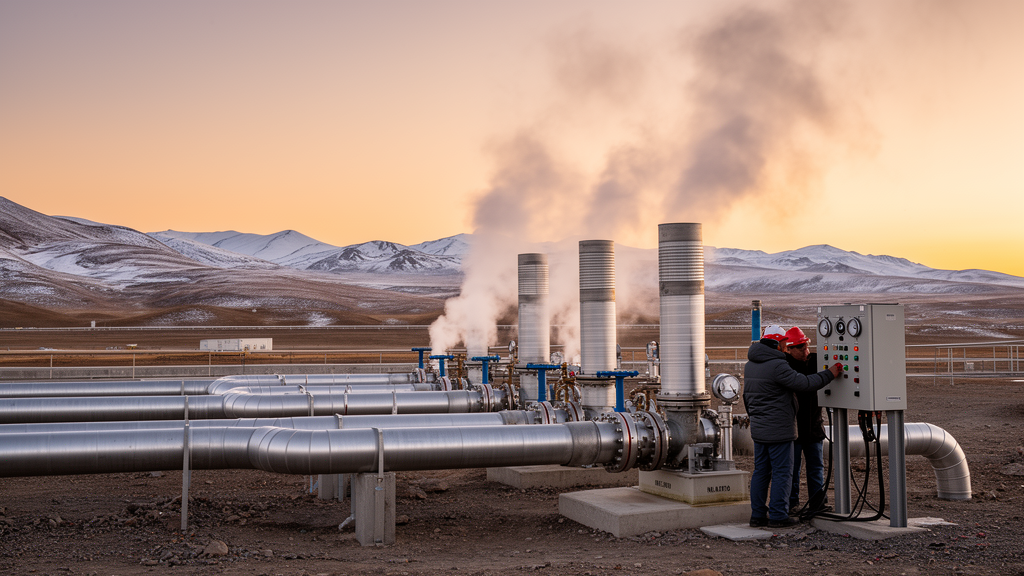
Reinjection of spent geothermal fluids is essential for sustaining production at high-temperature geothermal fields, but it can trigger water–rock interactions that damage the reservoir and reduce productivity. A new study of the Yangbajing geothermal field in Tibet combines laboratory experiments with numerical simulations to trace how these interactions cause formation clogging, and it identifies reinjection conditions that could limit the damage. The work, published in the journal Geothermal Energy, was carried out by Yanyan Huang, Hongwu Lei, Jin Na, Yilong Yuan, Yi Yu and colleagues.

The researchers built a site-specific numerical model of the Yangbajing reservoir using the TOUGHREACT simulator, and they calibrated the model’s thermodynamic parameters against high-temperature, high-pressure water–rock reaction experiments conducted in the laboratory. This calibration was intended to improve the accuracy and reliability of the simulations of how the reservoir evolves chemically under reinjection conditions.

The simulations showed distinct patterns of mineral reaction near different types of wells. In the production wells, quartz and feldspar were the dominant minerals undergoing dissolution, while illite and mica were the primary precipitated phases. In the injection wells the pattern was partly reversed: mica was the main mineral dissolving, and quartz, feldspar and illite constituted the major precipitated phases. These dissolution–precipitation dynamics near the geothermal wells were associated with a 10% decrease in reservoir porosity and permeability, the mechanism behind reinjection-induced clogging.

Sensitivity analyses, in which key simulation parameters were adjusted, indicated that reinjection at low temperature and low flow rate mitigated the extent of mineral dissolution and precipitation during reinjection, thereby easing the adverse impacts on reservoir permeability and porosity. According to the model results, the flow rate should be maintained below 14 litres per second and reinjection should be performed at a temperature of 50 degrees Celsius to minimise adverse impacts on the geothermal reservoir.

The authors describe the study as a systematic analysis of reinjection-induced site clogging arising from water–rock interactions, and they suggest the findings offer insights for optimising the sustainable exploitation of high-temperature geothermal reservoirs. Because the reported reinjection thresholds emerge from calibrated simulations supported by laboratory experiments rather than from field-scale trials, their applicability to operating decisions at Yangbajing or other fields would need to be assessed against site-specific conditions. The article is open access and was published on 10 August 2026.

Subject of Research: Water–rock interactions causing reinjection blockage in the Yangbajing geothermal field and strategies to mitigate reservoir clogging

Article Title: Mechanisms and mitigation strategies of reinjection blockage in the Yangbajing geothermal field, Tibet

Article References: Huang, Y., Lei, H., Na, J., Yuan, Y., & Yu, Y. (2026). Mechanisms and mitigation strategies of reinjection blockage in the Yangbajing geothermal field, Tibet. Geothermal Energy. https://doi.org/10.1186/s40517-026-00399-0

Image Credits: AI Generated

DOI: 10.1186/s40517-026-00399-0

Keywords: geothermal energy, reinjection, reservoir clogging, water–rock interaction, Yangbajing, Tibet, TOUGHREACT, numerical simulation, porosity, permeability, mineral dissolution, formation damage

News Source: Violet Maxwell. (October 29, 2026). Reinjection at 50°C and below 14 L/s could limit clogging in Tibet geothermal field. Scienmag.


Tags: formation damageGeothermal Energymineral dissolutionNumerical simulationpermeabilityporosityreinjectionreservoir cloggingTibetTOUGHREACTwater-rock interactionYangbajing
Share12Tweet7Share2ShareShareShare1

Related Posts

Systematic review maps sustainability tensions in offshore wind development

Systematic review maps sustainability tensions in offshore wind development

October 30, 2026
Amateur maps and sketches helped put Hong Kong's wartime pillboxes on official charts

Amateur maps and sketches helped put Hong Kong’s wartime pillboxes on official charts

October 30, 2026

Heavier logging trucks only pay off when the road network lets them work

October 30, 2026

Supersulfated cement outperforms Portland cement in curbing concrete’s alkali-silica reaction

October 30, 2026

POPULAR NEWS

  • Microbial Sources and Stress Shape the Hidden Endophytes of an Invasive Plant

    Microbial Sources and Stress Shape the Hidden Endophytes of an Invasive Plant

    29 shares
    Share 12 Tweet 7
  • Firebreaks Leave Lasting Scars in Grasslands While Wildfire Heals Fast

    29 shares
    Share 12 Tweet 7
  • ZNF207 shields glutamine transporter ASCT2 from degradation to fuel liver cancer growth

    29 shares
    Share 12 Tweet 7
  • Systematic review maps sustainability tensions in offshore wind development

    29 shares
    Share 12 Tweet 7

About

We bring you the latest biotechnology news from best research centers and universities around the world. Check our website.

Follow us

Recent News

Microbial Sources and Stress Shape the Hidden Endophytes of an Invasive Plant

Firebreaks Leave Lasting Scars in Grasslands While Wildfire Heals Fast

ZNF207 shields glutamine transporter ASCT2 from degradation to fuel liver cancer growth

Subscribe to Blog via Email

Enter your email address to subscribe to this blog and receive notifications of new posts by email.

Join 86 other subscribers
  • Contact Us

Bioengineer.org © Copyright 2023 All Rights Reserved.

Welcome Back!

Login to your account below

Forgotten Password?

Retrieve your password

Please enter your username or email address to reset your password.

Log In
No Result
View All Result
  • Homepages
    • Home Page 1
    • Home Page 2
  • News
  • National
  • Business
  • Health
  • Lifestyle
  • Science

Bioengineer.org © Copyright 2023 All Rights Reserved.
