


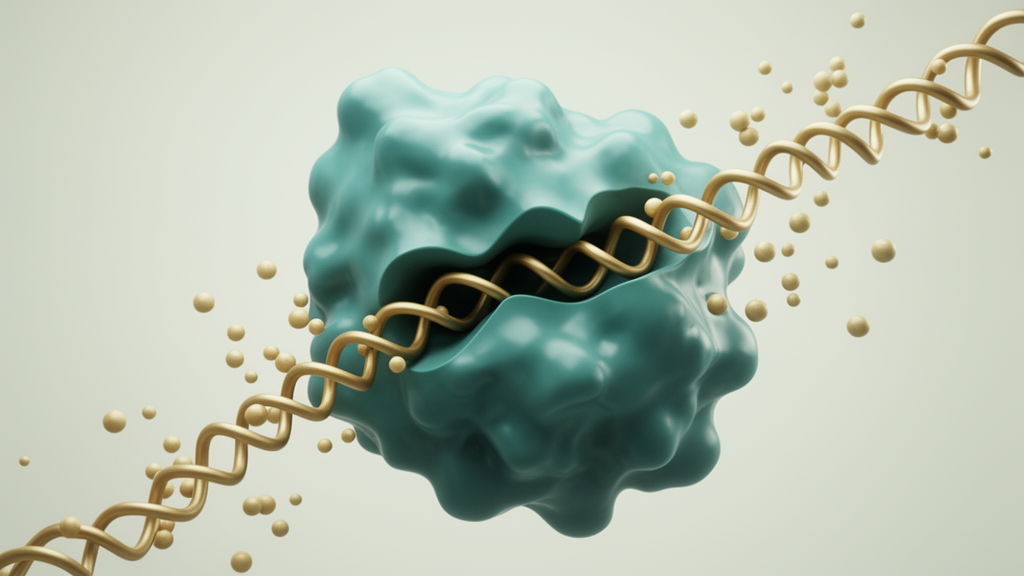
Flowering plants carry a plastid-localized alpha-amylase called AMY3, an enzyme built from two N-terminal carbohydrate-binding modules, an alpha-alpha hairpin that binds the catalytically inactive regulator beta-amylase9, and a C-terminal catalytic domain. Despite decades of work on leaf starch metabolism in Arabidopsis, what AMY3 actually does has remained largely unknown, with dimerization thought to control its activity. A new open-access study in BMC Plant Biology, published 29 October 2026 by Ruhi Rahman, Sara E. Scanlan, Fady Sidarous, Jonathan D. Monroe and Christopher E. Berndsen, reports that the enzyme has a marked preference for amylose, the largely linear component of starch, and that this preference shows up in living leaves as well as in test-tube assays.
The first clue came from in vitro experiments with purified AMY3: the enzyme reduced the amylose content of corn starch relative to amylopectin, hinting at a role in amylose metabolism. Follow-up enzyme assays using the individual starch components confirmed the bias, showing that AMY3 binds amylose with higher affinity than amylopectin. The team then examined starch in leaves of an Arabidopsis mutant lacking AMY3 and found that, at the end of the day, it contained twice as much amylose as wild-type leaves. This mutant phenotype is consistent with the enzyme preferentially attacking amylose in the plastid, although the authors frame the in vitro result as a suggestion of a metabolic role rather than a demonstrated pathway.
To understand where this preference comes from, the researchers purified and characterized the structure and function of the two N-terminal carbohydrate-binding modules, members of the CBM45 family. Bioinformatic analysis showed that the organization and overall structure of the AMY3 modules differ from those in GWD1, another CBM45 member, even though the carbohydrate-binding site itself is predicted to be structurally conserved. In solution, the AMY3 modules form a unique duplex, an arrangement that is unusual for carbohydrate-binding modules, and the paired modules can bind both amylose and amylopectin.
A surprising functional test sharpened the picture: AMY3 lacking its carbohydrate-binding modules still preferred amylose in vitro. The duplex module is therefore not essential for amylose preference, but it matters for another reason — the CBM is important for AMY3 dimerization and regulation, the process long suspected of controlling the enzyme’s activity. In other words, the structural feature that makes AMY3 unusual among starch-binding proteins appears tied to regulation rather than to substrate selection.
The study also carries a methodological warning for the starch biochemistry community. The authors report that their data show the importance of using structural comparisons rather than sequence alignments when assigning carbohydrate-binding module family designations. Because AMY3’s modules and those of GWD1 share the CBM45 label yet differ in organization and overall structure, family assignments based on sequence alone may obscure meaningful functional and architectural differences. As the article is being shared early as a peer-reviewed, accepted manuscript that remains subject to further edits before the final Version of Record, the findings stand as reported in vitro and in Arabidopsis leaves, with the broader role of amylose-targeted amylolysis in leaf starch turnover still to be worked out.
Subject of Research: Substrate preference and carbohydrate-binding module structure of the Arabidopsis starch enzyme AMY3
Article Title: Functional characterization of arabidopsis α-amylase3 (AMY3): amylose preference and structural insights into its duplex carbohydrate-binding module
Article References: Rahman, R., Scanlan, S. E., Sidarous, F., Monroe, J. D., & Berndsen, C. E. (2026). Functional characterization of arabidopsis α-amylase3 (AMY3): amylose preference and structural insights into its duplex carbohydrate-binding module. BMC Plant Biology. https://doi.org/10.1186/s12870-026-10284-4
Image Credits: AI Generated
DOI: 10.1186/s12870-026-10284-4
Keywords: AMY3, alpha-amylase, Arabidopsis, starch metabolism, amylose, amylopectin, carbohydrate-binding modules, CBM45, dimerization, protein structure, plastid, BMC Plant Biology
News Source: Drew Townsend. (October 29, 2026). Plant Starch Enzyme AMY3 Shows a Distinct Taste for Amylose. Scienmag.



