


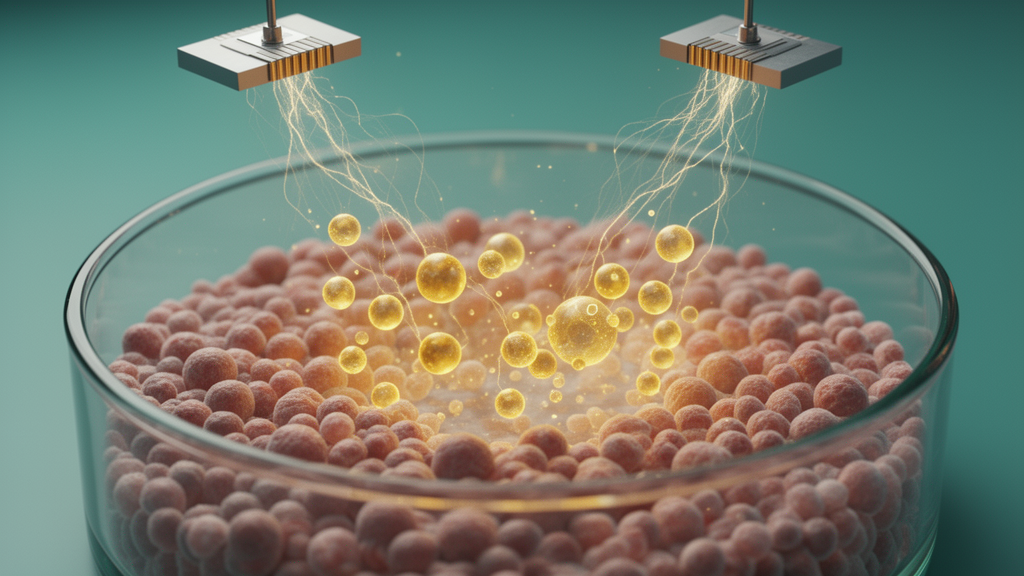
Adding 1α,25-dihydroxyvitamin D3, the active form of vitamin D, to oxaliplatin-based electrochemotherapy dramatically increased the treatment’s ability to kill human colon cancer cells in laboratory dishes, according to an in vitro experimental study published in Medical Oncology. The combination lowered the dose of oxaliplatin needed to halve cell viability from 138.66 micromolar when the drug was used alone to 26.30 micromolar when electrochemotherapy was supplemented with the vitamin D compound.
Oxaliplatin is widely used in the treatment of colon cancer, but the study’s authors note that treatment-related resistance, limited therapeutic efficacy and significant side effects create a need for more effective and safer approaches. Combination strategies have attracted growing interest in cancer research for their potential to improve chemotherapy outcomes, and the new work tested whether the active vitamin D metabolite could amplify an established drug-and-electric-field approach.
The researchers evaluated single and combined treatments on human colon cancer cell lines. Cell viability was measured with the MTT test, the apoptotic response was assessed by caspase-3 activity measurement and Annexin V/PI flow cytometry, intracellular survival signaling proteins were quantified by ELISA, and cellular energy status was determined with a luminescence-based ATP analysis.
Oxaliplatin alone reduced cell viability in a dose-dependent manner. At a concentration of 25 micromolar, the drug increased caspase-3 activity while lowering the protein levels of PI3K, PKC and NF-κB, three signaling molecules that promote cell survival. These changes indicate that oxaliplatin triggers programmed cell death while simultaneously suppressing intracellular survival pathways.
In the electrochemotherapy condition, PI3K, PKC and NF-κB protein levels also fell significantly relative to the control group, extending the survival-pathway suppression seen with oxaliplatin alone.
The most pronounced effects emerged when 1α,25-dihydroxyvitamin D3 was added to the electrochemotherapy protocol. The drop in viability became more marked, and the IC50 value fell from 138.66 micromolar for oxaliplatin alone to 26.30 micromolar for the combined treatment, a roughly fivefold reduction in the concentration required to halve viability in the cell lines studied.
Under the combined regimen, the survival markers PI3K, PKC and NF-κB showed a dramatic decrease in protein levels, while total ATP levels increased. The authors conclude that electrochemotherapy supplemented with 1α,25-dihydroxyvitamin D3 significantly enhanced the cytotoxic effect compared with oxaliplatin therapy alone, by inducing caspase-3 activation and suppressing the PI3K/PKC/NF-κB signaling pathways.
The rise in ATP levels is an intriguing secondary observation. The authors suggest it indicates that the combined therapy may reprogram cellular energy metabolism, although the study was not designed to establish how such metabolic changes arise or what they mean for treatment outcomes. Energy dynamics were measured with a luminescence-based ATP assay in the same cell line experiments.
Several important limitations frame these findings. The work was conducted entirely in vitro, using human colon cancer cell lines rather than tumors in patients or animals, and the authors explicitly caution that further molecular and in vivo studies are needed to understand the therapeutic mechanisms and the sustainability of the observed effects. The reported IC50 values, caspase-3 activation and signaling protein changes are laboratory measurements in this specific experimental system and should not be read as evidence of clinical benefit.
Within those boundaries, the study adds a concrete data point to research on combination strategies for colon cancer treatment. It shows that in this cell line model, pairing electrochemotherapy with the active vitamin D metabolite lowered the oxaliplatin dose needed for a strong cytotoxic effect, intensified caspase-3-mediated apoptosis, and further suppressed the PI3K/PKC/NF-κB survival signaling that oxaliplatin alone had already reduced. Whether these laboratory effects translate into safer or more effective treatment for patients remains a question for the in vivo and molecular studies the authors call for next.
Subject of Research: Vitamin D3-supplemented electrochemotherapy in human colon cancer cell lines
Article Title: Investigation of the effects of 1α,25-dihydroxyvitamin D3–supplemented electrochemotherapy on apoptosis and PI3K/PKC/NF-κB signaling pathway protein levels: an in vitro experimental study
Article References: Çiçek, Z., & Gürsoy, G. (2026). Investigation of the effects of 1α,25-dihydroxyvitamin D3–supplemented electrochemotherapy on apoptosis and PI3K/PKC/NF-κB signaling pathway protein levels: an in vitro experimental study. Medical Oncology, 43(12), Article 362. https://doi.org/10.1007/s12032-026-03493-2
Image Credits: AI Generated
DOI: 10.1007/s12032-026-03493-2
Keywords: electrochemotherapy, oxaliplatin, 1,25-dihydroxyvitamin D3, colon cancer, apoptosis, caspase-3, PI3K, PKC, NF-κB, ATP metabolism, in vitro study, IC50
News Source: Nathaniel Bowman. (October 29, 2026). Vitamin D Boost Makes Electrochemotherapy Far More Potent Against Colon Cancer Cells in Lab Study. Scienmag.



