


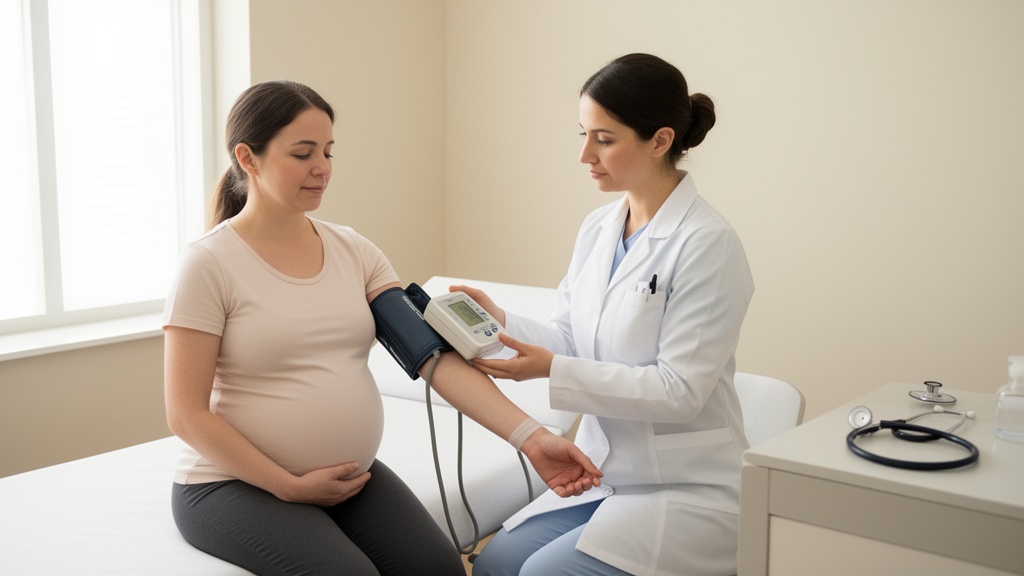
Women whose blood pressure sits in the prehypertension range during the first trimester of pregnancy are more likely to deliver babies with low birth weight or who are small for gestational age, according to a large retrospective cohort study published in BMC Pregnancy and Childbirth. The study, which analysed 19,394 singleton pregnancies in Guangxi, China, between 2019 and 2024, also found that the combination of early prehypertension with later hypertensive disorders of pregnancy was associated with substantially higher odds of adverse neonatal outcomes.
Prehypertension was defined in the study as a blood pressure of 120–139 and/or 80–89 mmHg measured in the first trimester. Of the 19,394 participants, 3,178 — or 16.4 percent — fell into this category, while the remaining 16,216 had blood pressures in the normal range. The researchers compared neonatal outcomes between the two groups and then examined how first-trimester blood pressure interacted with hypertensive disorders diagnosed in the third trimester, including gestational hypertension and preeclampsia.
The raw data showed that newborns of mothers with first-trimester prehypertension had shorter gestational age at birth and higher rates of preterm birth, small for gestational age, and low birth weight compared with newborns of mothers with normal blood pressure, with all of these differences reaching statistical significance.
After adjustment for confounding factors using multivariable logistic regression, first-trimester prehypertension remained independently associated with increased odds of low birth weight, with an adjusted odds ratio of 1.68 (95 percent confidence interval: 1.38–2.05), and of small for gestational age, with an adjusted odds ratio of 1.38 (95 percent confidence interval: 1.21–1.57).
The analysis of third-trimester hypertensive disorders showed that gestational hypertension was associated with higher odds of low birth weight and small for gestational age, while preeclampsia was associated with higher odds of low birth weight, small for gestational age, and preterm birth, with all of these associations significant at P < 0.001.
Stratified analyses revealed that the association between early prehypertension and neonatal outcomes depended on whether a hypertensive disorder developed later in pregnancy. Among women who did not develop a third-trimester hypertensive disorder, first-trimester prehypertension remained significantly associated with low birth weight (odds ratio 1.42, 95 percent confidence interval: 1.07–1.84) and small for gestational age (odds ratio 1.27, 95 percent confidence interval: 1.08–1.50). In contrast, among women who developed gestational hypertension or preeclampsia, the association between first-trimester prehypertension and these outcomes was not statistically significant.
Joint effect analyses compared combinations of first-trimester blood pressure status and third-trimester hypertensive disorders against a reference group of women with neither condition. Compared with women who had neither prehypertension nor a hypertensive disorder, the combination of prehypertension with gestational hypertension was associated with higher odds of low birth weight and small for gestational age (odds ratio 3.30, 95 percent confidence interval: 2.01–5.43), while the combination of prehypertension with preeclampsia showed the strongest association (odds ratio 7.18, 95 percent confidence interval: 4.99–10.34).
The authors concluded that first-trimester prehypertension was independently associated with higher odds of low birth weight and small for gestational age, as well as higher odds of adverse neonatal outcomes across joint exposure categories. They noted that these associations support the potential role of early blood pressure screening in risk stratification, although they emphasised that further prospective studies are necessary to define optimal management protocols.
As a retrospective cohort study conducted at a single region in China, the findings describe associations rather than causal effects, and the authors themselves caution that prospective research is needed before the results can inform clinical management. The study was published as an open-access research article on 29 October 2026.
Subject of Research: The association between first-trimester prehypertension and adverse neonatal outcomes in a retrospective cohort of 19,394 pregnancies.
Article Title: Prehypertension in early pregnancy and risk of neonatal complications in a large cohort: stratified analyses by hypertensive disorders of pregnancy
Article References: Li, D., Wu, Q., Zhuang, C., Wu, H., Liang, X., Zhang, J., & Li, J. (2026). Prehypertension in early pregnancy and risk of neonatal complications in a large cohort: stratified analyses by hypertensive disorders of pregnancy. BMC Pregnancy and Childbirth. https://doi.org/10.1186/s12884-026-10133-0
Image Credits: AI Generated
DOI: 10.1186/s12884-026-10133-0
Keywords: prehypertension, pregnancy, low birth weight, small for gestational age, preeclampsia, gestational hypertension, neonatal outcomes, blood pressure, cohort study, hypertensive disorders of pregnancy, first trimester, risk stratification
News Source: Harold Sullivan. (October 29, 2026). Early Pregnancy Prehypertension Linked to Higher Odds of Low Birth Weight and SGA. Scienmag.



