


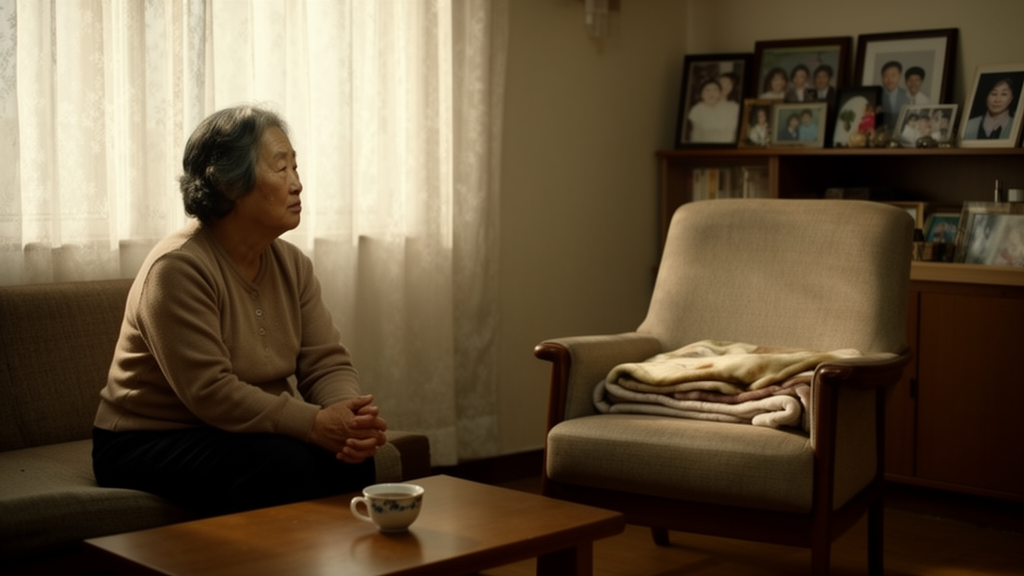
Unmet long-term care needs among community-dwelling older adults in South Korea rose sharply from 20.1 percent in 2014 to 54.7 percent in 2023, even as the country’s universal Long-Term Care Insurance system expanded substantially. That is the central finding of a new open-access study published in the European Journal of Ageing, which analyzed repeated cross-sectional data from the nationally representative National Survey of Older Koreans.
The research focused on adults aged 65 and over who reported at least one limitation in activities of daily living or instrumental activities of daily living. The analytic samples comprised 1,754 individuals in 2014 and 1,648 in 2023. Guided by Andersen’s Behavioral Model of Health Services Use, the researchers employed Blinder–Oaxaca decomposition to quantify how much of the observed change in unmet care needs and family caregiving could be attributed to predisposing, need, and enabling factors, including sociodemographic characteristics, health status, and caregiving arrangements.
The decomposition results showed that 77.9 percent of the increase in unmet long-term care needs was attributable to changes in observable characteristics, with the decline in family caregiving standing out as the dominant factor. Family-provided care fell dramatically over the study period, from 72.7 percent to 36.4 percent of older adults with care limitations.
Notably, only 13.6 percent of that reduction in family care could be explained by shifts in family composition or socioeconomic status. The authors conclude that unmeasured structural changes, such as health beliefs about care, likely played a predominant role in the withdrawal of informal caregiving.
Taken together, the findings indicate that the withdrawal of informal caregiving has outpaced the expansion of formal care services. The study’s authors describe this as an emerging crisis of unmet needs and underscore the urgency of population-level monitoring of unmet long-term care, alongside tiered-universal, preventive benefit packages with coordinated caregiver supports, to keep long-term care systems resilient ahead of demographic tipping points. As repeated cross-sectional rather than longitudinal data, the analysis captures population-level change across survey waves rather than tracking the same individuals over time.
Subject of Research: Trends in unmet long-term care needs and family caregiving among older adults in South Korea
Article Title: De-familialization of care and the emerging crisis of unmet needs among older adults in South Korea
Article References: Song, Y., Yun, S., & Choi, C. (2026). De-familialization of care and the emerging crisis of unmet needs among older adults in South Korea. European Journal of Ageing. https://doi.org/10.1007/s10433-026-00945-6
Image Credits: AI Generated
DOI: 10.1007/s10433-026-00945-6
Keywords: long-term care, South Korea, older adults, unmet care needs, family caregiving, Long-Term Care Insurance, Blinder-Oaxaca decomposition, National Survey of Older Koreans, de-familialization, aging society, care, emerging
News Source: Ophelia Keating. (October 29, 2026). Family Care Retreat Fuels Sharp Rise in Unmet Care Needs Among Older South Koreans. Scienmag.



