


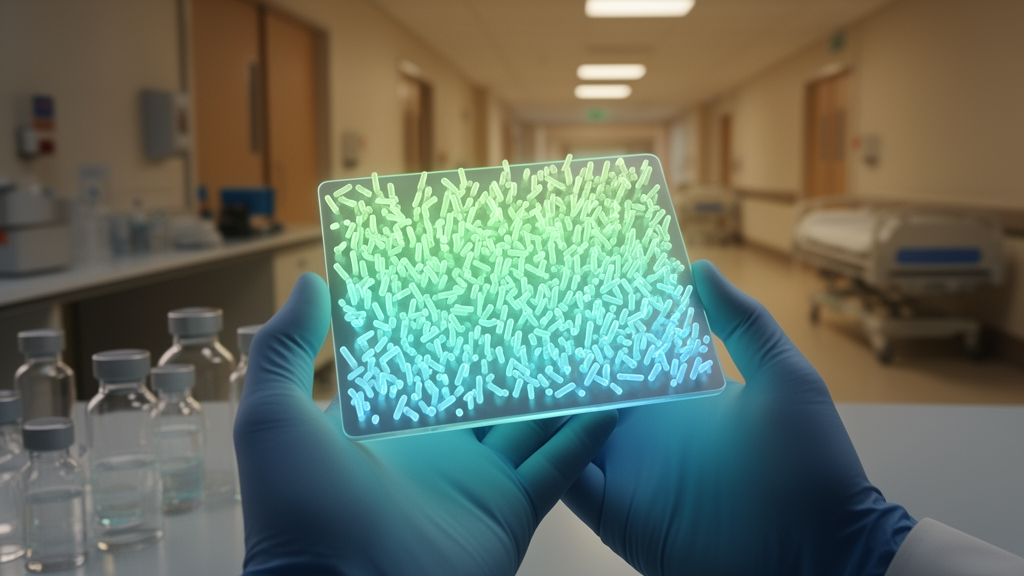
Biosensors built with exotic nanomaterials are delivering astonishing detection limits in laboratories around the world, yet almost none of them are reaching hospital wards or patients’ homes. That is the central tension examined in a new review published in the journal Biosensors and Biomolecular Electronics, which critically analyzes a decade of research on electrochemical, fluorescence, and colorimetric biosensing platforms and asks why so few nanomaterial-enabled devices survive the journey from bench to bedside. The review, authored by Monika Chhillar, Poornima Bhatt, Deepak Kukkar, and Ashok Kumar Yadav, surveys peer-reviewed publications from 2015 to 2025 retrieved through a structured literature search of Web of Science, Scopus, and Google Scholar, focusing on healthcare-related biomarker detection and analytical performance metrics.
The authors frame biosensors as devices that integrate a biorecognition element, such as an enzyme, antibody, aptamer, nucleic acid, peptide, molecularly imprinted polymer, or whole cell, with a transducer that converts biological interactions into measurable signals corresponding to analyte concentration. Advances in nanomaterials including carbon dots, graphene, MXenes, metal-organic frameworks, quantum dots, and noble metal nanoparticles have elevated sensor performance dramatically, the review finds, because these materials offer high surface area, good conductivity, strong fluorescence, and easy biomolecule immobilization. The result is enhanced sensitivity, lower limits of detection, and improved stability in laboratory settings.
Electrochemical biosensors emerge as the most clinically mature modality. They are prized for high sensitivity, rapid response, and compatibility with small electronics, using amperometric, potentiometric, or impedimetric signal transduction. The review cites concrete examples: a copper-mediated electroactive complex for creatinine detection achieved a detection range spanning roughly 1.13 x 10⁻⁴ to 2.26 x 10⁻² grams per liter with a detection limit of 5.66 x 10⁻⁶; an aptamer-based sensor for cardiac troponin I reached a detection limit of 1 x 10⁻⁹ grams per liter using a high-surface-area nanoporous electrode; and a non-enzymatic sensor built from copper-oxidized biochar derived from juniper seeds detected uric acid with a detection limit of 2.14 x 10⁻⁷ grams per liter. Yet the authors repeatedly caution that most reported systems demonstrate excellent analytical sensitivity only under controlled laboratory conditions, while far fewer studies validate performance in complex biological matrices such as serum or whole blood. Electrode fouling, oxidation susceptibility, and batch-to-batch reproducibility remain significant obstacles.
Fluorescence-based biosensors offer superior multiplexing through mechanisms like quantum dot emission, fluorescence quenching, and Forster resonance energy transfer, but they demand costlier optical equipment and suffer from photobleaching, signal drift, and interference from biological autofluorescence. The review highlights a MOF-based fluorescent probe for non-enzymatic glucose detection using dual pyrene ratiometric sensing, a CdTe@CdS quantum dot ratiometric biosensor for lactic acid whose synthesis involves potential toxicity concerns, and an Eu2O3 nanocrystal immunosensor that detected cardiac troponin T in serum at a detection limit of 3.86 x 10⁻⁹ grams per liter but required multiple bio-functionalization steps and sophisticated instrumentation. Although several systems demonstrate picomolar detection limits, the authors note that large-scale clinical validation remains limited, restricting regulatory advancement.
Colorimetric biosensors occupy the opposite end of the accessibility spectrum, offering equipment-free, visually readable detection suited to resource-limited settings, at the cost of lower sensitivity and largely semi-quantitative results. One striking example combines acetylcholinesterase inhibition with the aggregation of citrate-capped silver nanoparticles to detect the organophosphate dichlorvos through a visible color change; integrating convolutional neural network analysis on a smartphone improved accuracy to 97.6 percent and extended the detection range to 1.33 x 10⁻² grams per liter. Gold nanoparticle aptasensors for cardiac troponin I and DNAzyme-amplified assays for the kidney injury biomarker cystatin C round out the colorimetric portfolio. Nanozyme- and nanoparticle-based platforms promise better stability than enzyme-based assays, but sensitivity, reproducibility, and matrix interference problems persist.
The material science driving these advances receives detailed treatment. Metal-organic frameworks contribute extremely high surface area, tunable pore chemistry, and functionalization capacity; an integrated Fe-MOF-glucose oxidase cascade system achieved glucose sensing in human serum with a detection limit near 8.8 x 10⁻⁸ grams per liter, while a folate-functionalized nano-MOF probe detected intracellular microRNA-21 in prostate cancer cells at a detection limit of 7 x 10-11 grams per liter. Carbon dots deliver intense photoluminescence and biocompatibility, powering sensors such as tri-aminoguanidine carbon dots for citrate detection with a 7.7 x 10⁻¹⁰ grams per liter detection limit and rapid 15-minute response. MXenes bring metallic conductivity and hydrophilic surfaces to hybrid systems, including an electrochemical cytosensor for HER-2 positive circulating tumor cells that quantified 102 to 106 cells per liter with a detection limit of 47 cells per milliliter in blood samples, and a photonic crystal fiber surface plasmon resonance sensor coated with gold and Ti3C2TX MXene that achieved wavelength sensitivities above 10,000 nanometers per refractive index unit for breast cancer cell detection. Enzyme-mimicking nanozymes, meanwhile, replicate peroxidase and oxidase activity with greater robustness than natural enzymes, sustaining full activity under harsh conditions and enabling an ultrasensitive nano-ELISPR platform that quantified tumor markers AFP, CEA, and CA125 at a detection limit near 1.5 x 10⁻¹⁴.
Against this laboratory brilliance, the review sets a sobering translational ledger. Regulatory approval through the U.S. Food and Drug Administration or the European Medicines Agency, via pathways such as 510(k), Premarket Approval, and CE Marking, demands analytical validity, clinical performance, reproducibility, and manufacturing consistency. Studies cited in the review report that coefficients of variation for nanostructured sensing platforms can reach 10 to 20 percent, well above the sub-10 percent variation clinical diagnostic standards typically require. Differences in particle size, surface chemistry, and material defects can produce drastic signal variations, and long-term operational stability remains a weak point: many sensors show signal drift from material oxidation, enzymatic denaturation, or surface fouling, and wearable or implantable devices often last only hours to days under physiological conditions.
The contrast with successfully commercialized systems is instructive. Continuous glucose monitors from Dexcom and Abbott’s FreeStyle Libre, along with Abbott’s i-STAT point-of-care platform, are electrochemical enzyme-based biosensors holding FDA and CE approval, validated across numerous clinical sites and optimized for large-scale manufacturing, with demonstrated batch-to-batch reproducibility and integration with digital health ecosystems. By comparison, most MXene-, MOF-, and nanozyme-based research systems are validated only through short-term stability tests, spiked buffer systems, and small sample cohorts, and remain at early technology readiness levels of roughly TRL 2 to 5, lacking scalable manufacturing validation, regulatory alignment, and large-cohort clinical benchmarking. The review also observes that most reported biosensor studies were conducted on spiked samples rather than real patient samples, a major drawback for practical application.
Looking forward, the authors identify artificial intelligence and machine learning as accelerating trends, improving signal processing, pattern recognition, and diagnostic accuracy, while multiplexed platforms that combine electrochemical, optical, and colorimetric modalities in single devices could raise diagnostic confidence for complex diseases. But they close with a clear prescription: progress will require standardized benchmarking, long-term clinical evaluation, reproducibility assessment, scalable manufacturing, and regulatory alignment. Without addressing long-term stability, large-cohort validation, standardization, and real-world usability factors such as device miniaturization, user interface integration, and data sharing, nanomaterial-enabled biosensors risk remaining impressive laboratory demonstrations rather than the clinically deployable diagnostic tools their performance metrics promise.
Subject of Research: Nanomaterial-enabled biosensing platforms and the barriers to their clinical translation in healthcare diagnostics
Article Title: Next-generation biosensing platforms: critical analysis of nanomaterial-enabled strategies and clinical translation
Article References: Chhillar, M., Bhatt, P., Kukkar, D., & Yadav, A. K. (2026). Next-generation biosensing platforms: critical analysis of nanomaterial-enabled strategies and clinical translation. Biosensors and Biomolecular Electronics, 1(1), Article 3. https://doi.org/10.1186/s44510-026-00002-7
Image Credits: AI Generated
DOI: 10.1186/s44510-026-00002-7
Keywords: biosensors, nanomaterials, point-of-care diagnostics, electrochemical biosensors, fluorescence biosensors, colorimetric biosensors, metal-organic frameworks, MXenes, carbon dots, nanozymes, clinical translation, regulatory approval
News Source: Neil Sanderson. (October 29, 2026). Nanomaterial Biosensors Show Lab Brilliance but Struggle to Reach the Clinic. Scienmag.



