


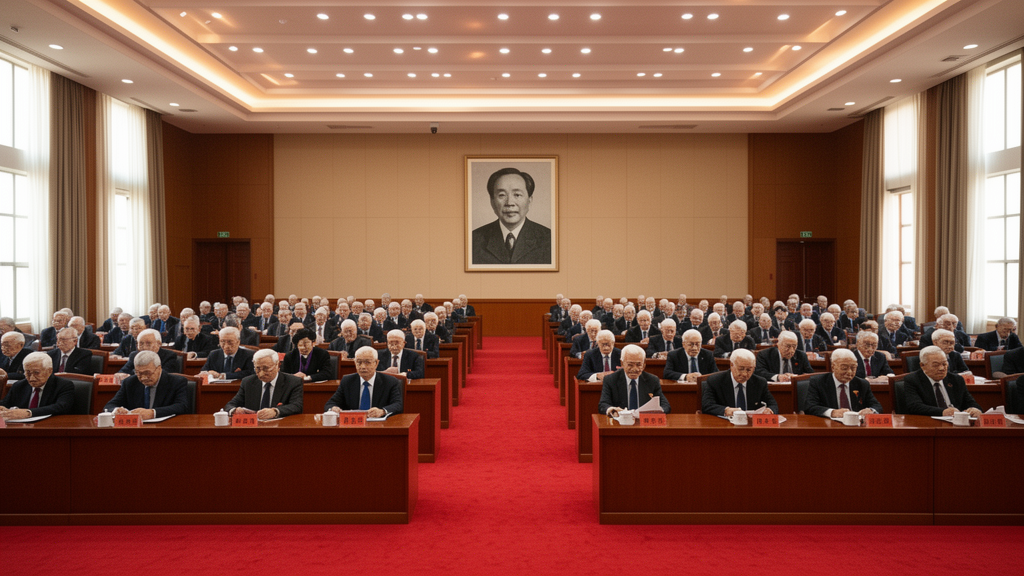
A retrospective study of 284 biomedical academicians listed on the official websites of the Chinese Academy of Sciences (CAS) and the Chinese Academy of Engineering (CAE) as of July 1, 2025 has documented substantial structural imbalances in China’s elite biomedical talent pool, spanning gender, geography, age and career trajectories. The researchers drew on publicly available data covering demographics, educational background, mentorship and institutional affiliations, and used descriptive statistics, hypothesis testing and multiple linear regression to characterize the distribution of top-tier talent and the factors influencing age at election.
The analysis found that the average age at election for CAS biomedical academicians was significantly lower than that for CAE academicians (p < 0.001). Women made up only 12.68% of the cohort, accounting for 36 of the 284 academicians. The study also identified significant geographical clustering in the birthplaces and upbringing regions of the academicians, indicating that elite biomedical talent in China is concentrated in particular regions rather than evenly distributed across the country.
Education and mentorship emerged as important factors in the timing of election. Univariate analysis showed that academicians holding overseas doctoral degrees, or who had been supervised by academicians, were elected at younger ages. However, after adjustment for confounders in multiple linear regression, holding an overseas doctoral degree was not independently associated with age at election (β = −0.109, p = 0.071). In contrast, highest degree attainment and having been supervised by an academician remained statistically significant predictors of earlier election, suggesting that domestic mentorship networks and advanced degree attainment play a more robust role than foreign training alone.
The study also revealed an employment imbalance, with over half of the academicians employed by universities, and an uneven ratio between Basic Medical Sciences and Clinical Medicine talent.
Concluding that the cohort exhibits substantial structural imbalances across gender, geography, age and academic career trajectories, the researchers framed their findings within the WHO global health workforce governance framework. They proposed governance insights across three dimensions: national top-level policy design, institutional platform development, and early-career talent cultivation. The authors note that large-sample empirical research on career trajectories and structural disparities among China’s elite biomedical academics has remained limited, constraining evidence-based talent policy refinement, and they state that these findings may inform future policy research and empirical evaluation. As a retrospective study based on publicly available data for a single national cohort, the analysis describes the characteristics of this group as of mid-2025 and does not establish causal effects.
Subject of Research: Structural imbalances among Chinese biomedical academicians and their policy implications
Article Title: Characteristics and structural imbalances of biomedical academicians in China: policy implications for the governance of leading medical talents
Article References: Liu, R., Huang, D. F., Huang, T., & Hu, T. L. (2026). Characteristics and structural imbalances of biomedical academicians in China: policy implications for the governance of leading medical talents. Frontiers in Public Health, 14, Article 1944514. https://doi.org/10.3389/fpubh.2026.1944514
Image Credits: AI Generated
DOI: 10.3389/fpubh.2026.1944514
Keywords: biomedical academicians, Chinese Academy of Sciences, Chinese Academy of Engineering, gender imbalance, geographical clustering, age at election, mentorship, doctoral degrees, health workforce governance, China, talent policy, clinical medicine
News Source: Ophelia Keating. (October 29, 2026). China’s biomedical academicians show gender, geography and age imbalances, study finds. Scienmag.



