


Bacteria defend themselves against antibiotics in many ways, and one of the most important is simply pumping the drugs back out. A new study of the Escherichia coli transporter YbhFSR, published in Frontiers in Microbiology, shows that within a single efflux pump, the two transmembrane subunits that span the bacterial membrane do not contribute equally to tetracycline export. When the gene for one of them, ybhR, was deleted, E. coli cells became markedly more vulnerable to four tetracycline-class antibiotics. Deleting the other, ybhS, changed essentially nothing. The finding extends a design principle previously documented mainly in Gram-positive bacteria to a Gram-negative transporter with an unusual fused architecture, and it offers a streamlined experimental model for studying how specialization emerges among the parts of a molecular machine.
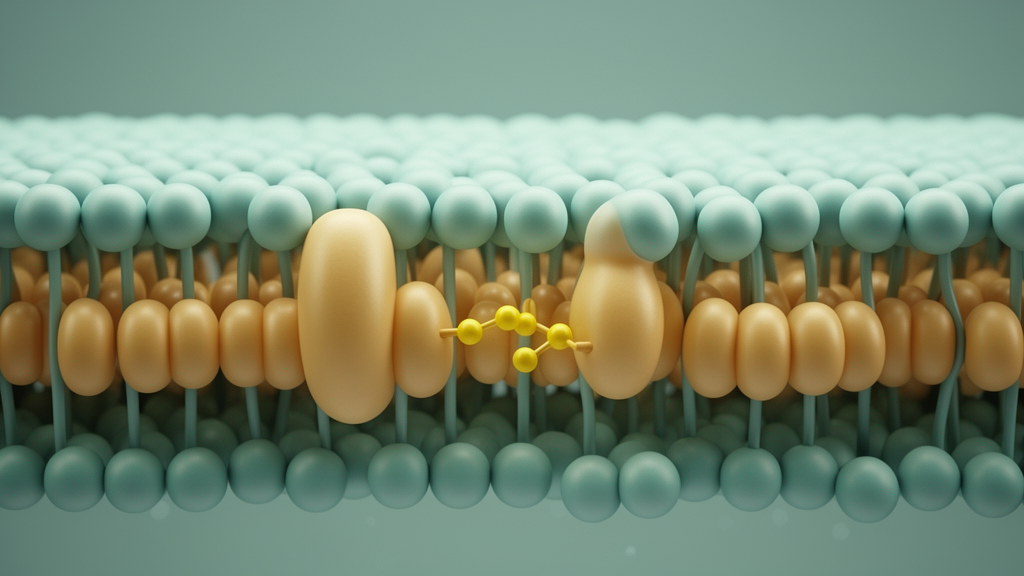
ABC, or ATP-binding cassette, transporters form the only class of efflux pumps powered directly by ATP hydrolysis rather than by ion gradients. Their core architecture consists of two nucleotide-binding domains, or NBDs, which burn ATP, and two transmembrane domains, or TMDs, which form the conduit through which substrates leave the cell. The domains communicate through coupling helices at their interface, so that energy released from ATP hydrolysis is transmitted to the substrate-binding pocket to drive coordinated transport. For the YbhFSR pump, encoded by the ybhFSR operon in E. coli K-12, the arrangement is distinctive: both NBDs are fused within a single polypeptide called YbhF, while the two TMDs are built from two separate proteins, YbhS and YbhR. Earlier work by the same group had established that this transporter expels tetracycline, oxytetracycline, chlortetracycline and doxycycline, along with ethidium bromide and Hoechst 33342, and also displays sodium/proton antiport activity, making it a bifunctional transporter.
The central question of the new study was whether YbhS and YbhR play distinct roles during tetracycline efflux, and how the operon responds transcriptionally to tetracycline stress. The researchers constructed a panel of knockout strains using λ-Red homologous recombination: single deletions of ybhF, ybhS and ybhR, a double deletion of ybhSR, and a triple deletion of the entire ybhFSR operon. They then measured transcription by quantitative real-time PCR, antibiotic susceptibility by broth microdilution and CLSI-standard disk diffusion, and real-time tetracycline export with a fluorescence assay. Cross-species sequence alignments across seven genera of Enterobacteriaceae rounded out the functional picture with an evolutionary one.
The transcriptional results were unambiguous. Tetracycline triggered dose-dependent upregulation of ybhF, ybhS and ybhR in wild-type cells exposed to concentrations ranging from 0 to 25 micrograms per milliliter. At the highest concentration, ybhR showed the strongest induction, roughly 11.5-fold, followed by ybhS at about 10.4-fold, ybhF at 5.8-fold and acrB at 4.5-fold, with all differences highly significant. Crucially, ybhR transcripts were consistently more abundant than ybhS transcripts at every tested concentration, revealing unequal activation of two genes sitting within the same operon. The asymmetry widened dramatically when the experiment was repeated in a strain lacking acrB, which encodes the main RND-family multidrug efflux pump of E. coli and the principal determinant of intrinsic tetracycline resistance. In that background, at 8 micrograms per milliliter of tetracycline, ybhR induction reached 23.8-fold while ybhS reached only 10.2-fold, indicating that loss of the major pump amplifies recruitment of this secondary system, with the stronger response concentrated on ybhR.
Susceptibility testing sharpened the functional contrast. Disk diffusion showed that deleting ybhF increased inhibition zones, while the ΔybhSR and ΔybhFSR mutants were clearly more susceptible than the wild type, but the single ΔybhS and ΔybhR mutants looked nearly identical to each other and to wild type under that assay. Broth microdilution resolved what disk diffusion could not. The ΔybhR mutant showed minimum inhibitory concentrations two-fold lower than wild type for tetracycline and oxytetracycline, and dramatically lower for chlortetracycline, reduced 64-fold, and doxycycline, reduced 32-fold. The ΔybhS mutant, by contrast, showed no MIC change for any tetracycline tested. The double and triple mutants were indistinguishable from the ΔybhR single mutant, meaning that removing ybhS on top of ybhR added nothing. Testing against roughly twenty unrelated antimicrobials revealed no differences between any ybh mutant and wild type, pointing to narrow substrate specificity for the pump.
A fluorescence-based efflux assay provided direct kinetic evidence. Cells loaded with tetracycline at equal density were monitored for export of the fluorescent antibiotic over 30 minutes. The ΔybhS mutant tracked the wild-type profile almost exactly, with only a slight deviation after 20 minutes. The ΔybhR mutant, however, showed a 24.2 percent reduction in extracellular fluorescence signal at 25 minutes relative to wild type, and the ΔybhSR and ΔybhFSR strains displayed efflux defects similar to the ΔybhR single mutant. Together with the MIC data, this establishes YbhR as the core transmembrane subunit supporting tetracycline export, while YbhS appears dispensable for efflux under the conditions tested.
The evolutionary analysis added a suggestive but statistically cautious layer. Comparing YbhR and YbhS orthologs across seven Enterobacteriaceae genera, the researchers found that YbhR had higher average sequence identity than YbhS, 96.20 percent versus 93.89 percent, and was more conserved in five of the seven genera, with Citrobacter showing the largest gap at 3.29 percentage points. Serratia was the sole exception, with YbhS more conserved there by 6.23 percentage points. Yet the difference did not reach statistical significance: a Wilcoxon signed-rank test excluding the tie gave p = 0.0625, and a paired t-test across all seven genera gave p = 0.75. The authors are careful on this point, noting that at this sample size both tests have limited power and that non-significant differences should not be read as evidence of equivalence. They report the direction of the effect without claiming significance, and treat the Serratia anomaly as an open question that cannot, from this dataset alone, distinguish relaxed purifying selection from a shift in substrate range or gene retention.
Sequence composition offered a possible structural rationale for the asymmetry, framed explicitly as hypothesis. Within transmembrane helices, tryptophan accounted for a 2.1-fold higher fraction of aromatic residues in YbhR than in YbhS, whereas phenylalanine dominated in YbhS, making up 72.2 percent of its transmembrane aromatic residues. In non-transmembrane regions, YbhR was enriched in tyrosine and tryptophan relative to YbhS, 11.81 percent versus 7.95 percent. Because tryptophan mediates stronger pi-pi stacking with aromatic substrates than phenylalanine, the authors speculate that tryptophan enrichment in YbhR could enhance tetracycline affinity, and that enriched aromatic residues in its non-transmembrane segments, including coupling helices, might form an allosteric signal-receiving interface. Both ideas remain to be tested directly by binding assays and mutagenesis. Meanwhile, the two subunits share only 24.9 percent full-length identity, a level comparable to the divergent TMD pairs of the well-studied Gram-positive heterodimers BmrCD and TM287/288, where cryo-electron microscopy has shown the leading subunit forming the substrate pocket while the partner mainly stabilizes the scaffold.
The study’s broader significance lies in its architecture. Functional asymmetry between transmembrane subunits had been established for heterodimeric ABC pumps in Gram-positive bacteria, whose NBDs sit on separate subunits and often include a degenerate ATP-binding site. YbhFSR is the first Gram-negative transporter of this kind shown in vivo to exhibit TMD functional asymmetry even though its NBD asymmetry is hard-wired into a single fused polypeptide: NBD1 retains canonical catalytic motifs while NBD2 carries substitutions in its LSGGQ motif that likely render it catalytically degenerate. That TMD specialization can arise independently of NBD organization suggests that divergence between transmembrane paralogs alone can drive functional asymmetry. The authors also stress the limits of their evidence. All functional interpretations rest on cellular deletion phenotypes, with no biochemical or structural validation; complemented strains could not be generated, so non-specific deletion effects cannot be formally excluded; the gapA reference gene for qRT-PCR was not systematically validated under tetracycline stress; and the evolutionary sampling was restricted to Enterobacteriaceae. A DNA pull-down experiment identified four stress-responsive regulators enriched at the ybhF promoter, ArcA, OmpR, CpxR and PhoP, but none has yet been confirmed as a direct regulator. Cryo-EM analysis of the full complex, combined with systematic mutagenesis, will be needed to visualize how the fused NBDs communicate with their unequal membrane partners, and whether YbhR, as the authors suggest, could become a candidate target for small-molecule inhibitors of YbhFSR-mediated tetracycline resistance.
Subject of Research: Functional asymmetry between the transmembrane subunits YbhS and YbhR of the tetracycline-inducible E. coli ABC transporter YbhFSR
Article Title: Functional asymmetry of the transmembrane subunits YbhS and YbhR in the tetracycline-inducible ABC transporter YbhFSR
Article References: Feng, Z., Yang, C., Wen, H., Wu, M., Feng, S., Zheng, W., & Liu, D. (2026). Functional asymmetry of the transmembrane subunits YbhS and YbhR in the tetracycline-inducible ABC transporter YbhFSR. Frontiers in Microbiology, 17, Article 1959624. https://doi.org/10.3389/fmicb.2026.1959624
Image Credits: AI Generated
DOI: 10.3389/fmicb.2026.1959624
Keywords: ABC transporter, Escherichia coli, YbhFSR, tetracycline resistance, efflux pump, functional asymmetry, transmembrane domains, antimicrobial resistance, qRT-PCR, Enterobacteriaceae, AcrAB-TolC, microbiology
News Source: Drew Townsend. (October 29, 2026). One Subunit Does the Heavy Lifting in a Bacterial Tetracycline Pump. Scienmag.



