


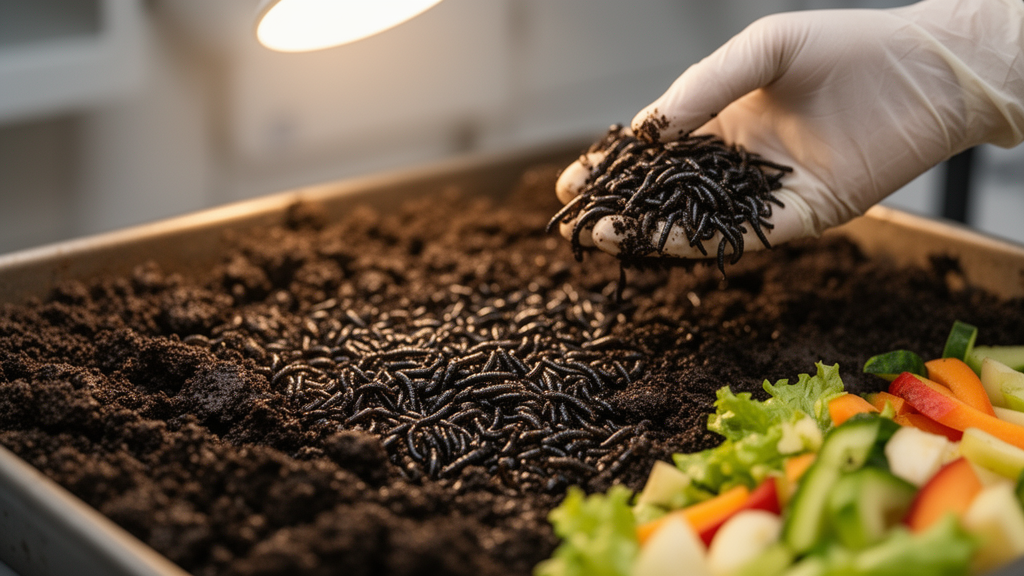
A new multi-omics study published in Environmental Microbiome on 8 October 2026 examined one such event, combining bacterial 16S rRNA gene amplicon sequencing, fungal ITS amplicon sequencing, transcriptomics and metabolomics to compare three larval phenotypes: dead larvae from an affected rearing container, surviving larvae from that same container, and apparently healthy larvae from an unaffected container.
The gut microbial profiles of the three groups diverged sharply. The apparently healthy larvae harboured gut communities enriched in taxa the authors associate with gut homeostasis, including Enterococcus at 20.21 percent relative abundance and Corynebacterium at 17.04 percent. The dead larvae, by contrast, showed higher relative abundances of opportunistic taxa, with Morganella reaching 25.30 percent and Proteus 8.31 percent. Fungal profiling added another layer: the yeast genus Issatchenkia was markedly enriched in both the dead larvae and the surviving larvae from the affected container, suggesting that fungal community shifts accompanied the health divergence as well.
The host-side molecular data indicated that the health differences were mirrored inside the larvae themselves. Transcriptomic and metabolomic analyses pointed to altered activity in Toll and Imd immune signaling pathways, glutathione metabolism, peroxisome-related processes, ABC transporters and amino-acid metabolic pathways.
The researchers also examined frass, the larval excrement that is a key output of manure bioconversion systems. Frass from the healthy container was dominated by Corynebacterium-related taxa, whereas frass from the affected container exhibited a distinct bacterial and fungal community structure. One frass composite was collected per box, representing the affected box containing both dead and surviving larvae and the unaffected box with healthy larvae, and the two composites differed in their microbial compositions.
The authors are explicit about the limits of their design. The event was observational, and only one affected and one unaffected container were sampled, so the larval pools and frass aliquots do not provide independent box replication or a reliable box-level power estimate. Within this single observed event, bacterial and fungal profiles varied with the sampled larval phenotypes and the two box-level frass composites, but causality and any effects on conversion efficiency require controlled, container-replicated validation. The percentages reported are relative abundances from amplicon sequencing within this event, not measures of pathogen loads or conversion performance.
Even with those caveats, the study offers a multi-omics basis for microbial monitoring and health management in black soldier fly-based manure valorization systems. If validated in replicated experiments, tracking gut taxa such as Enterococcus, Corynebacterium, Morganella and Proteus, alongside fungal markers like Issatchenkia and host immune and metabolic signatures, could help operators detect health divergence early and manage frass microbial quality in industrial-scale bioconversion of pig manure.
Subject of Research: Gut microbiota, host molecular responses and frass microbial quality during pig manure bioconversion by black soldier fly larvae
Article Title: Multi-omics profiling links gut microbiota dysbiosis to larval health divergence and frass microbial quality in black soldier fly-based pig manure valorization
Article References: Su, H., Zhang, B., Shi, J., Dai, S., He, S., Sun, D., Yang, R., Hu, Q., Zhao, Z., & Wu, D. (2026). Multi-omics profiling links gut microbiota dysbiosis to larval health divergence and frass microbial quality in black soldier fly-based pig manure valorization. Environmental Microbiome. https://doi.org/10.1186/s40793-026-00974-9
Image Credits: AI Generated
DOI: 10.1186/s40793-026-00974-9
Keywords: black soldier fly larvae, pig manure, gut microbiota, dysbiosis, multi-omics, frass, 16S rRNA sequencing, transcriptomics, metabolomics, waste valorization, insect immunity, microbial monitoring
News Source: Morgan Morrow. (October 29, 2026). Gut Microbiota Imbalance Tied to Larval Health in Black Soldier Fly Pig Manure Recycling. Scienmag.



