Credit: University of Calgary
Many people associate the word "bacteria" with something dirty and disgusting. Dr. Pere Santamaria disagrees. Called the microbiome, the bacteria in our bodies have all kinds of positive effects on our health, Santamaria says. "The bacteria we have in our gut actually have many beneficial functions. They help in our digestion, prevent infection by pathogens and educate our immune system on what to fight." Now, a new function of a protein in the gut microbiome reveals potential impacts for those who suffer from inflammatory bowel disease (IBD).
Published last week in Cell, a study by Santamaria and Kathy McCoy, PhD, from the University of Calgary's Cumming School of Medicine (CSM) reveals a new mechanism in the gut microbiome that regulates pro- and anti-inflammatory cells. "We found that a protein expressed by gut bacteria called Bacteroides works to prevent IBD by rapidly recruiting white blood cells to kill a cell of the immune system that is responsible for orchestrating IBD," says McCoy. "We think that this mechanism is likely involved in preventing most people from developing IBD."
However, there is a flipside to the protein's call for help. "In some people, the white blood cells overreact to the presence of the IBD bacteria. This is what causes problems like IBD — it's not the bacteria itself, but the immune system's severe reaction triggered by the protein. These same overstimulated white blood cells are also the cells that cause other autoimmune disorders like diabetes," says Santamaria. "This discovery demonstrates the effect the gut microbiome has on the immune system and unearths a novel mechanism via which changes in the gut microbiome can increase the risk of autoimmune disorders. While we looked specifically at IBD, it is likely there are many proteins in the gut that contribute to the development of other autoimmune disorders via similar mechanisms."
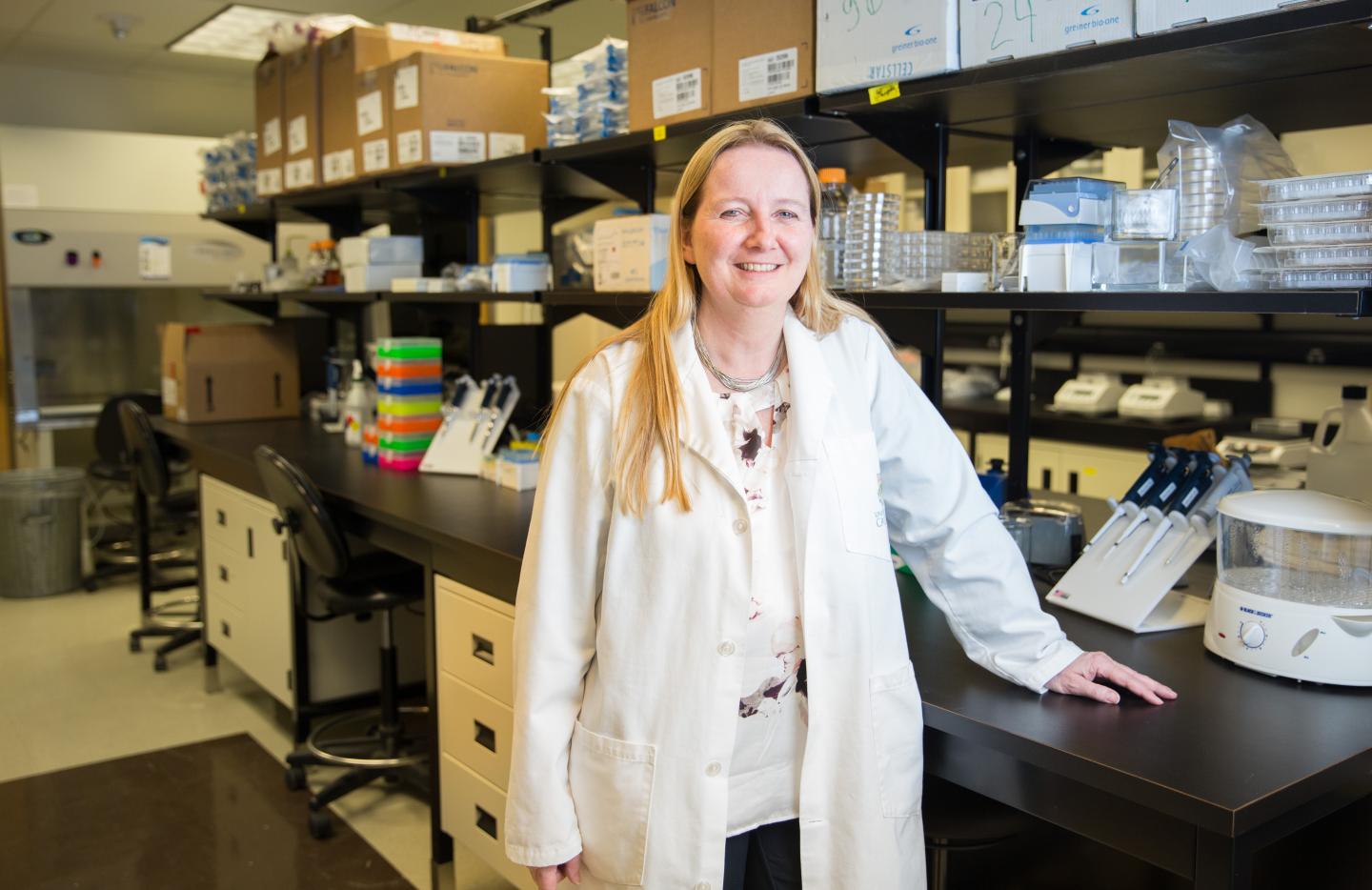
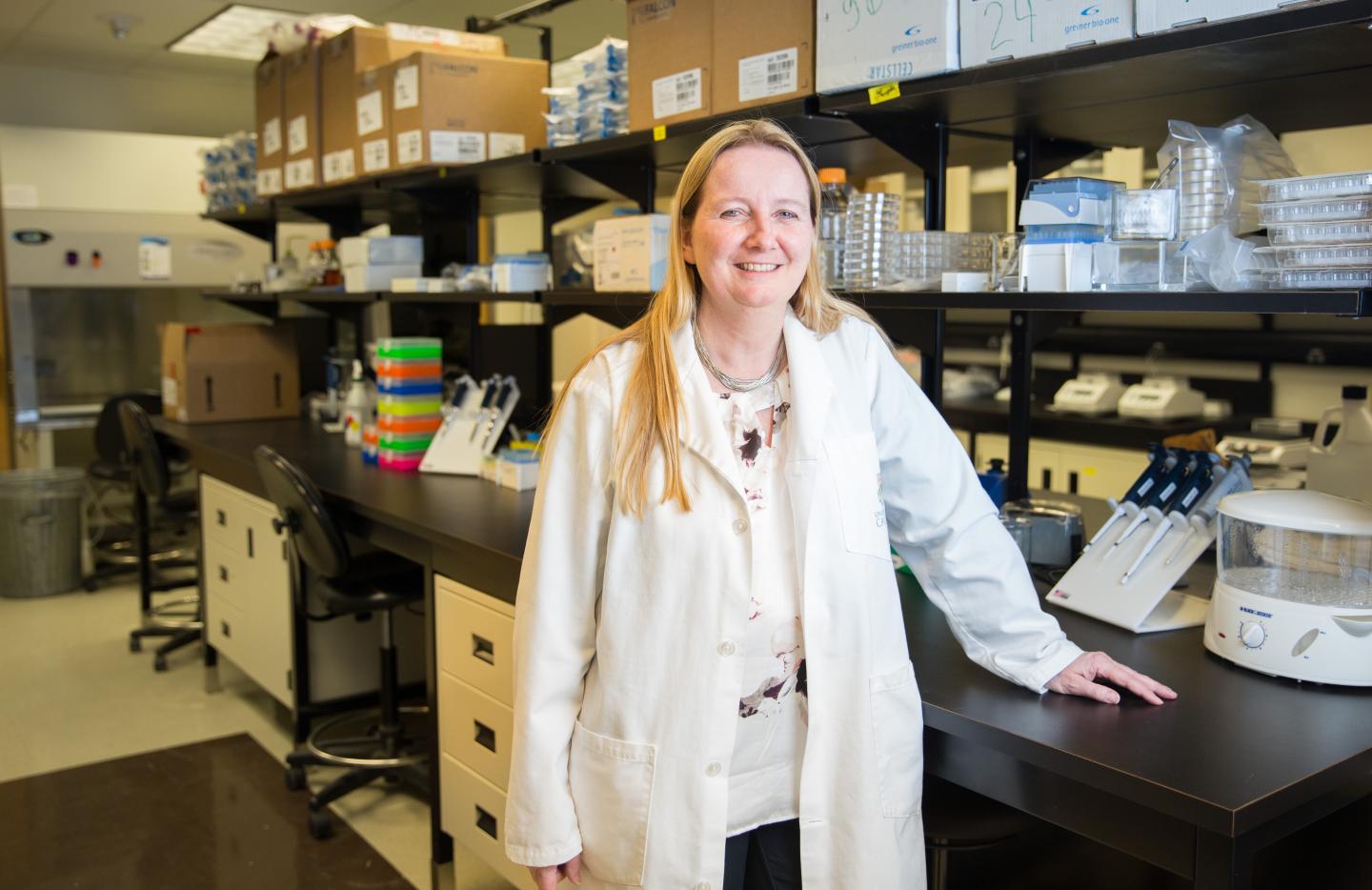
Research into the gut microbiome requires the isolation of a single bacterium in animal models in order to rule out other environmental factors. "It was germ-free mice that first began our research collaboration," says McCoy. Prior to joining UCalgary, McCoy was working with germ-free mice at the University of Bern, Switzerland. "Dr. Santamaria sent me his mouse strains to make them germ-free and then we were able to add back single microbial species that did or did not express the protein in the gut to investigate their effect." Six years later, the pair are still working together and looking ahead to the future impacts of their discoveries.
While more research is necessary, Santamaria and McCoy are optimistic that new therapies will be developed that harness the power of the gut microbiome. The new Western Canadian Microbiome Center (WCMC)'s germ-free facility, opening in November 2017 at the CSM, will provide the perfect space to investigate gut bacteria. "We will be able to study specific gut microbiomes without other environmental variables to consider," says McCoy, who is the director of the WCMC. "This will help us further this research, as well as complete many other studies into the effects of the microbiome."
###
Pere Santamaria, MD, PhD, is a professor in the Department of Microbiology, Immunology and Infectious Diseases at the Cumming School of Medicine. He is a member of the Snyder Institute of Chronic Diseases and the Hotchkiss Brain Institute.
Kathy McCoy, PhD, is a professor in the Department of Physiology and Pharmacology at the Cumming School of Medicine. She is a member of the Snyder Institute of Chronic Diseases.
Media Contact
Genevieve Juillet
[email protected]
403-220-5048
@UCalgary
http://www.ucalgary.ca
Original Source
https://ucalgary.ca/utoday/issue/2017-10-23/study-reveals-connection-between-microbiome-and-autoimmune-disorders http://dx.doi.org/10.1016/j.cell.2017.09.022