


Acute respiratory distress syndrome has long been treated as a single clinical entity, defined by acute hypoxemia, bilateral infiltrates and non-cardiogenic pulmonary edema. A new narrative review published in Critical Care argues that this uniform view obscures the biology that matters most when the trigger is pneumonia, the most frequent precipitating cause of the syndrome. Written by Raffaele Merola, Viola Lomonaco, Pedro Leme Silva and Patricia Rieken Macedo Rocco, the review integrates experimental, translational and clinical evidence to make the case that pneumonia-driven ARDS behaves as a biologically coherent, infection-driven context of respiratory failure, one in which ongoing host–pathogen interactions, sustained immune activation and marked spatial heterogeneity of the lung shape both physiology and response to therapy.
The authors begin from a familiar clinical frustration: despite advances in supportive care and the widespread adoption of lung-protective ventilation, ARDS precipitated by pneumonia remains associated with high mortality, prolonged mechanical ventilation and long-term functional impairment. A persistent limitation of current intensive care practice, they argue, is the uniform application of management strategies to biologically heterogeneous forms of the syndrome. Unlike sterile causes of lung injury, pneumonia creates a sustained biological context characterized by ongoing pathogen burden, persistent innate immune activation, endothelial dysfunction and pronounced regional variability in aeration and perfusion. Conventional syndromic definitions capture the clinical features but do not fully reflect this underlying complexity or its therapeutic implications.
The review traces how a focal lung infection progresses to diffuse alveolar injury. Microbial virulence, inoculum size and replication kinetics interact with host immune competence, genetic predisposition and comorbidities to determine the intensity and spatial distribution of early damage. Host factors such as advanced age, chronic lung disease, metabolic dysfunction and immunosuppression impair pathogen clearance and inflammatory control, and pre-existing epithelial or endothelial vulnerability lowers the threshold for progression from localized infection to widespread injury. Bacterial, viral and fungal pneumonias converge on alveolar–capillary barrier disruption but do so through distinct mechanisms: bacterial disease involves pattern-recognition receptor activation, neutrophil recruitment, cytokine amplification, protease release and neutrophil extracellular trap formation; viral pneumonia often reflects direct epithelial cytotoxicity and maladaptive interferon signaling; fungal infection, particularly in immunocompromised hosts, may progress through angioinvasion, endothelial injury and microvascular thrombosis.
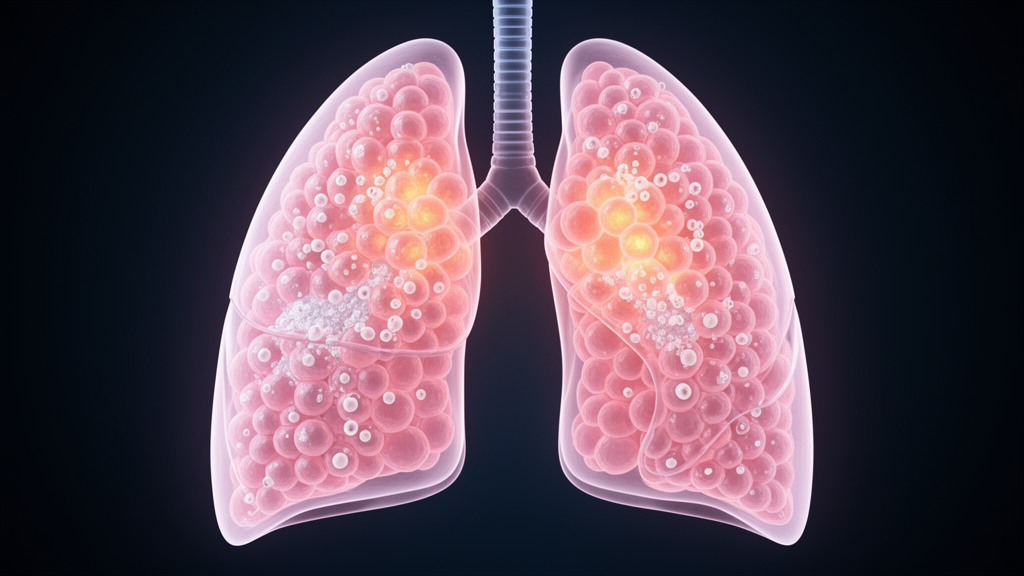
From the earliest stages, pneumonia produces spatial heterogeneity, with dense consolidation sitting adjacent to relatively preserved lung units. This mechanical asymmetry concentrates regional stress during ventilation, predisposing aerated units to overdistension while consolidated regions remain poorly recruitable. Disruption of the alveolar–capillary barrier then converts focal pneumonia into diffuse permeability edema, driven by combined epithelial and endothelial injury with dysregulated innate immunity. Endothelial activation promotes leukocyte adhesion, microvascular thrombosis and impaired hypoxic vasoconstriction, worsening ventilation–perfusion mismatch, while neutrophils amplify injury through protease release, reactive oxygen species and neutrophil extracellular traps. The resulting protein-rich alveolar edema dilutes and inactivates surfactant, increasing surface tension and promoting alveolar collapse, particularly in dependent regions, which reduces compliance and accelerates hypoxemia and respiratory failure.
A central theme of the review is ventilatory inefficiency that extends beyond hypoxemia. Alveolar consolidation, microvascular injury and mechanical heterogeneity increase both intrapulmonary shunt and physiological dead space, limiting carbon dioxide clearance. Endothelial inflammation, capillary derecruitment and thrombosis reduce perfusion to ventilated units, while positive-pressure ventilation preferentially distends aerated regions adjacent to consolidation, further disrupting matching of ventilation and perfusion. Escalating minute ventilation to correct hypercapnia may worsen regional overdistension without achieving meaningful carbon dioxide clearance, a scenario in which the authors suggest ultra-protective ventilation with extracorporeal carbon dioxide removal may warrant consideration. Mechanical ventilation, they emphasize, interacts bidirectionally with the inflammatory milieu: regional overdistension and cyclic alveolar collapse activate mechanotransduction pathways that amplify inflammatory signaling and propagate ventilator-induced lung injury in already heterogeneous lungs.
The injury does not remain confined to the chest. The lung acts as both injury site and source of inflammatory mediators, enabling organ crosstalk that the review maps across systems. Systemic inflammation increases vascular permeability, contributing to myocardial edema, impaired contractility, arrhythmias and circulatory failure, while positive-pressure ventilation further affects right ventricular function. Renal involvement ranges from proteinuria to acute kidney injury mediated by immune-driven microvascular dysfunction and hypoperfusion. In the central nervous system, systemic inflammation disrupts the blood–brain barrier, increasing susceptibility to cerebrovascular events and contributing to long-term cognitive and neurological impairment. Across organs, endothelial and microvascular dysfunction dominate, and sepsis frequently complicates pneumonia-driven ARDS, amplifying both pulmonary and systemic injury.
Perhaps the most consequential section addresses biological subphenotypes. Latent class and clustering analyses consistently identify two main profiles in ARDS: hyperinflammatory and hypoinflammatory. The hyperinflammatory state is characterized by elevated circulating mediators, greater vasopressor use, higher sepsis rates, increased mortality and fewer ventilator-free days, whereas the hypoinflammatory profile shows lower inflammatory burden and more favorable trajectories. Pneumonia-driven ARDS, with its persistent pathogen-associated molecular pattern signaling and often ongoing microbial replication, is frequently represented within hyperinflammatory, endothelial-injury–predominant subphenotypes associated with greater systemic involvement and worse outcomes. These states are dynamic and may shift with pathogen clearance, secondary infection or treatment, supporting longitudinal rather than one-off assessment. Transcriptomic analyses show enrichment of innate immune, interferon and neutrophil-related pathways in hyperinflammatory states, while hypoinflammatory profiles display adaptive immune and reparative signatures.
These subphenotypes carry therapeutic weight. Differential responses to ventilatory strategies, fluid management and immunomodulatory therapies have been reported, with hyperinflammatory patients more likely to derive greater benefit from higher positive end-expiratory pressure, restrictive fluid strategies and corticosteroids. In pneumonia-driven ARDS, these effects are further modulated by pathogen burden, timing of antimicrobial therapy and host immune status. The review is careful, however, to distinguish evidence tiers. Lung-protective ventilation remains fundamental, with tidal volumes of approximately 6 milliliters per kilogram of predicted body weight and driving pressures maintained below 15 centimeters of water when feasible, yet optimal PEEP titration in pneumonia-driven ARDS rests largely on physiological rationale and post hoc analyses rather than robust prospective evidence. Recruitment maneuvers have shown inconsistent benefit, and prolonged high-PEEP strategies have in some studies increased mortality, so their use should be limited to carefully selected patients.
Prone positioning receives particular attention. It improves ventilation–perfusion matching, redistributes mechanical load and enhances oxygenation despite focal consolidation, and randomized trials support early application, ideally within 36 hours, in severe ARDS. The LIVE study suggested a potentially greater benefit in patients with a focal, predominantly dorsal pattern of lung involvement, a phenotype in which pneumonia is likely a major driver. The authors candidly note, though, that a substantial proportion of LIVE patients were subsequently considered misclassified with respect to ARDS morphology, highlighting the limits of bedside phenotype assignment without systematic imaging. On corticosteroids, the review advocates individualization: they may attenuate excessive inflammation and potentially mitigate fibroproliferative progression, but in bacterial pneumonia with uncontrolled infection or in immunocompromised hosts, early or indiscriminate immunosuppression may impair pathogen clearance and increase secondary infections, with potential harms including hyperglycemia, neuromuscular weakness, delirium and superinfection.
The review closes by framing pneumonia-driven ARDS as a dynamic syndrome whose dominant mechanisms, physiological abnormalities and therapeutic priorities evolve over time. Fibroproliferation may begin early in a subset of patients, influenced by pathogen persistence, antimicrobial timing and inflammatory magnitude, and interventions beneficial during the potentially reversible stage, such as higher PEEP, may lose efficacy or become harmful once fibroproliferation predominates. Persistent pathogen detection has been reported in 20 to 30 percent of patients beyond the first week of ARDS, correlating with progressive fibroproliferation and worse outcomes. The authors argue that future trials should adopt etiology-informed designs incorporating pathogen characteristics, microbial burden and host-response profiles, since grouping biologically distinct forms of lung injury under a single diagnosis may dilute treatment effects confined to specific subgroups. As a narrative review, the work synthesizes rather than generates new clinical data, and several of its therapeutic recommendations rest on physiological reasoning and post hoc analyses. Even so, its central message is clear: moving beyond uniform supportive management toward etiology- and subphenotype-informed care may improve treatment selection, optimize organ support and reduce mortality and long-term disability in this most common and most lethal form of ARDS.
Subject of Research: Pneumonia-driven acute respiratory distress syndrome as a biologically distinct, heterogeneous form of lung injury
Article Title: Pneumonia-driven ARDS: systemic injury, biological subphenotypes, and therapeutic implications
Article References: Merola, R., Lomonaco, V., Leme Silva, P., & Rieken Macedo Rocco, P. (2026). Pneumonia-driven ARDS: systemic injury, biological subphenotypes, and therapeutic implications. Critical Care: Sepsis and Severe Infection, 1(1), Article 7. https://doi.org/10.1186/s44541-026-00009-3
Image Credits: AI Generated
DOI: 10.1186/s44541-026-00009-3
Keywords: ARDS, pneumonia, mechanical ventilation, hyperinflammatory subphenotype, alveolar-capillary barrier, ventilator-induced lung injury, prone positioning, corticosteroids, fibroproliferation, biomarkers, critical care, precision medicine
News Source: Kristina Jarvis. (October 29, 2026). Pneumonia-driven ARDS emerges as biologically distinct syndrome demanding tailored care. Scienmag.



