


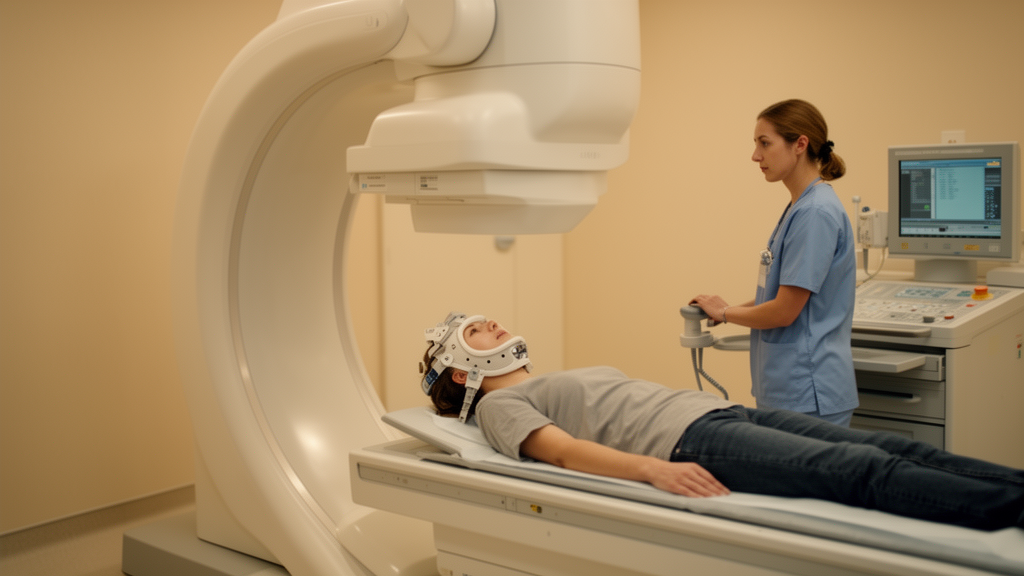
A pooled analysis of twelve studies covering 764 patients with head and neck squamous cell carcinoma finds that the hypofractionated QUAD SHOT radiotherapy regimen was associated with an objective response rate of 58 percent and a disease control rate of 84 percent, according to a systematic review and meta-analysis published in BMC Palliative Care. The work, registered prospectively in PROSPERO, set out to quantify for the first time how much tumor control, symptom relief and toxicity this short-course palliative schedule delivers in a disease where options are often limited.
Head and neck squamous cell carcinoma carries a poor prognosis, particularly when the disease recurs or spreads to distant sites. Many of these patients have already received full-course radiotherapy, and conventional re-irradiation can cause substantial toxicity in previously irradiated or heavily pretreated populations. The QUAD SHOT regimen was developed as a compressed, hypofractionated alternative intended to palliate symptoms with minimal burden, but its efficacy, symptom palliation, quality-of-life outcomes and safety had not previously been comprehensively quantified across studies.
The review followed Preferred Reporting Items for Systematic Reviews and Meta-Analyses guidelines and searched PubMed, Embase and the Cochrane Library for randomized controlled, prospective single-arm and retrospective studies evaluating QUAD SHOT in this cancer type. Studies were eligible if they enrolled at least ten patients and reported efficacy or safety outcomes. The primary outcome was the objective response rate, with secondary outcomes including disease control rate, progression-free survival, overall survival and treatment-related adverse events. Symptom relief and formal quality-of-life outcomes were evaluated in a post hoc extension of the original analysis, and pooled estimates were calculated using random-effects models.
Beyond tumor response, the pooled median progression-free survival was 4.46 months, with a 95 percent confidence interval of 3.09 to 6.44 months, and the pooled median overall survival was 6.88 months, with a 95 percent confidence interval of 5.19 to 9.14 months.
Symptom outcomes formed a central part of the analysis. The pooled proportion of patients experiencing relief of pain was 64 percent, with a 95 percent confidence interval of 57 to 71 percent. Relief of dysphagia or odynophagia, difficulty or pain on swallowing, was reported in a pooled 64 percent of patients, though the confidence interval of 41 to 82 percent was wide, reflecting variation across the contributing studies. Bleeding or haemorrhage was relieved in a pooled 79 percent of patients, with a 95 percent confidence interval of 64 to 88 percent, the narrowest and highest estimate among the symptom endpoints.
Toxicity results were notably low for a radiotherapy regimen. Grade 3 or higher mucositis occurred in a pooled 2 percent of patients, with a 95 percent confidence interval of 1 to 4 percent, and grade 3 or higher dermatitis occurred in a pooled 1 percent, with a 95 percent confidence interval of 1 to 3 percent.
Formal quality-of-life outcomes were reported in only two of the twelve included studies, and because the reporting formats were incompatible, the authors summarized these data descriptively rather than pooling them.
The authors also flagged a caution about their exploratory subgroup analyses. When results were split according to the number of completed treatment cycles, the comparisons were susceptible to treatment-continuation and selection bias, meaning patients who tolerate and complete more cycles may differ systematically from those who stop early. The authors state explicitly that these subgroup findings should not be interpreted causally.
The evidence base itself carries the review’s most important limitation. The pooled estimates were derived predominantly from retrospective studies, and several analyses showed substantial heterogeneity, including the objective response rate, whose 95 percent confidence interval of 45 to 69 percent spans a wide clinical range. The disease control rate, by contrast, showed low heterogeneity at 84 percent, with a 95 percent confidence interval of 80 to 88 percent.
The authors conclude that QUAD SHOT was associated with meaningful tumor control and symptom relief, with low incidences of severe mucositis and dermatitis, but they call for prospective studies incorporating standardized symptom and quality-of-life assessments to confirm these findings and to optimize how the regimen is delivered. Until such studies are completed, the pooled figures offer clinicians and patients a quantified, if imperfect, picture of what this short palliative radiotherapy schedule has achieved across the published literature.
Subject of Research: Pooled efficacy, symptom relief and safety of the QUAD SHOT palliative radiotherapy regimen in head and neck squamous cell carcinoma
Article Title: QUAD SHOT regimen for palliative treatment in head and neck squamous cell carcinoma: a systematic review and meta-analysis
Article References: Luo, Y., Ran, Y., Qin, Y., & Li, Y. (2026). QUAD SHOT regimen for palliative treatment in head and neck squamous cell carcinoma: a systematic review and meta-analysis. BMC Palliative Care. https://doi.org/10.1186/s12904-026-02387-4
Image Credits: AI Generated
DOI: 10.1186/s12904-026-02387-4
Keywords: QUAD SHOT, head and neck squamous cell carcinoma, palliative radiotherapy, systematic review, meta-analysis, hypofractionation, objective response rate, symptom relief, mucositis, quality of life, BMC Palliative Care, re-irradiation
News Source: Nathaniel Bowman. (October 29, 2026). Palliative QUAD SHOT Radiotherapy Shows Tumor Control in Head and Neck Cancer Review. Scienmag.



