


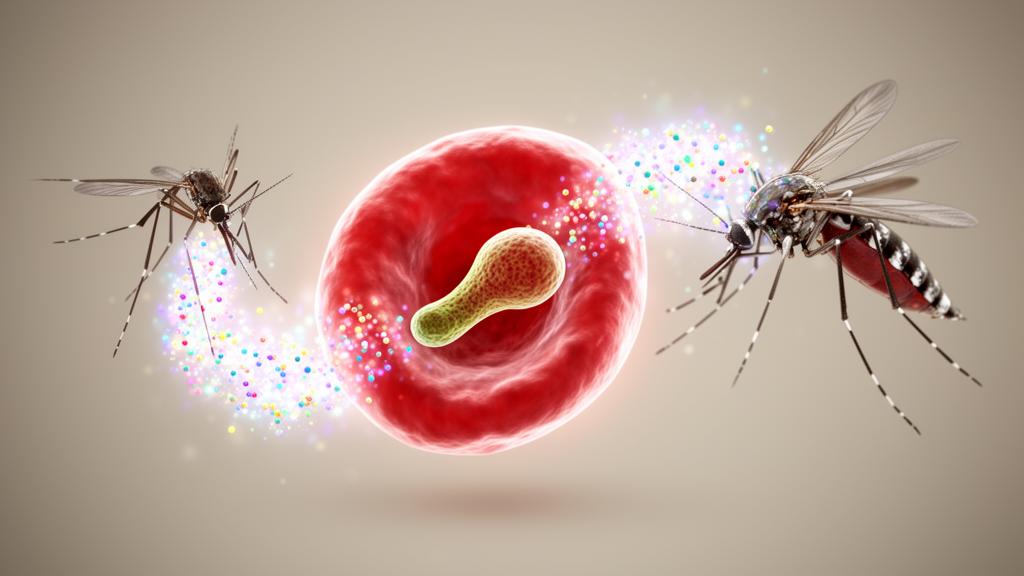
Malaria remains one of the world’s most serious infectious diseases, causing an estimated 282 million cases and 610,000 deaths in 2024, with the burden concentrated in sub-Saharan Africa. While genomic and transcriptomic tools have deepened understanding of host, parasite and vector biology, they do not capture the functional and phenotypic consequences of infection and drug resistance.
The review, published in BMC Infectious Diseases, was conducted in accordance with the PRISMA 2020 guidelines. The researchers searched PubMed, Scopus and Web of Science using combinations of the terms “metabolomics” and “malaria”, “Plasmodium” or “Anopheles”. The search identified 885 records from the three databases; 352 duplicates were removed, leaving 533 records for screening. Seventy articles underwent full-text review, and 51 were included in the final synthesis.
Because of the biological diversity of the included studies, the team stratified the data by target organism — human host, parasite or mosquito vector — and synthesised the findings narratively following the SWiM guidelines. The most commonly used analytical platform across the studies was liquid chromatography–mass spectrometry (LC-MS/MS), followed by other methods.
In the mosquito vector, the review found that both insecticide resistance and Plasmodium infection were associated with altered metabolism of glycerophospholipids, amino acids and purines. The included studies also reported swaps between tryptophan–serotonin metabolism and lipid reproduction pathways, changes that might affect transmission competence — the ability of mosquitoes to acquire and pass on the parasite.
Within the human host, several recurring metabolic patterns were associated with disease severity. These included acidosis, reflected in elevated lactate and hydroxybutyrate; deficiency of arginine and aromatic amino acids; and dysregulated lipid and steroid metabolism. Such signatures have been frequently reported across the studies included in the synthesis, although the review notes that the evidence base remains largely descriptive.
The parasite side of the picture was shaped by drug pressure. Under fast-acting anti-malarial drugs, the review found a conserved disruption of haemoglobin and pyrimidine metabolism in the parasite. In contrast, under sub-lethal or resistance-associated conditions, the studies showed drug-specific rerouting of lipid, carbohydrate and nucleotide pathways — a pattern that could help explain how parasites survive partial drug exposure.
The authors are explicit about the limitations of the field. The results are mainly descriptive, with no causal validation, no standardised analytical platforms and a lack of field-representative sampling. In other words, the metabolic signatures identified so far are associations reported in individual studies rather than validated causal mechanisms, and they have not yet been confirmed across diverse populations and real-world settings.
To move the field forward, the review identifies several priorities: integration of multi-omics data, harmonisation of reporting standards, and longitudinal and cross-population validation. The authors argue that these steps are needed to transform the metabolic signatures catalogued so far into practical clinical and vector-control applications, such as biomarkers for disease severity or tools for monitoring drug resistance and transmission.
By pulling together evidence from human hosts, Plasmodium parasites and Anopheles vectors in a single synthesis, the review offers a consolidated map of how metabolism changes at every stage of malaria biology — and a clear statement of what must still be done before those metabolic fingerprints can be used in the clinic or in the field.
Subject of Research: A systematic review of metabolomic signatures in malaria across human hosts, Plasmodium parasites and Anopheles vectors.
Article Title: Malaria metabolomic signatures across human hosts, Plasmodium parasites, and Anopheles vectors: a systematic evidence synthesis
Article References: Tebamifor, M., Anzaku, D., Olafusi, C., Ogundimu, T., Adebayo, A., & Afolabi, I. (2026). Malaria metabolomic signatures across human hosts, Plasmodium parasites, and Anopheles vectors: a systematic evidence synthesis. BMC Infectious Diseases. https://doi.org/10.1186/s12879-026-14652-1
Image Credits: AI Generated
DOI: 10.1186/s12879-026-14652-1
Keywords: malaria, metabolomics, systematic review, Plasmodium, Anopheles, drug resistance, LC-MS/MS, biomarkers, disease severity, vector control, PRISMA, BMC Infectious Diseases
News Source: Alexandra Wallace. (October 28, 2026). Malaria metabolomics review maps metabolic signatures in hosts, parasites and mosquitoes. Scienmag.



