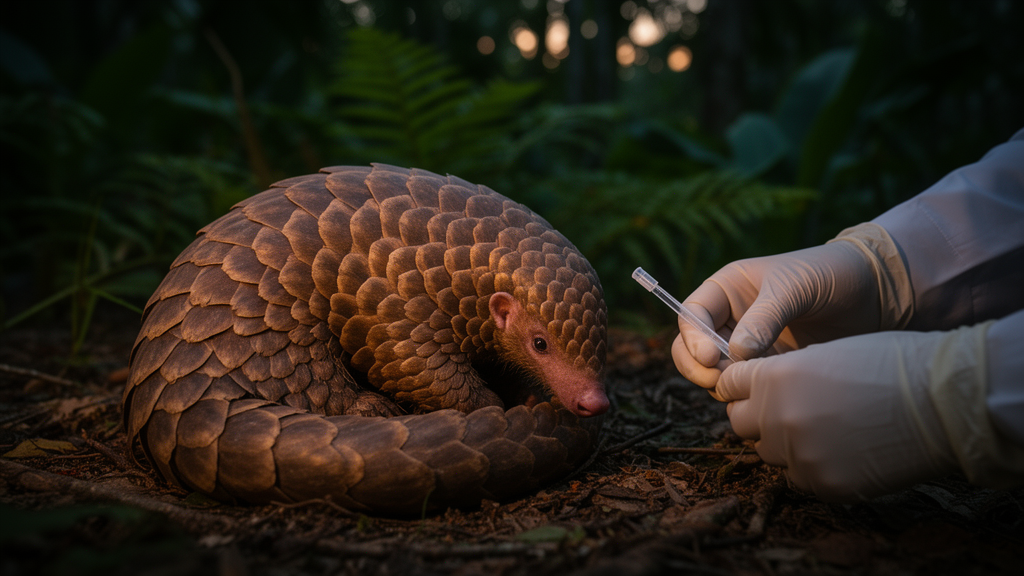
The Philippine pangolin is one of the most imperiled and least studied mammals on Earth, and a new perspective article argues that conservation genetics could be the key to pulling it back from the brink. Published in the journal Discover Conservation, the paper examines how DNA barcoding and genomic analysis have been applied to Manis culionensis, a critically endangered species endemic to the Palawan Biosphere Reserve in the Philippines, and lays out a roadmap for turning molecular data into concrete conservation outcomes. The authors, led by Joey Ace Peralta, argue that genetic tools should not remain confined to the laboratory but should expand to the landscape level, integrate with ecological methods, and be embedded in multi-sectoral collaboration.
Pangolins, often called scaly anteaters, are the only mammals fully covered in protective epidermal scales, and they hold the grim distinction of being the world’s most heavily trafficked mammals. Illegal hunting and trade of their scales and meat persist despite a global ban, and most of the eight recognized species in Asia and Africa are classified as endangered or critically endangered on the IUCN Red List. The Philippine pangolin, which typically weighs between four and seven kilograms, was long considered a subspecies of the Sunda pangolin until Gaubert and Antunes classified it as a distinct species. Its population decline is driven primarily by anthropogenic pressures, compounded by scarce data and limited research attention, and it is also listed under CITES as a species threatened with extinction.
One of the biggest challenges for law enforcement is identifying degraded pangolin specimens seized from traffickers. Traffickers have been reported disguising pangolin meat and scales as legal frozen food cargo shipments, such as frozen fish, meat, and seafood exports, making forensic identification and tracing extremely difficult. Heinrich and colleagues have recommended that countries involved in wildlife seizures establish forensic DNA protocols to ensure reliable species-level identification of confiscated pangolin-derived products, and have emphasized the need to strengthen enforcement in countries that record relatively few seizures despite being implicated in numerous trafficking routes. In the Philippines, where environmental law enforcement is lacking, molecular genetic tools offer an essential means of supporting conservation measures.
To assess how molecular genetics has actually been used in Philippine pangolin research, the authors identified and analyzed four journal articles, obtained from the Web of Science on November 5, 2025, that directly involved the species or comparative analyses including it. Most of these studies focused on pangolins in general rather than on the Philippine pangolin specifically, which the authors say underscores how under-researched the species remains. Two of the papers employed DNA barcoding, the technique of using standardized short DNA sequences for rapid species identification, while two used genomic analysis to clarify species boundaries, assess evolutionary history, and detect cryptic species.
The DNA barcoding studies illustrate both the power and the limits of mitochondrial markers. Kumar and colleagues analyzed fecal samples from four individual Indian pangolins using the routine mitochondrial markers Cyt b, 12S rRNA, and 16S rRNA, demonstrating that non-invasive samples can effectively confirm species identity, though the markers showed limited phylogenetic resolution and different markers recovered different relationships among Asian pangolins. Notably, that paper described the Philippine pangolin as possibly extinct, a stark contrast to its critically endangered IUCN classification. Meanwhile, Luczon and colleagues collected muscle tissue from 85 confiscated, unidentified pangolin specimens, 73 of them frozen-dressed and 12 fresh and decomposing, along with reference samples from two living Philippine pangolins. By PCR-amplifying and sequencing the COI region with VF1 and VR1 primers, they showed the seized samples were either Philippine or Sunda pangolins, demonstrating the value of barcoding in a country where seized specimens are often degraded.
Genomic analysis goes considerably further than species identification. Heighton and colleagues integrated whole-genome sequencing, analyses of thousands of nuclear genes, phylogenetic frameworks, and admixture tests to generate the first complete genomic dataset for all extant pangolin species, verifying that an unknown confiscated pangolin belonged to an undescribed Asian pangolin lineage and was not a hybrid. Remarkably, the team generated a draft genome of the Philippine pangolin itself from a degraded museum skin sample, achieving a coverage depth of approximately 77 times. Building on these resources, Gu and colleagues used 138 pangolin genomes alongside morphometric data to identify a previously unrecognised cryptic species, tentatively named M. mysteria, which would be a ninth pangolin species or fifth Asian pangolin. That cryptic species showed a distinct demographic history, low genetic diversity, high inbreeding, and a high genetic load, signaling elevated extinction risk.
The comparative picture that emerges is one of trade-offs. DNA barcoding with mitochondrial markers is efficient, works even on severely degraded samples, and is less costly and technically demanding than genome-wide analysis, with mini-barcode assays detecting DNA inputs as low as 5 picograms. Microsatellite genotyping, applied directly to investigations of the white-bellied pangolin trade, offers a cost-effective route to tracing geographic sourcing across trafficking networks, and studies suggest microsatellites are often more cost-efficient than SNP-based approaches per sample and per project. Genomic methods, however, resolve forensic questions at higher resolution and enable kinship, phylogenomic, and gene-flow analyses. Advanced tools are already proving their worth: ddRADseq has been used on Sunda pangolins to determine the geographic origin of confiscated animals, a panel of 96 diagnostic SNPs built from 551 geo-referenced white-bellied pangolins has identified poaching hotspots and reconstructed trafficking routes from Africa to Asia, and a gene-capture approach has recovered useful genetic information from museum and trade samples for the three most heavily traded species.
For the Philippine pangolin, the genomic foundation is alarmingly thin. Only a single whole-genome reference is available in public databases, and the GenBank sequence database contains just nine sequencing entries for the species, compared with more than 89,000 entries for the Sunda pangolin as of November 28, 2025. The authors argue this reflects poor documentation of the species’ distribution and taxonomy. Cost and capacity are real constraints: internationally accredited forensic laboratories meeting ISO and ILAC standards are expensive to establish and maintain, genomic analyses carry high costs that restrict sample size and coverage, and conservation practice faces budget constraints and shortages of genetic experts. Still, the presence of the Philippine Genome Center shows the country possesses both Sanger and high-throughput sequencing capability, and low-cost innovations such as direct PCR assays that bypass conventional DNA extraction could simplify workflows, though these approaches still need validation on wildlife forensic samples.
The paper’s central argument is that molecular species identification alone cannot halt population decline or reverse habitat fragmentation. Because the Philippine pangolin is endemic to the fragmented, insular landscape of Palawan, the authors recommend landscape genomics integrated with habitat and demographic data, citing evidence from Chinese pangolins in Taiwan where mountain ranges restricted gene flow, split populations, and drove lower genetic diversity, bottlenecks, and inbreeding. They also call for integrating genetics with adaptive methods such as detection dogs and telemetry to track population trends, and for strengthening multi-sectoral collaboration. A promising precedent exists in the partnership between the University of the Philippines Diliman Institute of Biology and the DENR’s Biodiversity Management Bureau through the Wildlife Forensics and DNA Barcoding Program, though research indicates the agency has relied purely on morphological identification, meaning molecular methods are not yet institutionalized in government practice.
Ultimately, the authors recommend that the Philippine government invest in a standardized national genetic database for the species, including mitochondrial DNA barcodes, microsatellite markers, genome-wide SNP datasets, and geographic population profiles, to guide conservation unit prioritization, species verification, and law enforcement investigations. They are careful to note that conservation genetics is not a silver bullet. But by combining DNA barcoding and genomic approaches with landscape-scale perspectives and the social-ecological contexts of Palawan’s Indigenous peoples and local communities, they contend that conservation strategies can move beyond simply determining the provenance of seized specimens toward a deeper understanding of the species’ dynamics, offering one of the world’s most trafficked mammals a scientifically grounded path to survival.
Subject of Research: Application of conservation genetics, including DNA barcoding and genomic analysis, to research and conservation of the critically endangered Philippine pangolin
Article Title: Integrating conservation genetics into Philippine pangolin (Manis culionensis) research: insights and future directions
Article References: Peralta, J. A., Belachew, A. A., Mariano, B. J. S., Lutap, K. A., & Matias, D. M. S. (2026). Integrating conservation genetics into Philippine pangolin (Manis culionensis) research: insights and future directions. Discover Conservation, 3(1), Article 42. https://doi.org/10.1007/s44353-026-00111-0
Image Credits: AI Generated
DOI: 10.1007/s44353-026-00111-0
Keywords: Philippine pangolin, conservation genetics, DNA barcoding, genomics, wildlife forensics, wildlife trafficking, Palawan, Manis culionensis, CITES, landscape genomics, biodiversity conservation, Philippines
News Source: Juliet Wilcox. (October 28, 2026). Genetic Tools Could Decide the Fate of the Philippine Pangolin. Scienmag.