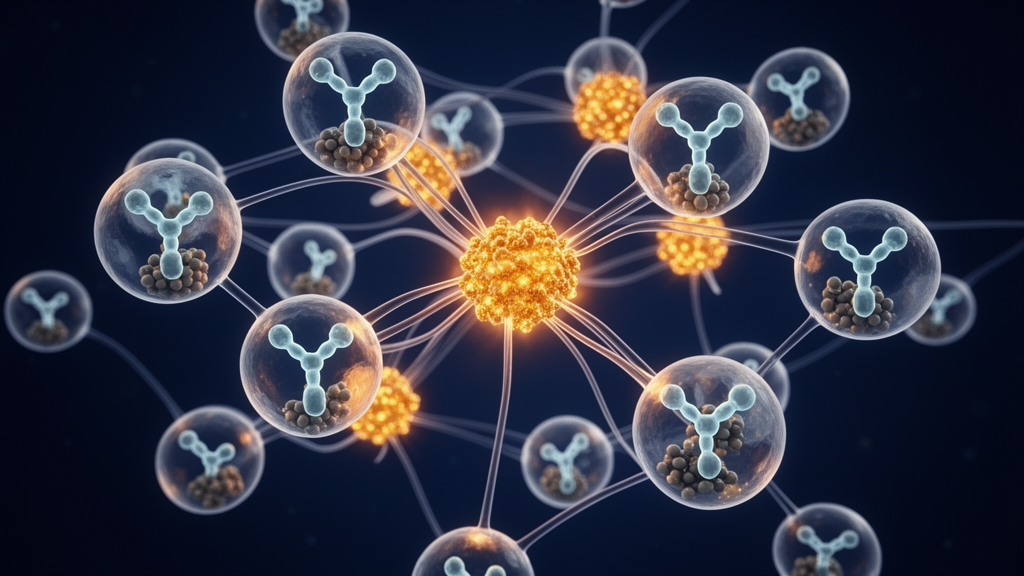
Antibody-drug conjugates (ADCs) have become one of the most closely watched classes of cancer therapeutics, combining the targeting precision of antibodies with the killing power of small-molecule cytotoxic payloads. Yet despite a decade of clinical breakthroughs, the underlying structure of the technology — which targets, payloads, and engineering strategies dominate the field, and how knowledge flows between them — has remained poorly mapped.
Researchers at Shenyang Pharmaceutical University and Southeast University in China retrieved 28,286 individual patents from the IncoPat database, organized into 7,671 patent families based on the Derwent World Patent Index. After a structured, PRISMA-based screening process that removed non-pharmaceutical conjugates, physical mixtures, and irrelevant industrial applications, the final dataset comprised 6,620 highly relevant patent families published before 30 June 2025. Rather than reading thousands of documents manually, the team applied BERTopic, a machine-learning topic-modeling method that uses transformer language-model embeddings to cluster semantically similar texts without requiring a preset number of categories.
The modeling, performed on patent titles and abstracts, produced 47 coherent technological topics covering 99.0 percent of the corpus, with the remaining 1.0 percent left unassigned because no stable dominant topic could be established. The 47 topics were then grouped into nine technological clusters arranged along the ADC development pipeline: Target Selection, Biological Mechanisms, Antibody Architecture, Therapeutic Indications, Conjugation Chemistry, Linker Chemistry, Payload Modality, Delivery Systems, and Formulation and Stability. Target selection proved to be the largest cluster, accounting for 38.8 percent of patent families, followed by conjugation chemistry at 15.4 percent and payload modality at 15.1 percent. Formulation and stability, despite its critical role in manufacturability, represented only 1.1 percent of the landscape.
Within the target cluster, HER2 emerged as the most frequently represented therapeutic target, appearing in 302 patent families, followed by CD79b (185), TROP-2 (169), EGFR (163), and the folate receptor FRα (144). The payload side showed a parallel story: camptothecin derivatives — the topoisomerase I inhibitor chemistry behind approved drugs such as trastuzumab deruxtecan and sacituzumab govitecan — were the most common payload category at 276 families, ahead of the older maytansinoid (207) and auristatin (196) microtubule-inhibitor platforms. Enzyme-responsive linkers were the most commonly selected linker type, appearing in 39 families, followed by non-cleavable linkers (33) and redox-responsive linkers (25).
To go beyond a static inventory, the researchers constructed a directed citation network at the patent-family level, in which each family could both cite and be cited by others, with intra-family citations excluded to avoid bias from internal knowledge reinforcement. The extracted giant component contained 901 patent family nodes connected by 847 directed edges. A striking asymmetry emerged: 628 families had nonzero out-degree, meaning they drew on prior patent knowledge, while only 373 had nonzero in-degree, meaning they were recognized by later inventions. In-degree was far more skewed than out-degree, with maximum values of 24 and 8 respectively — a sign that a small set of foundational patents serves as recurrent reference points for the entire field.
Applying a combined cross-degree metric that weighs both citation directions, the team identified 15 high-impact patents. The top-ranked, US7999083B2 assigned to Gilead Sciences, describes the hydrolyzable CL2A-SN-38 linker-payload system that underlies sacituzumab govitecan, an ADC that has demonstrated improved progression-free and overall survival in metastatic triple-negative breast cancer compared with conventional monochemotherapy. Other high-impact patents covered Genentech/Roche’s HER2-targeted maytansinoid conjugates that supported trastuzumab emtansine (T-DM1), the first ADC approved worldwide for solid tumors, and Seagen’s site-specific cysteine conjugation technology for auristatin ADCs, exemplified by brentuximab vedotin, the first CD30-directed ADC. A separate set of influential patents with high out-degree — intensive absorbers of prior art — clustered around later-stage process optimization, formulation chemistry, and manufacturing scale-up, including work on maintaining a drug-to-antibody ratio of 7 to 8 during production of CL2A-SN-38 conjugates.
The analysis then aggregated patent citations by dominant topic to build a topic-level citation network, and identified ten key topics that ranked in the top quartile for both cross-degree and PageRank. Five were target hubs: B-cell surface antigens, B7 family antigens, mesothelin, AXL, and HER family receptors. Two were payload hubs: pyrrolobenzodiazepine (PBD) payloads and camptothecin-derived payloads. Two were immune-mechanism hubs: interleukin immunocytokines and immune checkpoint modulation. The tenth was nanoparticle delivery. Each hub played a distinct role in knowledge flow. B7 family antigens, camptothecin payloads, AXL, and HER family receptors were diffusion-oriented, meaning their knowledge was repeatedly reorganized by subsequent inventions. B-cell surface antigens, immune checkpoint modulation, and mesothelin were absorption-oriented, drawing heavily on upstream knowledge. PBD payloads, interleukin immunocytokines, and nanoparticle delivery acted as bridges, occupying interface positions where multiple knowledge streams intersect and enabling cross-domain recombination.
The authors interpret these hubs as evidence that ADC innovation currently concentrates on recombination and extension around validated antigen platforms rather than wholly novel biology. B-cell targets such as CD19, CD20, and CD22 have already yielded approved ADCs including loncastuximab tesirine, inotuzumab ozogamicin, and polatuzumab vedotin, while the B7-H3 pipeline has expanded rapidly with programs such as ifinatamab deruxtecan and HS-20093. On the payload side, the contrast between the two hubs is instructive: PBD dimers act through DNA minor-groove binding and interstrand crosslinking at extreme potency, which limits dosing and narrows the therapeutic window, whereas camptothecin derivatives such as SN-38 and DXd offer moderate potency that permits high drug-to-antibody ratios of around eight, strong membrane permeability, and a bystander effect that can reach antigen-low tumor cells. The study is careful to note that this broader technological applicability should not be read as evidence of inherently superior clinical efficacy.
The immune-mechanism hubs point toward a second frontier in which ADCs are coupled to cancer immunotherapy. Patent activity around immune checkpoint modulation frequently pairs immune-activating payloads with checkpoint-targeting antibodies, on the rationale that cytotoxic payloads can trigger immunogenic cell death, releasing tumor antigens and damage-associated molecular patterns that may make the tumor microenvironment more responsive to checkpoint blockade. Interleukin immunocytokines fuse IL-2 or IL-15 with tumor-targeting antibodies to concentrate cytokine activity at the tumor site, and the same logic is extending beyond oncology into autoimmune disease, where antibody-glucocorticoid-receptor-modulator conjugates aim to confine immunosuppression to inflamed tissue — an approach whose systemic safety limits were underscored by the discontinuation of ABBV-154.
The authors also flag the limitations of their approach. BERTopic was applied only to titles and abstracts, which capture principal technical disclosures but not the full detail of claims and specifications; topic granularity depends on embedding-model and clustering parameters; and patent citation patterns are shaped by examiner practices, citation age, and differences among patent authorities. Topic size, network centrality, and knowledge-flow roles, they caution, are not direct measures of technical quality, commercial value, or clinical efficacy. Even so, the framework offers a replicable template for mapping other emerging technology fields, and for strategists in the ADC industry it delivers a concrete message: the field’s future will be decided less by any single breakthrough than by how effectively target biology, payload chemistry, linker engineering, immune modulation, and delivery systems are recombined — and the patent record now shows exactly where those recombination pathways run.
Subject of Research: Patent landscape and knowledge-flow analysis of antibody-drug conjugate technologies
Article Title: Emerging antibody-drug conjugate (ADC) therapies: perspectives from the global patent landscape
Article References: Wu, T., Liu, B., Jin, J., Zhou, Y., & Yuan, H. (2026). Emerging antibody-drug conjugate (ADC) therapies: perspectives from the global patent landscape. Frontiers in Pharmacology, 17, Article 1853273. https://doi.org/10.3389/fphar.2026.1853273
Image Credits: AI Generated
DOI: 10.3389/fphar.2026.1853273
Keywords: antibody-drug conjugates, patent landscape, BERTopic, citation network, knowledge flow, HER2, camptothecin payloads, PBD payloads, B7 family antigens, nanoparticle delivery, topoisomerase I inhibitors, biopharmaceutical innovation
News Source: Ophelia Keating. (October 28, 2026). Patent map reveals the hidden knowledge hubs driving antibody-drug conjugate innovation. Scienmag.