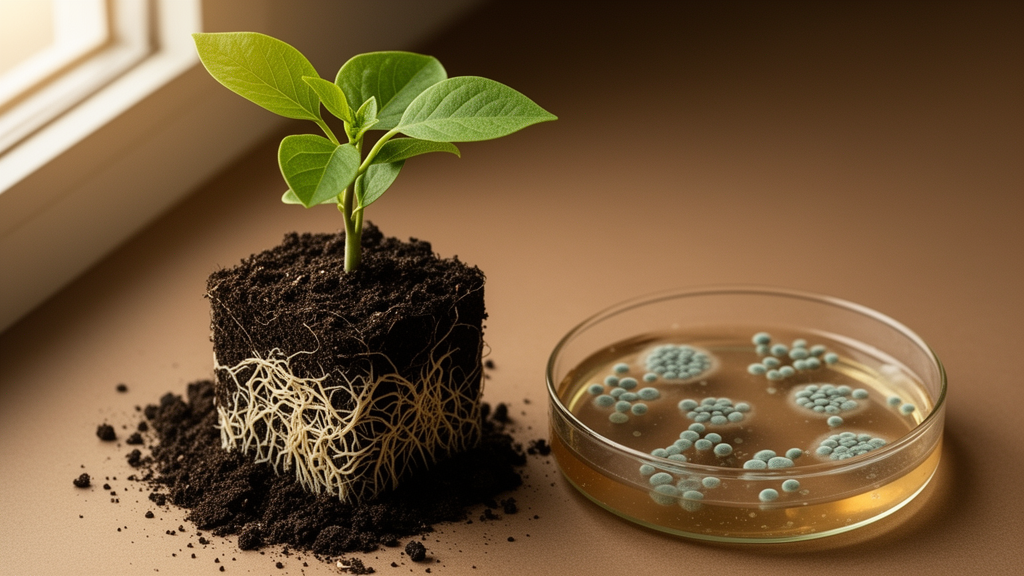
Heavy metals are persistent, non-biodegradable metallic elements that build up in soils through weathering and human activities such as mining, smelting and industrial discharges. A newly published review in Plant Cell Reports brings together what is known about how metal-resistant fungi help plants cope with this contamination, examining both the molecular responses inside plant cells and the biotechnological potential of fungal partners.
The review classifies heavy metals into two broad groups. Essential metals such as copper, zinc, nickel, iron and manganese become toxic in excessive amounts, while non-essential metals including cadmium, lead, arsenic and mercury are dangerous even at low concentrations. In plants, heavy metal stress disrupts metabolism, triggering the production of reactive oxygen species, inhibiting growth and causing nutrient deficiencies.
The scale of the damage can be striking. The review cites evidence that germination of Arabidopsis thaliana seedlings fell to 55 percent at a cadmium chloride concentration of 50 mg per litre and to 21 percent at 100 mg per litre, illustrating how strongly even model plants are affected by cadmium exposure.
Plants are not defenceless. The review describes phytochelatins, metallothioneins and the sequestration of metals into vacuoles as the principal internal protective mechanisms. However, these systems become ineffective at high heavy metal concentrations, which is where external biological partners may become decisive.
Metal-resistant fungi attack the problem through several distinct mechanisms: biosorption, bioaccumulation, biomineralization, bioleaching and biotransformation. The review reports that an adapted strain of Aspergillus niger managed to leach 78.5 percent of nickel and 82.3 percent of molybdenum over 30 days, while Penicillium chrysogenum eliminated 63 percent of cadmium in soil.
Beyond these direct removal mechanisms, fungal partners such as Trichoderma species and arbuscular mycorrhizal fungi appear to influence plant signalling under stress. According to the review, they regulate the production of reactive oxygen species and the activation of MAPK signalling pathways in plants exposed to heavy metals.
The molecular picture extends to hormone signalling and gene expression. The review links fungal associations with abscisic acid, jasmonic acid, salicylic acid, ethylene and auxin signalling pathways, and with the expression of genes including MT, PCS, GST, ABC, NRAMP and HMA, which are controlled by WRKY, MYB, NAC and bZIP transcription factors.
By connecting fungal mechanisms of metal immobilisation and removal with the plant-side signalling and gene networks they modulate, the review frames metal-resistant fungi as a biotechnological resource for mitigating heavy metal stress in contaminated soils. The authors note that the work is a synthesis of existing findings rather than new experimental data, and the reported leaching and cadmium-removal figures come from the individual studies compiled in the review.
Subject of Research: How metal-resistant fungi mitigate heavy metal stress in plants through molecular and biotechnological mechanisms
Article Title: Heavy metal stress mitigation in plants by metal-resistant fungi: molecular and biotechnological insights
Article References: Choudhary, S., Singh, K., Sharma, A., Mehta, A., Gupta, S., & Juneja, G. (2026). Heavy metal stress mitigation in plants by metal-resistant fungi: molecular and biotechnological insights. Plant Cell Reports, 45(11), Article 342. https://doi.org/10.1007/s00299-026-04028-9
Image Credits: AI Generated
DOI: 10.1007/s00299-026-04028-9
Keywords: heavy metals, metal-resistant fungi, plant stress, biosorption, bioremediation, Aspergillus niger, Penicillium chrysogenum, mycorrhizal fungi, reactive oxygen species, phytochelatins, Plant Cell Reports, review
News Source: Roger Howard. (October 28, 2026). Metal-Resistant Fungi Offer New Routes to Shield Plants from Heavy Metal Stress. Scienmag.