• HOME
  • NEWS
  • EXPLORE
    • CAREER
      • Companies
      • Jobs
    • EVENTS
    • iGEM
      • News
      • Team
    • PHOTOS
    • VIDEO
    • WIKI
  • BLOG
  • COMMUNITY
    • FACEBOOK
    • INSTAGRAM
    • TWITTER
Wednesday, October 28, 2026
BIOENGINEER.ORG
No Result
View All Result
  • Login
  • HOME
  • NEWS
  • EXPLORE
    • CAREER
      • Companies
      • Jobs
        • Lecturer
        • PhD Studentship
        • Postdoc
        • Research Assistant
    • EVENTS
    • iGEM
      • News
      • Team
    • PHOTOS
    • VIDEO
    • WIKI
  • BLOG
  • COMMUNITY
    • FACEBOOK
    • INSTAGRAM
    • TWITTER
No Result
View All Result
Bioengineer.org
No Result
View All Result
Home NEWS Science News Biology

Seed germination thresholds mapped for a semiarid rangeland plant

by
October 28, 2026
in Biology
Reading Time: 2 mins read
0
Seed germination thresholds mapped for a semiarid rangeland plant

Seed germination thresholds mapped for a semiarid rangeland plant

Share on FacebookShare on TwitterShare on LinkedinShare on RedditShare on Telegram

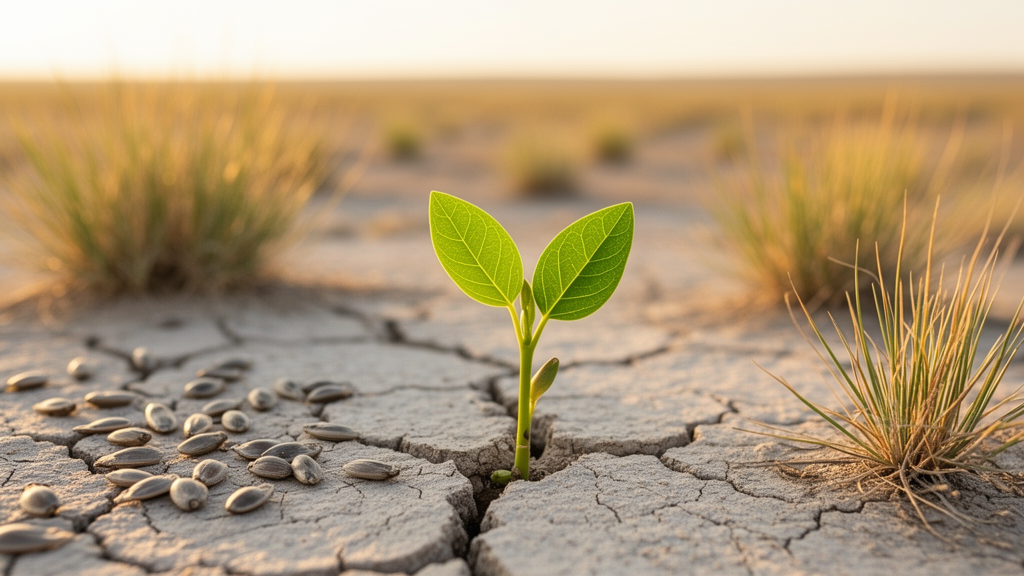
Researchers have charted how seeds of Physorhynchus chamaerapistrum, a rangeland species native to semi-arid regions, respond to temperature, water stress and salinity, identifying specific thresholds that could guide future seed-based restoration work. The study, published in BMC Plant Biology, tested germination across a wide range of controlled laboratory conditions and reported that the species germinates over a broad thermal window but declines progressively as osmotic and salt stress intensify.

Under constant temperatures, germination occurred between 10 and 40 °C, with the best performance between 15 and 30 °C. Maximum germination of 88 percent was recorded at 30 °C, while the fastest germination rate, 15.26 seeds per day, occurred at 25 °C; model predictions pointed to a peak germination rate at 23.76 °C. Alternating temperature regimes told a similar story: germination reached 88 percent at 25/15 °C (day/night) and the highest rate occurred at 30/20 °C, but performance dropped sharply at elevated temperatures, falling to 18 percent at 40/30 °C.

Water stress, imposed through osmotic potentials ranging from 0 to −1.2 MPa, revealed considerable tolerance at mild levels. Germination reached 95 percent at −0.2 MPa, but 50 percent inhibition occurred at −0.61 MPa and complete inhibition at −1.2 MPa. Salinity trials, using NaCl concentrations from 0 to 350 mM, showed a linear decline in germination, from 90 percent at 0 mM to complete inhibition at 350 mM, with the germination rate reduced by 50 percent at 90 mM. Notably, the authors observed that the salinity threshold for a 50 percent reduction in germination rate was lower than the threshold for final germination, indicating that germination speed is particularly sensitive to salt.

Stress also slowed the process, not just the outcome. Mean germination time increased substantially under all stress conditions, reaching a maximum of 8.64 days at an osmotic potential of −0.84 MPa and 6.06 days at 244 mM salinity. The authors conclude that the species has a distinct thermal range favorable for germination and exhibits progressively reduced germination under increasing osmotic and salinity stress. They present the identified thermal, osmotic and salinity thresholds as species-specific benchmarks that may inform future seed-based restoration studies in semi-arid rangelands, while cautioning that the implications for field establishment and grazing management require validation under natural conditions. As a controlled laboratory experiment, the study describes responses under defined conditions rather than measured outcomes in the field.

Subject of Research: Laboratory study of temperature, osmotic and salinity effects on seed germination of Physorhynchus chamaerapistrum

Article Title: Germination responses of Physorhynchus chamaerapistrum to abiotic stressors: implications for semiarid rangeland restoration

Article References: Zare, A., & Moosavi, S. A. (2026). Germination responses of Physorhynchus chamaerapistrum to abiotic stressors: implications for semiarid rangeland restoration. BMC Plant Biology. https://doi.org/10.1186/s12870-026-10187-4

Image Credits: AI Generated

DOI: 10.1186/s12870-026-10187-4

Keywords: Physorhynchus chamaerapistrum, seed germination, temperature, osmotic stress, salinity, semiarid rangelands, restoration, germination rate, BMC Plant Biology, thermal thresholds, Germination, responses

News Source: Alan Morgan. (October 28, 2026). Seed germination thresholds mapped for a semiarid rangeland plant. Scienmag.

Tags: BMC Plant Biologygerminationgermination rateosmotic stressPhysorhynchus chamaerapistrumresponsesrestorationsalinitySeed germinationsemiarid rangelandstemperaturethermal thresholds
Share12Tweet7Share2ShareShareShare1

Related Posts

Engineered antibodies show promise for blocking PRRSV entry in pigs

Engineered antibodies show promise for blocking PRRSV entry in pigs

October 28, 2026
Global Health Data Standards Take Center Stage in Pandemic Intelligence Push

Global Health Data Standards Take Center Stage in Pandemic Intelligence Push

October 28, 2026

Smart Nanocarriers Promise Sustained Delivery of Biostimulants for Sustainable Crops

October 28, 2026

Worm kinase keeps a temperature-tracking behavior running for minutes on end

October 28, 2026

POPULAR NEWS

  • CT and Blood Markers Predict Severe Mycoplasma Pneumonia in Children

    CT and Blood Markers Predict Severe Mycoplasma Pneumonia in Children

    29 shares
    Share 12 Tweet 7
  • Community drug adulteration reports could extend Europe’s early warning system

    29 shares
    Share 12 Tweet 7
  • Engineers Model Why Easter Island Moai Fall Face-Down First

    29 shares
    Share 12 Tweet 7
  • Ultrasound Risk Scores Track Cytology Results in Low-Risk Thyroid Nodules

    29 shares
    Share 12 Tweet 7

About

We bring you the latest biotechnology news from best research centers and universities around the world. Check our website.

Follow us

Recent News

How an industrial apparel brand stitches narrative into fabric, thread and label

New Open-Access Journal Biomedical Materials Science Launches to Link Materials Innovation with Patient Care

Berberine Eases Diabetic Kidney Damage by Tuning a Renal Sugar-Transport Switch

Subscribe to Blog via Email

Enter your email address to subscribe to this blog and receive notifications of new posts by email.

Join 85 other subscribers
  • Contact Us

Bioengineer.org © Copyright 2023 All Rights Reserved.

Welcome Back!

Login to your account below

Forgotten Password?

Retrieve your password

Please enter your username or email address to reset your password.

Log In
No Result
View All Result
  • Homepages
    • Home Page 1
    • Home Page 2
  • News
  • National
  • Business
  • Health
  • Lifestyle
  • Science

Bioengineer.org © Copyright 2023 All Rights Reserved.