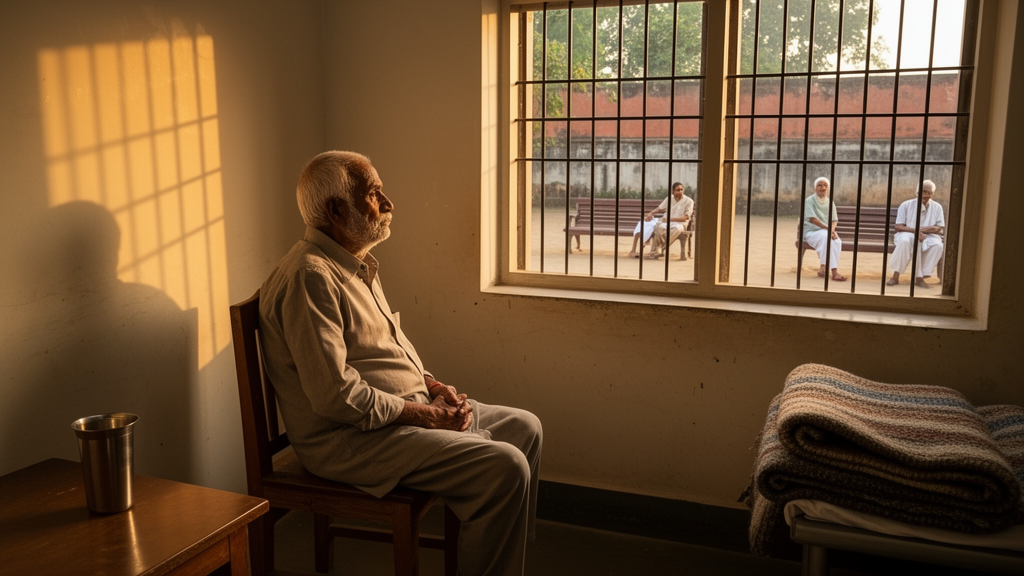
A qualitative study of 40 older residents in two Indian old age homes has found that institutional care reliably delivers physical security, routine medical attention, and basic material support, yet leaves emotional fulfillment and identity affirmation only partially addressed. The research, published in Discover Aging on 17 August 2026, was conducted under the National Service Scheme community engagement framework and used in-depth interviews and open-ended survey responses to explore how senior citizens experience everyday life inside institutional settings. Thematic analysis of the narratives generated eight interconnected themes, ranging from family disintegration and loneliness to spirituality as a meaning-making resource.
The study’s demographic profile shows why institutional aging has become an urgent question in India. Participants were aged between 60 and 85 years, with 22 women and 18 men. The largest share, 25 percent, fell in the 66 to 70 years age group, followed by 22.5 percent aged 71 to 75, suggesting that many individuals entered institutional care during early old age rather than in advanced dependency. Half of the participants were widowed, a figure the authors link to emotional distress, social isolation, and financial insecurity, particularly for women who may have relied on spouses for economic stability. Another 15 percent were married but living separately from their spouses, 12.5 percent were divorced or separated, and 22.5 percent had never married. Duration of residence ranged from six months to more than eight years, allowing the researchers to capture both early adjustment and long-term adaptation.
The most dominant factor underlying institutionalization was family conflict. Participants reported strained household relationships involving intergenerational disagreements, property-related disputes, and feelings of exclusion from decision-making. The prominence of relational conflict over financial hardship indicates that emotional and interpersonal breakdown, rather than economic deprivation alone, plays a central role in the transition to institutional living. Neglect emerged as the second most significant factor, and notably, participants rarely described physical abuse. Instead they emphasized emotional distancing: being ignored in conversations, excluded from family events, or left alone for extended periods. One male participant, 72, described the shift after his son married: family decisions once included him, but gradually he felt invisible in his own house. A female participant, 74, said no one spoke harshly to her, but nobody had time for her either, and she would sit alone for hours while everyone remained busy with their own lives.
Financial instability contributed as well, particularly among residents without pension security or independent income, but even in economically vulnerable cases the emotional dimensions remained intertwined with financial strain. Some participants described feeling dependent and hesitant to express personal needs within the family. A 76-year-old woman said that after her husband passed away she had no stable income and felt uncomfortable depending on her children for every small expense. Some residents without children reflected structural vulnerability, the absence of immediate familial caregivers. Interestingly, some participants described institutional entry as a self-initiated decision, yet even voluntary relocation was often framed as an act of self-sacrifice, an attempt to avoid becoming a burden to children. One 73-year-old man said his children never directly asked him to leave, but he could sense the pressure in the household and came so they could live peacefully.
Loneliness emerged as one of the most persistent emotional experiences among residents, despite living in a shared environment. Participants described communal living spaces as socially active yet emotionally insufficient, with conversations that remained surface-level, centered on routine activities rather than personal histories or deep emotional exchange. A 75-year-old woman said there are many people in the home, but everyone carries their own sadness; they talk, eat together, and sit together, yet deep inside many still feel alone. Loneliness was frequently linked to reduced contact with children and grandchildren, and even when visits occurred, participants described them as brief or formal. Festivals and family celebrations were particularly triggering moments, amplifying awareness of separation. The authors interpret this as a distinction between physical proximity and emotional connectedness, with loneliness extending beyond physical solitude to a deeper experience of emotional displacement, reduced social relevance, and disrupted relational belonging.
Adjustment to institutional life was a negotiated process rather than an immediate outcome. Several participants recounted initial feelings of shock, grief, embarrassment, or perceived social failure upon entering the institution, which for many symbolized a painful disruption of expected family life and social identity. Over time, routine formation, peer interaction, participation in activities, and spiritual engagement facilitated gradual adaptation. Daily schedules, shared meals, recreational activities, and religious practices created a sense of continuity and reduced uncertainty. Yet a critical nuance emerges from the coexistence of reported adjustment and persistent loneliness: adaptation did not necessarily imply emotional fulfillment. One 76-year-old woman captured this directly, saying she had adjusted to the place, but adjustment does not mean she stopped missing her family. Poor adjustment among a smaller segment appeared linked to recent relocation, severe health problems, or unresolved family conflicts, while a few residents described institutional living as comparatively peaceful when contrasted with emotionally stressful family environments.
Health vulnerability shaped daily life in both physical and symbolic ways. Hypertension, diabetes, arthritis, and heart-related conditions were commonly reported, reflecting the broader epidemiological profile of aging populations. Chronic illness structured everyday routines through medication schedules, dietary restrictions, and mobility limitations, and several participants expressed concern about progressive deterioration and the possibility of becoming fully dependent. Even though institutional healthcare provided regular monitoring and immediate assistance, illness remained a constant reminder of fragility and mortality. An 81-year-old man said the most painful part is not the disease itself, but depending on others for small things. At the same time, some participants appreciated the availability of medical support, particularly those who previously lacked consistent healthcare access at home, noting that medicines and check-ups happened on time in the institution.
Social relationships within the institutions varied significantly in quality. Many residents reported regular interaction with peers, but most characterized these relationships as casual rather than deeply intimate, with companionship rooted in shared routines and collective living conditions. Emotional disclosure and profound attachment were less common, highlighting a critical difference between social presence and emotional closeness. For some residents, peer relationships provided genuine comfort, since shared experiences of aging, illness, and separation created mutual understanding. A minority remained minimally interactive or socially withdrawn, with withdrawal linked to grief, chronic pain, introverted personality traits, or unresolved family conflict. Institutional social networks functioned as substitute communities but did not fully replicate the depth of familial bonds; interaction reduced complete isolation, yet emotional belonging remained partial.
Satisfaction with institutional services was generally high in relation to food, cleanliness, medical supervision, and safety, and participants frequently appreciated the structured environment and predictable routine, which many associated with emotional stability and practical security. However, satisfaction was predominantly associated with material and structural aspects of care. Several participants emphasized that although institutions addressed physical necessities, emotional needs remained only partially fulfilled. One 76-year-old woman observed that everything necessary is available, but emotional warmth cannot be arranged like food or medicine. Some desired greater recreational engagement, increased privacy, or more personalized interaction, and others felt that rigid routines occasionally felt impersonal. Spirituality functioned as a powerful coping mechanism: a majority reported daily or regular involvement in prayer, meditation, or religious practices, describing faith as a source of emotional reassurance during loneliness, illness, and uncertainty, and group prayers fostered social connection. Self-perception, meanwhile, was ambivalent for many, with the burden narrative appearing repeatedly across interviews, even among those who voluntarily entered care. Feelings of worth were closely linked to respectful treatment by staff, participation in activities, and opportunities to express opinions.
The authors conclude that institutional aging represents a negotiated balance between protection and selfhood. While survival and safety needs are effectively addressed, belongingness, esteem, and meaningful contribution remain areas of ongoing struggle. A key contribution of the study is the distinction between functional adaptation and emotional fulfillment: successful adjustment to institutional living should not be equated with complete psychosocial well-being. The findings support the development of dignity-centered and person-centered long-term care models that integrate psychosocial support with physical care, including regular counseling, grief support, peer-support interventions, staff training in empathetic caregiving, and stronger pension and social security mechanisms. The researchers caution that the sample was limited to two old age homes in a semi-urban region of India and cannot be statistically generalized, calling for future studies across multiple states, longitudinal designs, and comparative analyses of different residential elder care models.
Subject of Research: Qualitative study of the lived experiences, emotional well-being, and social integration of older residents in Indian old age homes
Article Title: Lived experiences and everyday life of older residents living in old age homes
Article References: Bharti, J., Verma, S., & Mishra, S. (2026). Lived experiences and everyday life of older residents living in old age homes. Discover Aging, 1(1), Article 8. https://doi.org/10.1007/s44518-026-00008-z
Image Credits: AI Generated
DOI: 10.1007/s44518-026-00008-z
Keywords: old age homes, older adults, qualitative research, loneliness, institutional care, India, aging, dignity, spirituality, family conflict, long-term care, thematic analysis
News Source: Ophelia Keating. (October 28, 2026). Old Age Homes Offer Safety but Not Belonging, Interviews with 40 Indian Residents Reveal. Scienmag.