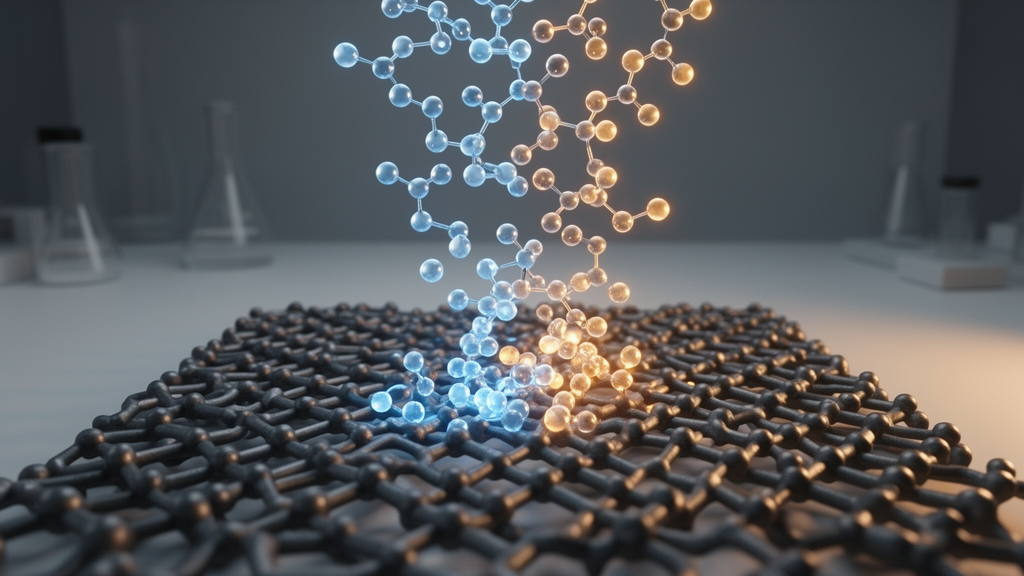
Chemists have spent years chasing a reaction that would turn carbon dioxide from a climate liability into a liquid asset, and a new review argues that the most promising route may run through one of the cheapest metals on Earth: iron. Writing in the journal Catal, researchers led by Zexiu Yu and Li Tan survey the latest progress in iron-based catalysts designed to convert CO2 and hydrogen directly into higher alcohols, the C2-and-above alcohols prized as fuels, gasoline octane boosters, and industrial solvents. The review, published on 6 July 2026, maps how promoters, supports, and reaction mechanisms can be tuned to coax stubborn CO2 molecules into longer carbon chains.
The appeal is obvious, but so is the difficulty. CO2 is a thermodynamically and kinetically stable, inert molecule that resists activation, and the pathway to higher alcohols demands a delicate balancing act between breaking and preserving carbon-oxygen bonds while controlling carbon chain growth. Those steps are often kinetically mismatched, and side reactions such as reverse water-gas shift, methanation, and Fischer-Tropsch synthesis generate substantial water and carbon deposition precursors. Water can oxidize active metal phases and undermine hydrothermal stability, while carbon deposits block carrier pores and cover active sites. The result is typically low activity and poor selectivity, with methane, light hydrocarbons, and methanol crowding out the desired alcohols.
Iron earns its place in this contest because it can do two jobs at once. According to the review, iron-based catalysts combine strong CO2 activation capacity with carbon-carbon coupling ability, effectively carrying both reverse water-gas shift and Fischer-Tropsch catalytic functions in one material. They are also inexpensive, cost-effective, and thermally stable, advantages that noble-metal systems cannot match. Rhodium-based catalysts show excellent selectivity for CO2 hydrogenation products but suffer from low CO2 conversion and high cost, while copper, cobalt, and molybdenum systems each carry their own liabilities: copper particles sinter and agglomerate, cobalt struggles to adsorb and activate CO2, and molybdenum demands harsh conditions while its active components are prone to carbonylation and leaching.
The clearest evidence for what a well-designed promoter can do comes from the iron-cobalt system. In a series of FeX bimetallic catalysts prepared by Wang and colleagues, spanning copper, cobalt, manganese, and zinc additives, only the iron-cobalt pair formed stable FeCo alloy carbides during reaction. Under optimal conditions of 320 degrees Celsius, 5.0 megapascals, a hydrogen-to-CO2 ratio of 3, and a gas hourly space velocity of 4500 milliliters per gram of catalyst per hour, the catalyst reached a space-time yield of 245.7 milligrams of higher alcohols per gram per hour, with 51.1 percent CO2 conversion and 49.1 percent higher-alcohol selectivity. That substantially outperformed the monometallic iron catalyst, which managed 44.9 percent conversion and just 21.2 percent selectivity, and the single FeCo alloy, which reached only 12.0 percent selectivity.
The mechanism behind that leap is instructive. In situ X-ray diffraction and X-ray photoelectron spectroscopy showed that iron and cobalt, with their adjacent atomic numbers and similar chemistry, readily carburize together into alloy carbides, whereas copper, manganese, and zinc persisted as inert metallic copper, manganese carbonate, and zinc oxide phases that could not activate CO2 or promote carbon-carbon coupling. The iron-to-cobalt molar ratio proved decisive: only the 3:1 composition created an active site structure that efficiently transferred and converted intermediates. Cobalt also induced a lattice strain effect that raised the binding energy of the iron-carbon bond, strengthening CO2 and intermediate adsorption. Tandem integration with a copper-zinc-alumina component that favors CH2O* intermediate formation further boosted selectivity, and the alloy carbide phase remained stable for 1000 hours of operation without significant deactivation.
Palladium offers a different kind of partnership. Wang and colleagues reported that a PdFe catalyst carburizes iron oxide through a PdFe alloy, forming in situ a PdFe alloy-Fe5C2 interface rich in active sites. At 300 degrees Celsius, 5 megapascals, and a space velocity of 6000 milliliters per gram per hour, the catalyst achieved a higher-alcohol space-time yield of 86.5 milligrams per gram per hour at 26.5 percent selectivity, a performance the review ranks among the highest reported for palladium or iron-based catalysts. Electron microscopy confirmed a homogeneous, disordered solid-solution alloy in which iron atoms permeated the palladium lattice, and post-reaction imaging clearly showed the Fe5C2 phase and the alloy-carbide interface. Alloying downshifts the palladium 4d valence band, weakening CO adsorption on palladium, easing CO poisoning, and enhancing the reverse water-gas shift reaction, while the interface divides labor: the alloy generates and non-dissociatively activates CO, and the carbide promotes CO dissociation and chain growth.
Supports matter just as much as promoters. Liu and colleagues loaded potassium-copper-iron components onto amorphous zirconia, producing a catalyst that delivered a higher-alcohol space-time yield of 125.0 milligrams per gram per hour at 27.7 percent selectivity. The key turned out to be a potassium-zirconia interface that dominated CO adsorption: potassium doping increased surface oxygen defects and Lewis acid sites, and carbon monoxide pre-adsorption experiments showed far greater molecular CO desorption than on potassium-free or silica-supported analogues, strengthening the non-dissociative CO activation that carbon-carbon coupling requires. In a separate system, Yang and colleagues used TiO2 nanorods rich in surface hydroxyl groups to anchor a rhodium-iron-lithium catalyst that reached 15.7 percent CO2 conversion and 31 percent ethanol selectivity at 250 degrees Celsius and 3 megapascals, with hydroxyls stabilizing formate intermediates, protonating methanol to generate methyl species, and promoting CO insertion.
Carbon supports bring their own electronic tricks. A sodium-doped iron catalyst on carbon paired with a potassium-doped copper-zinc-aluminum catalyst achieved 39.2 percent CO2 conversion and 35.0 percent ethanol selectivity, with the carbon backbone inhibiting nanoparticle agglomeration. Another carbon-layered system, NaZnFe@C, reached an ethanol yield of 366.6 grams of ethanol per kilogram of catalyst per hour, while a comparable catalyst without the carbon layer managed only 9.0 percent ethanol selectivity at 35.9 percent conversion, underscoring how the carbon layer acts as an electron buffer that withdraws excess electrons from iron oxide and iron carbide phases and tunes CO adsorption for carbon-carbon coupling. Zeolite supports, meanwhile, remain early-stage for iron: one study found that ZSM-5’s framework aluminum promoted iron reduction and carburization, yet strong iron-zeolite interaction and potassium migration poisoned acid sites and suppressed CO2 activation, leaving overall performance hostage to the balance between promotion and inhibition.
Mechanistic studies are converging on a common picture in which alkali metals steer the reaction by electronic control. Cesium modification of a copper-iron-zinc catalyst, meanwhile, suppressed the methanol pathway, dropping methanol space-time yield from 72.0 to 2.0 milligrams per gram per hour as cesium loading rose from zero to 5 weight percent, and pushed the reaction toward higher alcohols by weakening hydrogenation while preserving iron carbide’s carbon-coupling activity. The review’s authors conclude that matching the right alkali metal with the right dose, alongside rational support and promoter design, offers the clearest path toward industrial CO2-to-alcohol conversion, though unsatisfactory single-pass yields, side reactions, and poorly understood microscopic synergies between iron sites, promoters, and supports still stand between laboratory promise and commercial reality.
Subject of Research: Iron-based catalysts for the direct hydrogenation of carbon dioxide into higher alcohols
Article Title: Advances in Fe-based catalysts for the hydrogenation of carbon dioxide toward higher alcohols
Article References: Yu, Z., Wang, P., Atchimarungsri, T., Wu, L., Bo, F., Li, X., Yang, H., & Tan, L. (2026). Advances in Fe-based catalysts for the hydrogenation of carbon dioxide toward higher alcohols. Catal, 2(1), Article 16. https://doi.org/10.1007/s44422-026-00029-7
Image Credits: AI Generated
DOI: 10.1007/s44422-026-00029-7
Keywords: carbon dioxide hydrogenation, iron catalysts, higher alcohols, cobalt promoters, palladium-iron alloy, zeolite supports, Fischer-Tropsch synthesis, reverse water-gas shift, ethanol selectivity, catalyst stability, Advances, Fe-based
News Source: Bethany Barker. (October 28, 2026). Iron Catalysts Turn Carbon Dioxide Into Higher Alcohols, Review Finds. Scienmag.