

• HOME
  • NEWS
  • EXPLORE
    • CAREER
      • Companies
      • Jobs
    • EVENTS
    • iGEM
      • News
      • Team
    • PHOTOS
    • VIDEO
    • WIKI
  • BLOG
  • COMMUNITY
    • FACEBOOK
    • INSTAGRAM
    • TWITTER
Wednesday, October 28, 2026
BIOENGINEER.ORG
No Result
View All Result
  • Login
  • HOME
  • NEWS
  • EXPLORE
    • CAREER
      • Companies
      • Jobs
        • Lecturer
        • PhD Studentship
        • Postdoc
        • Research Assistant
    • EVENTS
    • iGEM
      • News
      • Team
    • PHOTOS
    • VIDEO
    • WIKI
  • BLOG
  • COMMUNITY
    • FACEBOOK
    • INSTAGRAM
    • TWITTER
No Result
View All Result
Bioengineer.org
No Result
View All Result
Home NEWS Science News Biology

Heat shock slows sea anemone development and leaves lasting carryover effects

by
October 28, 2026
in Biology
Reading Time: 2 mins read
0
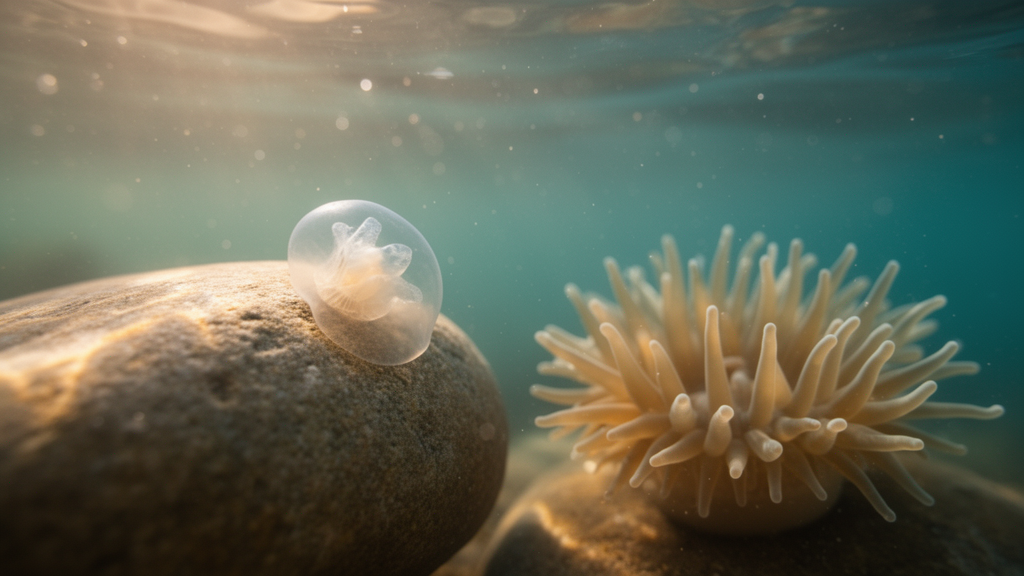
Heat shock slows sea anemone development and leaves lasting carryover effects

Heat shock slows sea anemone development and leaves lasting carryover effects

Share on FacebookShare on TwitterShare on LinkedinShare on RedditShare on Telegram

A transient one-hour heat shock during larval development is enough to slow development, disrupt metabolism and leave lasting damage in the starlet sea anemone, Nematostella vectensis, according to a new open-access study published on 24 September 2026 in Developmental Biology Advances by Benjamin H. Glass and Katie L. Barott. The researchers exposed larvae to water at 39 °C for one hour, 21 °C above the ambient temperature of 18 °C, and then tracked the animals’ development, physiology and gene expression as larvae and juveniles.

N. vectensis was chosen because it is an estuarine species adapted to highly variable conditions, including diel temperature fluctuations of more than 20 °C, making it a plausible candidate for strong developmental plasticity. The team hypothesized that such plasticity would allow the animals to lessen the negative effects of thermal stress. Instead, the heat shock led to delayed development after the larvae were returned to ambient conditions, indicating that even a brief, sublethal thermal excursion disrupted the normal pace of development in this hardy species.

Transcriptomic analysis revealed a pronounced stress response in the heat-shocked larvae, including activation of heat shock protein pathways and innate immunity pathways. The animals also showed evidence of metabolic disruption: lipid stores were rapidly depleted, and aerobic respiration rate showed a transient decrease.

The most striking finding emerged long after the heat stress itself had ended. Despite more than a week of recovery under ambient conditions, juveniles that had been exposed to heat shock as larvae displayed negative carryover effects, including reduced body sizes and reduced heat tolerance. The authors attribute these lasting deficits to heat-induced cellular damage and to the metabolic disruption observed earlier in development, rather than to any ongoing thermal exposure.

The study’s conclusions carry two messages. First, the environment demonstrably shapes developmental outcomes in N. vectensis, and the work provides insights into the mechanisms underlying cnidarian developmental plasticity, a process the authors note remains uncharacterized in most species. Second, and perhaps more sobering, even a species adapted to high thermal variability can be negatively affected by hyperthermal stress. Because many marine invertebrates have externally developing early life stages that are threatened by climate change, the authors emphasize the importance of rapid intervention to limit further ocean warming.

Subject of Research: Effects of transient larval heat shock on development, physiology and gene expression in the sea anemone Nematostella vectensis

Article Title: Heat shock induces delayed development leading to carryover effects in the sea anemone Nematostella vectensis

Article References: Glass, B. H., & Barott, K. L. (2026). Heat shock induces delayed development leading to carryover effects in the sea anemone Nematostella vectensis. Developmental Biology Advances. https://doi.org/10.1186/s13227-026-00274-w

Image Credits: AI Generated

DOI: 10.1186/s13227-026-00274-w

Keywords: Nematostella vectensis, heat shock, developmental plasticity, carryover effects, marine invertebrates, climate change, gene expression, lipid depletion, heat tolerance, cnidarians, Heat, shock

News Source: Juliet Wilcox. (October 28, 2026). Heat shock slows sea anemone development and leaves lasting carryover effects. Scienmag.
Tags: carryover effectsClimate Changecnidariansdevelopmental plasticitygene expressionheatheat shockheat tolerancelipid depletionmarine invertebratesNematostella vectensisshock
Share12Tweet7Share2ShareShareShare1

Related Posts

Laboratory Generations of Sugarcane Parasitoid Wasp Lose Fitness Within Ten Generations

Laboratory Generations of Sugarcane Parasitoid Wasp Lose Fitness Within Ten Generations

October 28, 2026
Prophages Shape Virulence, Not Resistance, in Staphylococcus aureus Genomes

Prophages Shape Virulence, Not Resistance, in Staphylococcus aureus Genomes

October 28, 2026

TREX1 enzyme shields tumors by destroying immune-activating DNA fragments

October 28, 2026

Evolutionary Feature Optimization Sharpens Latent Learning in Endoscopy Images

October 28, 2026

POPULAR NEWS

  • Systematic review maps end-of-life psychosocial and spiritual needs in physical disability

    Systematic review maps end-of-life psychosocial and spiritual needs in physical disability

    29 shares
    Share 12 Tweet 7
  • Text Message Campaign Reached Only a Third of Patients Overdue for Colorectal Cancer Screening

    29 shares
    Share 12 Tweet 7
  • FOXO1 Emerges as Candidate Regulator and Biomarker in Hip Dysplasia

    29 shares
    Share 12 Tweet 7
  • Regulators, developers and clinicians in Shenzhen voice concerns over medical AI governance

    29 shares
    Share 12 Tweet 7

About

We bring you the latest biotechnology news from best research centers and universities around the world. Check our website.

Follow us

Recent News

Systematic review maps end-of-life psychosocial and spiritual needs in physical disability

Text Message Campaign Reached Only a Third of Patients Overdue for Colorectal Cancer Screening

FOXO1 Emerges as Candidate Regulator and Biomarker in Hip Dysplasia

Subscribe to Blog via Email

Enter your email address to subscribe to this blog and receive notifications of new posts by email.

Join 85 other subscribers
  • Contact Us

Bioengineer.org © Copyright 2023 All Rights Reserved.

Welcome Back!

Login to your account below

Forgotten Password?

Retrieve your password

Please enter your username or email address to reset your password.

Log In
No Result
View All Result
  • Homepages
    • Home Page 1
    • Home Page 2
  • News
  • National
  • Business
  • Health
  • Lifestyle
  • Science

Bioengineer.org © Copyright 2023 All Rights Reserved.
