Vascular cell adhesion molecule-1, better known as VCAM-1, appears to help colorectal cancer cells proliferate, migrate and invade, and a new study now traces how that influence may operate at the level of the cell’s internal skeleton. The work, published in the journal Biology Direct, reports that VCAM-1 is more abundant in colorectal cancer tissue than in neighboring healthy tissue, and that removing it from laboratory-grown cancer cells dampens several hallmark malignant behaviors. The authors also identify the RhoA/LIMK/Cofilin signaling pathway as a plausible route through which the molecule acts, linking an adhesion protein on the cell surface to the dynamic remodeling of actin filaments inside the cell.
The clinical portion of the study relied on immunohistochemistry, a staining technique that reveals where a protein sits within tissue sections. Using a tissue microarray containing 90 colorectal cancer samples, the researchers found that VCAM-1 expression was higher in tumor tissue than in adjacent non-tumorous tissue. Tissue microarrays allow many samples to be analyzed under identical conditions, making them a common tool for comparing protein levels across patient cohorts, though they capture only a small snapshot of each tumor.
The survival analysis in the study carries an unusual twist. When the authors reanalyzed the original survival dataset, they found that VCAM-1 positivity was associated with better overall survival in this particular cohort, a direction that runs counter to what the laboratory experiments would predict for a molecule that appears to fuel tumor growth. The team itself flagged this discrepancy, noting that associations with most clinicopathological variables were not statistically significant and that the survival finding should be interpreted cautiously and validated in larger independent cohorts. This kind of internal tension between functional data and prognostic data is not rare in cancer biology, but it is a reminder that correlation measured in a single patient group cannot settle questions of cause and effect.
In the laboratory, the researchers turned to two widely used colorectal cancer cell lines, HCT116 and SW480. When they knocked down VCAM-1, meaning they reduced the molecule’s production inside the cells, the cells became less able to proliferate, migrate and invade through their surroundings. Knockdown also promoted apoptosis, the programmed self-destruction process that cancer cells often evade. These assays measure behavior in a dish, so they cannot reproduce every condition of a living tumor, but they do isolate specific cellular functions for direct testing.
The mechanistic core of the paper concerns the RhoA/LIMK/Cofilin pathway, a signaling cascade with a well-established role in cell movement. RhoA is a small GTPase that, when activated, triggers a chain of events involving LIM kinase and ultimately Cofilin, a protein that disassembles actin filaments. By regulating Cofilin activity, the pathway controls how a cell builds and rebuilds its F-actin cytoskeleton, the fibrous network that gives cells their shape and generates the pushing and pulling forces needed to crawl through tissue. In the study, depleting VCAM-1 inhibited this signaling axis, reduced F-actin organization and fluorescence intensity, and reversed epithelial-mesenchymal transition-related changes. Epithelial-mesenchymal transition, or EMT, is the process by which relatively stationary epithelial cells acquire the motile, invasive character of mesenchymal cells, and it is considered a key step in cancer metastasis.
To test whether the pathway sits downstream of VCAM-1 rather than merely alongside it, the researchers introduced RhoA-Q63L, a constitutively active form of RhoA that stays switched on regardless of upstream signals. Expressing this mutant partially restored the downstream signaling, cytoskeletal organization, migration and invasion that VCAM-1 knockdown had suppressed. Partial rescue experiments of this sort are a standard way to argue for a causal chain: if reactivating the pathway recovers some of the lost malignant behavior, the pathway is likely to be one of the routes the surface molecule uses. The word partially matters, however, because it implies other mechanisms may also contribute.
The study also examined the tumor microenvironment, the ecosystem of immune and stromal cells that surrounds a tumor. VCAM-1 contributed to colorectal cancer cell adhesion to endothelial cells, the cells that line blood vessels, a step relevant to how circulating tumor cells might lodge in new locations. In a separate co-culture setting with M2 macrophages, an immunosuppressive type of immune cell often enriched in tumors, VCAM-1 was involved in cancer cell migration. These experiments suggest the molecule may support progression not only through internal cytoskeletal remodeling but also through interactions with surrounding host cells.
Animal experiments extended the findings beyond the dish. In a subcutaneous model, where cancer cells are implanted under the skin, stable VCAM-1 knockdown in HCT116 cells reduced tumor growth. In a tail-vein bioluminescence imaging model, in which labeled cells are injected into the bloodstream and tracked by light emission, the same knockdown decreased whole-body experimental colonization burden. Such models test specific stages of the metastatic process rather than the full natural sequence of human metastasis, and results in mice do not automatically translate to patients.
Taken together, the authors propose that VCAM-1 may promote colorectal cancer cell progression through RhoA/LIMK/Cofilin-related cytoskeletal remodeling and through interactions with the tumor microenvironment. The study was published as open access on 22 October 2026 and is currently shared as a peer-reviewed, accepted version that remains citable and carries a permanent DOI while further edits are pending. The researchers themselves emphasize that the clinical prognostic direction observed in their cohort differs from the tumor-promoting functional findings, and that the prognostic and therapeutic relevance of VCAM-1 should be further evaluated in larger studies. For now, the work adds a mechanistic piece to the puzzle of how an adhesion molecule long implicated in tumor biology might mechanically equip colorectal cancer cells to move, invade and colonize, while leaving open the question of what its expression ultimately means for patient outcomes.
Subject of Research: The role of the adhesion molecule VCAM-1 and the RhoA/LIMK/Cofilin pathway in colorectal cancer progression and metastasis.
Article Title: VCAM-1 promotes colorectal cancer progression and metastasis via the RhoA/LIMK/Cofilin pathway
Article References: Zhang, Q., Wufuer, A., Li, Z., Hong, T., & Wang, Z. (2026). VCAM-1 promotes colorectal cancer progression and metastasis via the RhoA/LIMK/Cofilin pathway. Biology Direct. https://doi.org/10.1186/s13062-026-01030-9
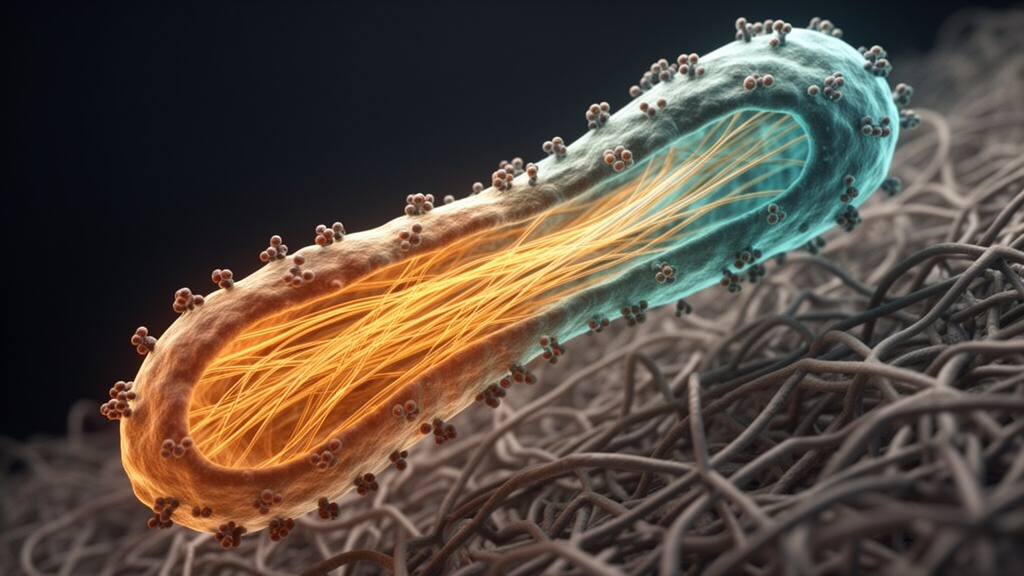
Image Credits: AI Generated
DOI: 10.1186/s13062-026-01030-9
Keywords: VCAM-1, colorectal cancer, RhoA/LIMK/Cofilin pathway, metastasis, EMT, cytoskeleton, tissue microarray, tumor microenvironment, M2 macrophages, apoptosis, cell migration, bioluminescence imaging
News Source: Nathaniel Bowman. (October 28, 2026). Cell adhesion molecule VCAM-1 drives colorectal cancer spread through cytoskeletal pathway. Scienmag.