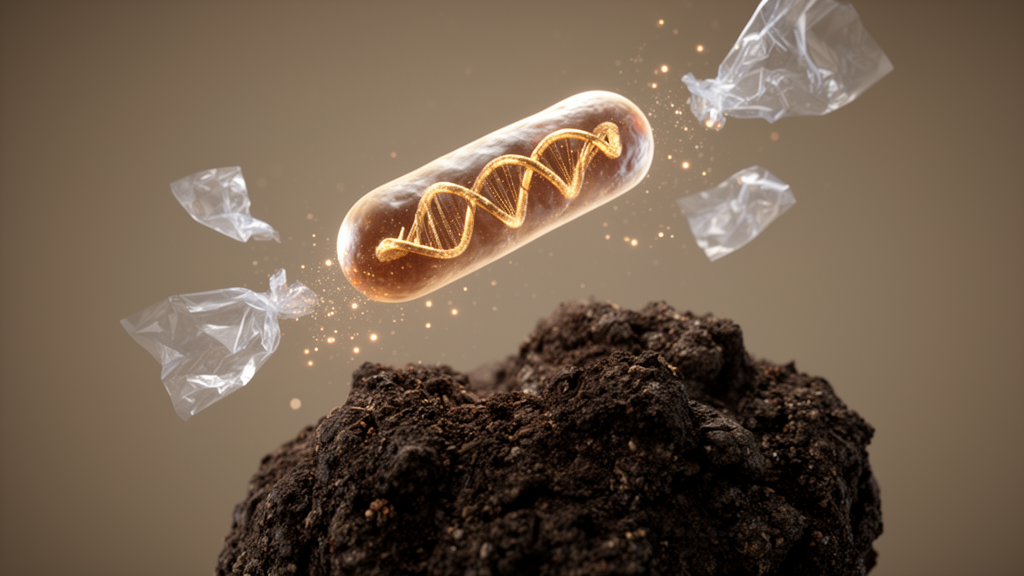
Researchers have sequenced the complete genome of a soil bacterium that may represent an entirely new species of Cupriavidus, isolated from greenhouse soil in the Republic of Korea and named Cupriavidus sp. PB-02. The strain was flagged as a candidate for degrading PBAT, poly(butylene adipate-co-terephthalate), a biodegradable copolyester increasingly used in agricultural mulch films. The work, published as a Data Note in BMC Genomic Data on 3 October 2026, addresses a stated gap: genomic resources for PBAT-degrading bacteria remain limited.
The genome was sequenced with Oxford Nanopore long-read technology. De novo assembly produced three circular replicons totaling 8,747,246 base pairs at 70.0x coverage. Structural annotation predicted 8,021 coding sequences, and functional profiling identified 21 biosynthetic gene clusters.
Taxonomic comparisons suggest PB-02 is not a member of any described species. Average nucleotide identity analysis against 15 type strains returned a maximum of 88.86% to Cupriavidus necator, and digital DNA-DNA hybridization yielded 37.3%. Together these values support classification of the strain as a novel species candidate, though formal description would require further evidence.
The functional screen highlighted traits of applied interest. Annotation revealed 20 candidate genes associated with PBAT degradation and 91 heavy-metal resistance genes. No antibiotic resistance genes were detected. The authors emphasize that the degrading ability is putative at this stage; the genome sequence identifies candidate genes rather than demonstrating measured breakdown of the polymer.
A striking feature of the genome is its mobile genetic content. A total of 169 insertion sequences were detected, with 99 of them concentrated on the megaplasmid, one of the three replicons. Such a concentration suggests the megaplasmid may be a hotspot for genome plasticity, although the data note reports the distribution without assigning it a functional role.
As a data note, the study’s contribution is the resource itself: a complete, closed bacterial genome made openly available for researchers working on plastic biodegradation, heavy-metal tolerance, or Cupriavidus taxonomy. With PBAT mulch films widely deployed in agriculture, a well-annotated genome from a Korean greenhouse soil isolate offers a reference point for future experiments testing whether the predicted degradation genes are actually expressed and active on PBAT.
Subject of Research: Complete genome sequence of a novel Cupriavidus soil strain with putative PBAT-degrading genes
Article Title: Complete genome sequence of Cupriavidus sp. PB-02, a potential new species with putative ability to degrade PBAT, isolated from soil
Article References: Kim, M., Jeong, M., & Shin, J.-H. (2026). Complete genome sequence of Cupriavidus sp. PB-02, a potential new species with putative ability to degrade PBAT, isolated from soil. BMC Genomic Data. https://doi.org/10.1186/s12863-026-01489-5
Image Credits: AI Generated
DOI: 10.1186/s12863-026-01489-5
Keywords: Cupriavidus, PBAT, genome sequencing, Oxford Nanopore, biodegradable plastic, soil bacteria, novel species, average nucleotide identity, megaplasmid, biosynthetic gene clusters, heavy-metal resistance, BMC Genomic Data
News Source: Juliet Wilcox. (October 28, 2026). Soil bacterium with plastic-degrading genes revealed as candidate new Cupriavidus species. Scienmag.