• HOME
  • NEWS
  • EXPLORE
    • CAREER
      • Companies
      • Jobs
    • EVENTS
    • iGEM
      • News
      • Team
    • PHOTOS
    • VIDEO
    • WIKI
  • BLOG
  • COMMUNITY
    • FACEBOOK
    • INSTAGRAM
    • TWITTER
Wednesday, October 28, 2026
BIOENGINEER.ORG
No Result
View All Result
  • Login
  • HOME
  • NEWS
  • EXPLORE
    • CAREER
      • Companies
      • Jobs
        • Lecturer
        • PhD Studentship
        • Postdoc
        • Research Assistant
    • EVENTS
    • iGEM
      • News
      • Team
    • PHOTOS
    • VIDEO
    • WIKI
  • BLOG
  • COMMUNITY
    • FACEBOOK
    • INSTAGRAM
    • TWITTER
No Result
View All Result
Bioengineer.org
No Result
View All Result
Home NEWS Science News Biology

Soil bacterium with plastic-degrading genes revealed as candidate new Cupriavidus species

by
October 28, 2026
in Biology, Technology
Reading Time: 2 mins read
0
Soil bacterium with plastic-degrading genes revealed as candidate new Cupriavidus species

Soil bacterium with plastic-degrading genes revealed as candidate new Cupriavidus species

Share on FacebookShare on TwitterShare on LinkedinShare on RedditShare on Telegram

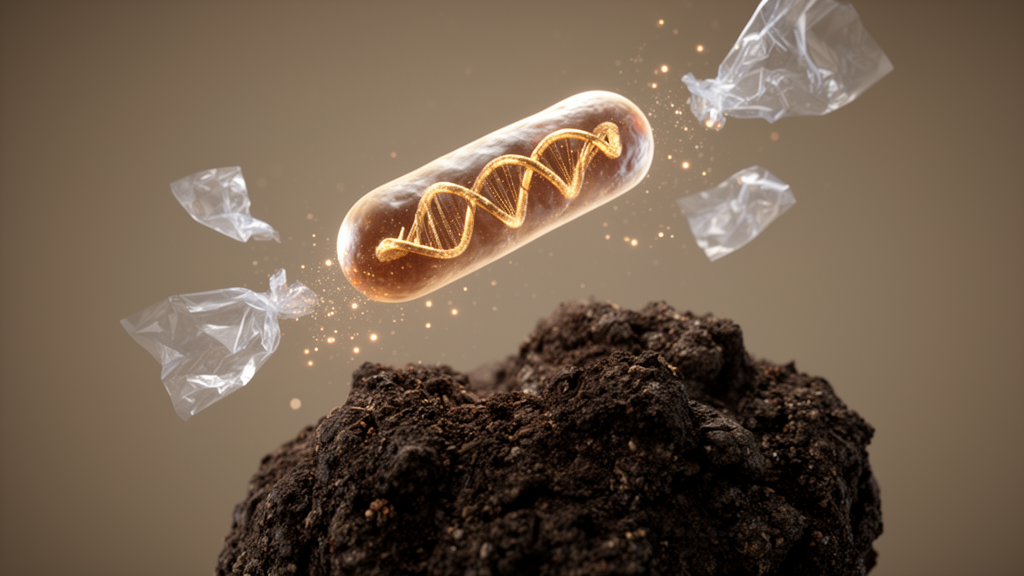
Researchers have sequenced the complete genome of a soil bacterium that may represent an entirely new species of Cupriavidus, isolated from greenhouse soil in the Republic of Korea and named Cupriavidus sp. PB-02. The strain was flagged as a candidate for degrading PBAT, poly(butylene adipate-co-terephthalate), a biodegradable copolyester increasingly used in agricultural mulch films. The work, published as a Data Note in BMC Genomic Data on 3 October 2026, addresses a stated gap: genomic resources for PBAT-degrading bacteria remain limited.

The genome was sequenced with Oxford Nanopore long-read technology. De novo assembly produced three circular replicons totaling 8,747,246 base pairs at 70.0x coverage. Structural annotation predicted 8,021 coding sequences, and functional profiling identified 21 biosynthetic gene clusters.

Taxonomic comparisons suggest PB-02 is not a member of any described species. Average nucleotide identity analysis against 15 type strains returned a maximum of 88.86% to Cupriavidus necator, and digital DNA-DNA hybridization yielded 37.3%. Together these values support classification of the strain as a novel species candidate, though formal description would require further evidence.

The functional screen highlighted traits of applied interest. Annotation revealed 20 candidate genes associated with PBAT degradation and 91 heavy-metal resistance genes. No antibiotic resistance genes were detected. The authors emphasize that the degrading ability is putative at this stage; the genome sequence identifies candidate genes rather than demonstrating measured breakdown of the polymer.

A striking feature of the genome is its mobile genetic content. A total of 169 insertion sequences were detected, with 99 of them concentrated on the megaplasmid, one of the three replicons. Such a concentration suggests the megaplasmid may be a hotspot for genome plasticity, although the data note reports the distribution without assigning it a functional role.

As a data note, the study’s contribution is the resource itself: a complete, closed bacterial genome made openly available for researchers working on plastic biodegradation, heavy-metal tolerance, or Cupriavidus taxonomy. With PBAT mulch films widely deployed in agriculture, a well-annotated genome from a Korean greenhouse soil isolate offers a reference point for future experiments testing whether the predicted degradation genes are actually expressed and active on PBAT.

Subject of Research: Complete genome sequence of a novel Cupriavidus soil strain with putative PBAT-degrading genes

Article Title: Complete genome sequence of Cupriavidus sp. PB-02, a potential new species with putative ability to degrade PBAT, isolated from soil

Article References: Kim, M., Jeong, M., & Shin, J.-H. (2026). Complete genome sequence of Cupriavidus sp. PB-02, a potential new species with putative ability to degrade PBAT, isolated from soil. BMC Genomic Data. https://doi.org/10.1186/s12863-026-01489-5

Image Credits: AI Generated

DOI: 10.1186/s12863-026-01489-5

Keywords: Cupriavidus, PBAT, genome sequencing, Oxford Nanopore, biodegradable plastic, soil bacteria, novel species, average nucleotide identity, megaplasmid, biosynthetic gene clusters, heavy-metal resistance, BMC Genomic Data

News Source: Juliet Wilcox. (October 28, 2026). Soil bacterium with plastic-degrading genes revealed as candidate new Cupriavidus species. Scienmag.

Tags: average nucleotide identitybiodegradable plasticbiosynthetic gene clustersBMC Genomic DataCupriavidusgenome sequencingheavy-metal resistancemegaplasmidnovel speciesOxford NanoporePBATsoil bacteria
Share12Tweet7Share2ShareShareShare1

Related Posts

Corneal digital twins move from simplified shapes to patient-specific simulations

Corneal digital twins move from simplified shapes to patient-specific simulations

October 28, 2026
Growth Hormone-Fc Fusion Protein Sped Fracture Healing in Rats, Metabolomics Study Finds

Growth Hormone-Fc Fusion Protein Sped Fracture Healing in Rats, Metabolomics Study Finds

October 28, 2026

Rigid Molecules and a Sharp Energy Boundary Set the Path to Better Organic Solar Cells

October 28, 2026

Open-source pipeline pairs human judgment with AI to label tricky industrial images

October 28, 2026

POPULAR NEWS

  • Resorbable Self-Locking Device for Canine Ovarian Pedicle Ligation Tested Across Four Veterinary Centres

    Resorbable Self-Locking Device for Canine Ovarian Pedicle Ligation Tested Across Four Veterinary Centres

    29 shares
    Share 12 Tweet 7
  • Faster Bandwidth Exploration Brings Near-Real-Time Spatial-Temporal Kernel Density Visualizations

    29 shares
    Share 12 Tweet 7
  • Marine heatwaves and typhoons reshaped Yellow Sea fungal communities, study finds

    29 shares
    Share 12 Tweet 7
  • Mixed reality office reads bodies and moods to reshape virtual space

    29 shares
    Share 12 Tweet 7

About

We bring you the latest biotechnology news from best research centers and universities around the world. Check our website.

Follow us

Recent News

HIV-1 in Zunyi shows high genetic diversity and pretreatment drug resistance

HbA1c Tracks Blood Sugar, Not Muscle Health, in Type 2 Diabetes

Flooding and Heat Leave Mothers in Nigeria Distressed, Children Vulnerable

Subscribe to Blog via Email

Enter your email address to subscribe to this blog and receive notifications of new posts by email.

Join 85 other subscribers
  • Contact Us

Bioengineer.org © Copyright 2023 All Rights Reserved.

Welcome Back!

Login to your account below

Forgotten Password?

Retrieve your password

Please enter your username or email address to reset your password.

Log In
No Result
View All Result
  • Homepages
    • Home Page 1
    • Home Page 2
  • News
  • National
  • Business
  • Health
  • Lifestyle
  • Science

Bioengineer.org © Copyright 2023 All Rights Reserved.