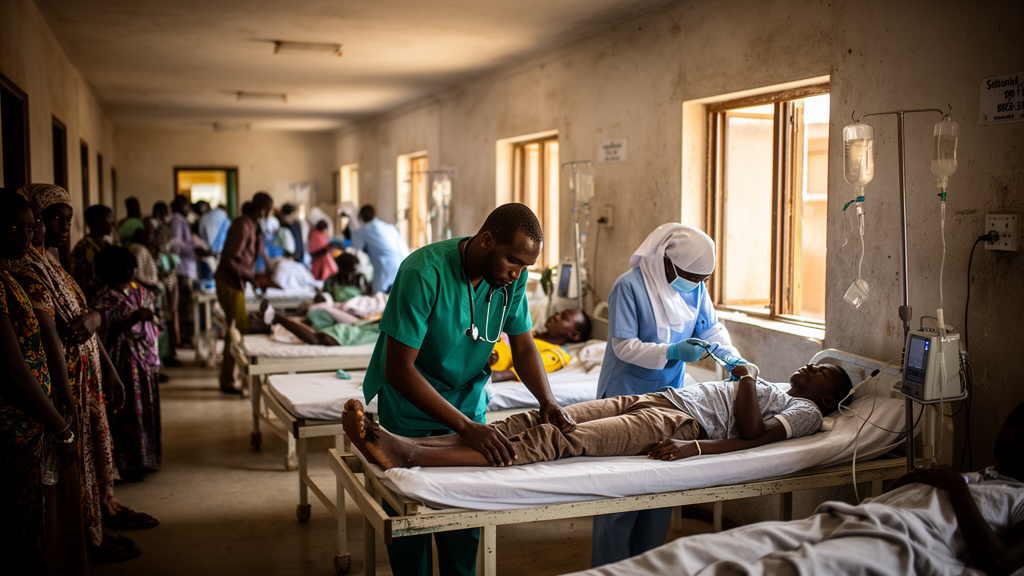
Adults arriving at a tertiary emergency department in Mogadishu with sepsis died in hospital at a rate of 30.2 percent, according to a prospective observational cohort study published on 10 August 2026 in a Springer Nature open-access journal. The study, conducted at Mogadishu Somalia Türkiye Recep Tayyip Erdoğan Training and Research Hospital between June 2024 and February 2025, screened 7,200 emergency department presentations and enrolled 169 adults who met the Sepsis-3 definition, meaning they had suspected or confirmed infection together with a Sequential Organ Failure Assessment (SOFA) score of 2 or higher. That single figure, drawn from consecutive data collection rather than retrospective chart review, offers one of the first detailed prospective portraits of sepsis at the point of first contact in Somalia, a region where the authors note that well-characterized cohort data have been almost entirely absent.
The research team, led by Abdullahi Ahmed Ahmed with colleagues at the hospital, collected demographic, clinical, laboratory and outcome data prospectively using a standardized structured case report form completed by trained emergency physicians. They applied the Sepsis-3 framework, which characterizes sepsis as life-threatening organ dysfunction caused by a dysregulated host response to infection, operationalized through the SOFA scoring system. The hospital is a tertiary referral and teaching hospital in southern Somalia serving a catchment population of more than two million people, and the authors describe it as the only tertiary-level teaching hospital in the region. Because routine laboratory investigations, including platelet counts, renal function tests, liver function tests and arterial blood gas analysis, were available around the clock in the emergency department, SOFA calculation was feasible despite broader resource constraints.
Of the 7,200 people who presented during the study window, 169 patients, or 2.35 percent, fulfilled Sepsis-3 criteria and entered the final analysis. The median age was 46 years, with an interquartile range of 29 to 63 years, and 58.0 percent of the cohort were male. Nearly half of the patients, 49.1 percent, had at least one documented chronic illness. Diabetes mellitus was the most common comorbidity at 20.7 percent, followed by the combination of diabetes and hypertension at 15.4 percent. Less frequent conditions included chronic respiratory disease at 5.9 percent, isolated hypertension at 3.0 percent and prior stroke at 1.2 percent.
The sources of infection showed a distinctive regional pattern. Soft tissue infections were the leading origin of sepsis, accounting for 26.0 percent of cases, followed by respiratory tract infections at 21.9 percent, urinary tract infections at 16.6 percent and intra-abdominal infections at 14.8 percent. Bloodstream infections accounted for 13.0 percent of cases, while central nervous system, device-related and postoperative infections were observed less frequently. The authors suggest that the relatively high proportion of soft tissue infections may reflect delayed healthcare access, untreated community infections and a higher burden of trauma-related or neglected infections, and they argue that the bloodstream infection figure underscores the importance of early empiric antimicrobial therapy and antimicrobial stewardship programs.
The physiological picture at presentation was one of advanced derangement. Fever was present in 79.3 percent of patients, with 20.7 percent showing high-grade fever. Tachycardia was strikingly frequent, recorded in 82.8 percent of patients, with an additional 13.6 percent manifesting severe tachycardia. Respiratory involvement was also evident: while most patients maintained a normal respiratory rate, 19.5 percent were tachypneic and 9.5 percent severely so. Hypotension was observed in 36.1 percent of the cohort. Oxygen saturation was compromised in a large minority, with 20.1 percent of patients in severe hypoxia and another 20.1 percent in mild hypoxia, using the study’s categorization of mild hypoxia as an oxygen saturation of 90 to 92 percent, moderate as 80 to 89 percent and severe as below 80 percent. Neurological assessment found that 42.0 percent had some degree of impaired consciousness, with 13.0 percent in the severe range, defined as a Glasgow Coma Scale score of 8 or below.
Laboratory investigations reflected the systemic burden of infection and multi-organ stress. Nearly three-quarters of patients demonstrated leukocytosis, of which one-third had significant elevations, while leukopenia was present in 11.2 percent. Anaemia was frequent, with almost half of patients recording haemoglobin levels below 10 grams per deciliter, and neutrophilia was predominant, occurring in two-thirds of patients. Platelet counts were generally preserved, although 12.4 percent had thrombocytopenia and 24.9 percent had thrombocytosis. More than half of patients had elevated aspartate aminotransferase and nearly half had raised alanine aminotransferase, indicating hepatic involvement. Renal impairment was evident in 43.2 percent of patients with creatinine above 1.3 milligrams per deciliter, and severe uremia was documented in 20.1 percent. Hyperbilirubinemia affected nearly half of the cohort. A qSOFA score of 2 or higher was present in 37.3 percent of patients, and non-survivors demonstrated significantly higher qSOFA and SOFA scores than survivors.
Hospital course data revealed a pattern the authors interpret with caution. Overall, 43.2 percent of patients were either discharged alive or died within the first seven days of hospitalization, while 7.7 percent required hospitalization for longer than 30 days. The researchers argue that the large proportion of short stays likely reflects early mortality among critically ill patients rather than rapid clinical recovery, a pattern they note has been described in other East and Central African studies where limited intensive care capacity and delayed escalation of care contribute to early deaths in severe sepsis cases. Overall in-hospital mortality was 30.2 percent, corresponding to 51 deaths among the 169 enrolled patients.
To identify which factors independently predicted death, the team first performed univariable analyses, in which age above 60 years, hypotension, severe hypoxia, a Glasgow Coma Scale score of 8 or below, elevated serum creatinine and higher SOFA scores were each significantly associated with in-hospital mortality. Variables reaching a significance threshold of p below 0.10, together with clinically relevant covariates identified a priori, were then entered into a multivariable binary logistic regression model using a backward stepwise selection approach. ICU admission was deliberately excluded from the adjusted model because the investigators considered it a marker of disease severity and downstream clinical management rather than an independent baseline predictor. Analyses were performed in IBM SPSS Statistics version 26.0, missing data were minimal at under 5 percent and were handled by complete-case analysis, and the study was reported according to the STROBE guidelines for observational research.
Four factors emerged as independent predictors of in-hospital mortality. Age above 60 years carried an adjusted odds ratio of 2.15, with a 95 percent confidence interval of 1.12 to 4.10 and a p value of 0.021. Severe hypoxia showed an adjusted odds ratio of 4.20, with a 95 percent confidence interval of 2.10 to 8.50 and a p value below 0.001. A SOFA score of 10 or higher was the strongest predictor, with an adjusted odds ratio of 5.12, a 95 percent confidence interval of 2.45 to 10.82 and a p value below 0.001. Elevated serum creatinine above 1.3 milligrams per deciliter carried an adjusted odds ratio of 2.84, with a 95 percent confidence interval of 1.32 to 6.11 and a p value of 0.008. Hypotension, defined as a mean arterial pressure below 65 millimeters of mercury, demonstrated only a borderline association that did not reach statistical significance after adjustment, with an adjusted odds ratio of 1.95, a 95 percent confidence interval of 0.98 to 3.85 and a p value of 0.056.
The authors acknowledge the limitations of their work, most notably its single-center design, which may limit generalizability to rural or lower-resource facilities, and incomplete microbiological data, which restricted pathogen-specific analysis and antimicrobial resistance profiling. They nevertheless position the study as robust prospective evidence from an underrepresented region, arguing that the findings highlight the urgent need for early recognition protocols, timely administration of empiric antibiotics, standardized sepsis management pathways and strengthened critical care infrastructure. The observed mortality rate falls within the 25 to 50 percent range the authors cite for tertiary care centers across sub-Saharan Africa, and the predictors they identified, including organ dysfunction severity and acute kidney injury, align with patterns reported in multicenter African intensive care studies and in Asian low- and middle-income country settings. As a prospective, single-center observational cohort of 169 patients at one tertiary hospital, the study establishes a baseline for regional benchmarking rather than demonstrating the effect of any specific intervention, and the authors frame their conclusions about improved outcomes as a direction for future investment in emergency and critical care systems rather than a measured result.
Subject of Research: Mortality predictors among adult sepsis patients presenting to a tertiary emergency department in Mogadishu, Somalia
Article Title: Clinical Characteristics, outcomes, and mortality predictors of sepsis patients in an East African emergency department at Mogadishu, Somalia: an observational cohort study
Article References: Ahmed, A. A., Abdirahman, A. M., Jama, S. M. A., Abdullahi, I. M., Hassan, M. A., & Yusuf, S. A. (2026). Clinical Characteristics, outcomes, and mortality predictors of sepsis patients in an East African emergency department at Mogadishu, Somalia: an observational cohort study. Critical Care: Sepsis and Severe Infection, 1(1), Article 11. https://doi.org/10.1186/s44541-026-00014-6
Image Credits: AI Generated
DOI: 10.1186/s44541-026-00014-6
Keywords: sepsis, Sepsis-3, emergency department, Somalia, in-hospital mortality, SOFA score, observational cohort, hypoxia, renal impairment, soft tissue infection, low- and middle-income countries, critical care
News Source: Kristina Jarvis. (October 28, 2026). Sepsis Kills One in Three Patients in Mogadishu Emergency Department, Prospective Cohort Finds. Scienmag.