

• HOME
  • NEWS
  • EXPLORE
    • CAREER
      • Companies
      • Jobs
    • EVENTS
    • iGEM
      • News
      • Team
    • PHOTOS
    • VIDEO
    • WIKI
  • BLOG
  • COMMUNITY
    • FACEBOOK
    • INSTAGRAM
    • TWITTER
Thursday, October 29, 2026
BIOENGINEER.ORG
No Result
View All Result
  • Login
  • HOME
  • NEWS
  • EXPLORE
    • CAREER
      • Companies
      • Jobs
        • Lecturer
        • PhD Studentship
        • Postdoc
        • Research Assistant
    • EVENTS
    • iGEM
      • News
      • Team
    • PHOTOS
    • VIDEO
    • WIKI
  • BLOG
  • COMMUNITY
    • FACEBOOK
    • INSTAGRAM
    • TWITTER
No Result
View All Result
Bioengineer.org
No Result
View All Result
Home NEWS Science News Health

Heart MRI Without Contrast Dye Predicts Risk After Heart Attack

by
October 28, 2026
in Health
Reading Time: 2 mins read
0
Heart MRI Without Contrast Dye Predicts Risk After Heart Attack

Heart MRI Without Contrast Dye Predicts Risk After Heart Attack

Share on FacebookShare on TwitterShare on LinkedinShare on RedditShare on Telegram

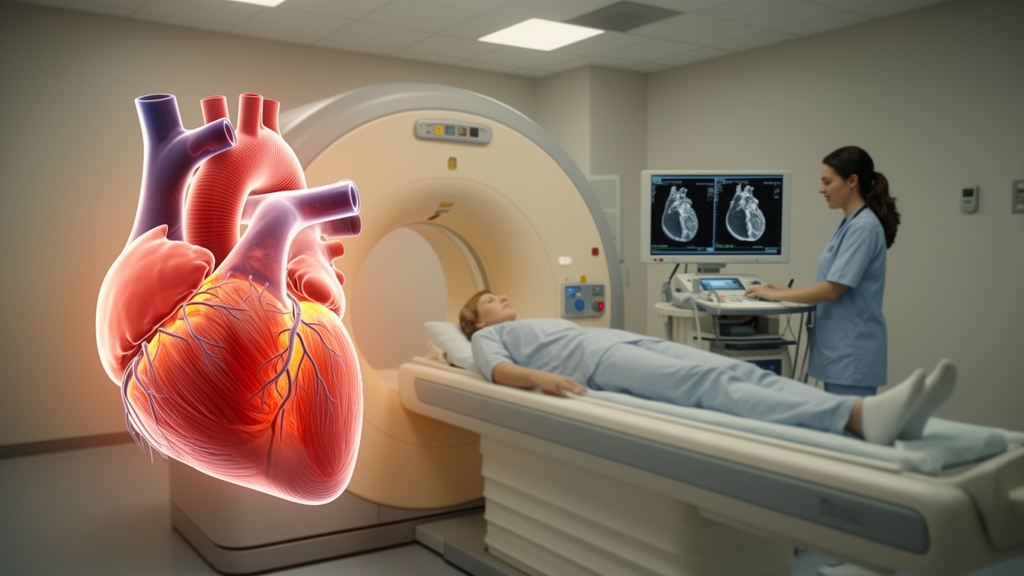
Patients recovering from a heart attack may not need contrast dye for the MRI scans that guide their follow-up care, according to a new retrospective study published in BMC Medical Imaging. Combining two contrast-free imaging measurements — left ventricular global longitudinal strain (LV GLS) and native T1 mapping — predicted major adverse cardiac events after acute myocardial infarction at least as well as, and in some comparisons better than, conventional contrast-enhanced markers.

In the retrospective study, 1253 patients from four centers who underwent percutaneous coronary intervention and cardiac MRI between February 2017 and September 2024 were enrolled. The cohort was split into a development group of 1002 patients and an external validation group of 251. Over a median follow-up of 43 months, 137 patients in the development cohort and 36 in the validation cohort experienced a major adverse cardiac event, defined as all-cause death, life-threatening arrhythmias, cardiac death, reinfarction or heart failure hospitalization.

The key comparison centered on two risk models. Model 2 relied on conventional contrast-enhanced CMR markers: late gadolinium enhancement, microvascular obstruction and intramyocardial hemorrhage. Model 3 instead combined clinical variables, left ventricular ejection fraction, native T1 z score and LV GLS, all obtainable without contrast. In the development cohort, the non-contrast model improved discrimination over the contrast-enhanced model, with a C-index of 0.780 versus 0.736 (P = 0.033). The pattern held in the external validation cohort.

The study found that these two measures together offered complementary prognostic information, improving risk stratification and reclassification beyond established risk factors.

The non-contrast approach also outperformed two established clinical tools. Native T1 and LV GLS showed better prognostic performance than both the GRACE score and the Glasgow CMR Risk Score, suggesting that the imaging-based combination captures prognostic information these scores miss.

The authors conclude that combined native T1 mapping and LV GLS supported the potential of a contrast-free CMR strategy that outperformed a conventional contrast-enhanced model. Because the study was retrospective and focused on AMI patients who had already undergone PCI and CMR, the findings describe prognostic associations in this population rather than the effect of changing clinical practice.

Subject of Research: Prognostic value of non-contrast cardiac MRI markers after acute myocardial infarction

Article Title: Prognosis and risk stratification with LV global longitudinal strain and Native T1 mapping in acute myocardial infarction

Article References: Zhang, S., Zhu, G., Gu, X., Wu, J., & Wu, L. (2026). Prognosis and risk stratification with LV global longitudinal strain and Native T1 mapping in acute myocardial infarction. BMC Medical Imaging. https://doi.org/10.1186/s12880-026-02992-y

Image Credits: AI Generated

DOI: 10.1186/s12880-026-02992-y

Keywords: cardiac MRI, acute myocardial infarction, native T1 mapping, global longitudinal strain, risk stratification, major adverse cardiac events, prognosis, contrast-free imaging, late gadolinium enhancement, C-index, risk, stratification

News Source: Ophelia Keating. (October 28, 2026). Heart MRI Without Contrast Dye Predicts Risk After Heart Attack. Scienmag.


Tags: Acute Myocardial InfarctionC-indexcardiac MRIcontrast-free imagingglobal longitudinal strainlate gadolinium enhancementmajor adverse cardiac eventsnative T1 mappingprognosisriskrisk stratificationstratification
Share12Tweet7Share2ShareShareShare1

Related Posts

Terbium-161 Shows Dose-Dependent Edge Over Lutetium-177 in Mouse Neuroendocrine Tumor Model

Terbium-161 Shows Dose-Dependent Edge Over Lutetium-177 in Mouse Neuroendocrine Tumor Model

October 29, 2026
African Wild Lettuce Shows Anticancer Activity in Lab Studies, Review Finds

African Wild Lettuce Shows Anticancer Activity in Lab Studies, Review Finds

October 29, 2026

Longer HPV Vaccine Programmes Tied to Higher Coverage Across 31 African Countries

October 29, 2026

Fertility Treatment Reshapes Semen Parameter Networks in Retrospective Study of 112 Men

October 29, 2026

POPULAR NEWS

  • Terbium-161 Shows Dose-Dependent Edge Over Lutetium-177 in Mouse Neuroendocrine Tumor Model

    Terbium-161 Shows Dose-Dependent Edge Over Lutetium-177 in Mouse Neuroendocrine Tumor Model

    29 shares
    Share 12 Tweet 7
  • Gas Drainage Lags Pressure Relief by 151.6 Metres in Deep Protective Seam Mining

    29 shares
    Share 12 Tweet 7
  • African Wild Lettuce Shows Anticancer Activity in Lab Studies, Review Finds

    29 shares
    Share 12 Tweet 7
  • SLC7A5 emerges as a central player in cancer amino acid metabolism

    29 shares
    Share 12 Tweet 7

About

We bring you the latest biotechnology news from best research centers and universities around the world. Check our website.

Follow us

Recent News

Terbium-161 Shows Dose-Dependent Edge Over Lutetium-177 in Mouse Neuroendocrine Tumor Model

Gas Drainage Lags Pressure Relief by 151.6 Metres in Deep Protective Seam Mining

African Wild Lettuce Shows Anticancer Activity in Lab Studies, Review Finds

Subscribe to Blog via Email

Enter your email address to subscribe to this blog and receive notifications of new posts by email.

Join 85 other subscribers
  • Contact Us

Bioengineer.org © Copyright 2023 All Rights Reserved.

Welcome Back!

Login to your account below

Forgotten Password?

Retrieve your password

Please enter your username or email address to reset your password.

Log In
No Result
View All Result
  • Homepages
    • Home Page 1
    • Home Page 2
  • News
  • National
  • Business
  • Health
  • Lifestyle
  • Science

Bioengineer.org © Copyright 2023 All Rights Reserved.
