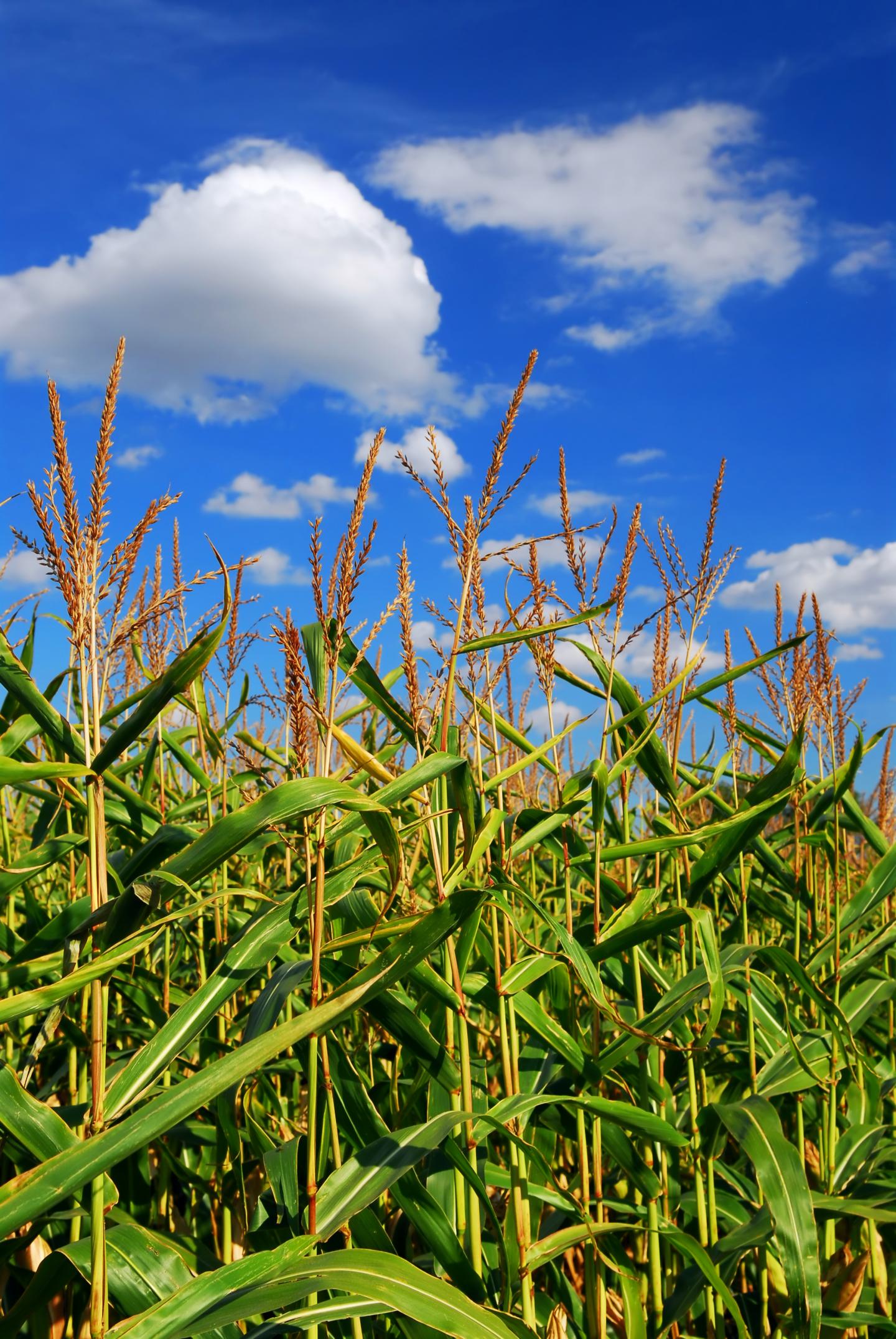
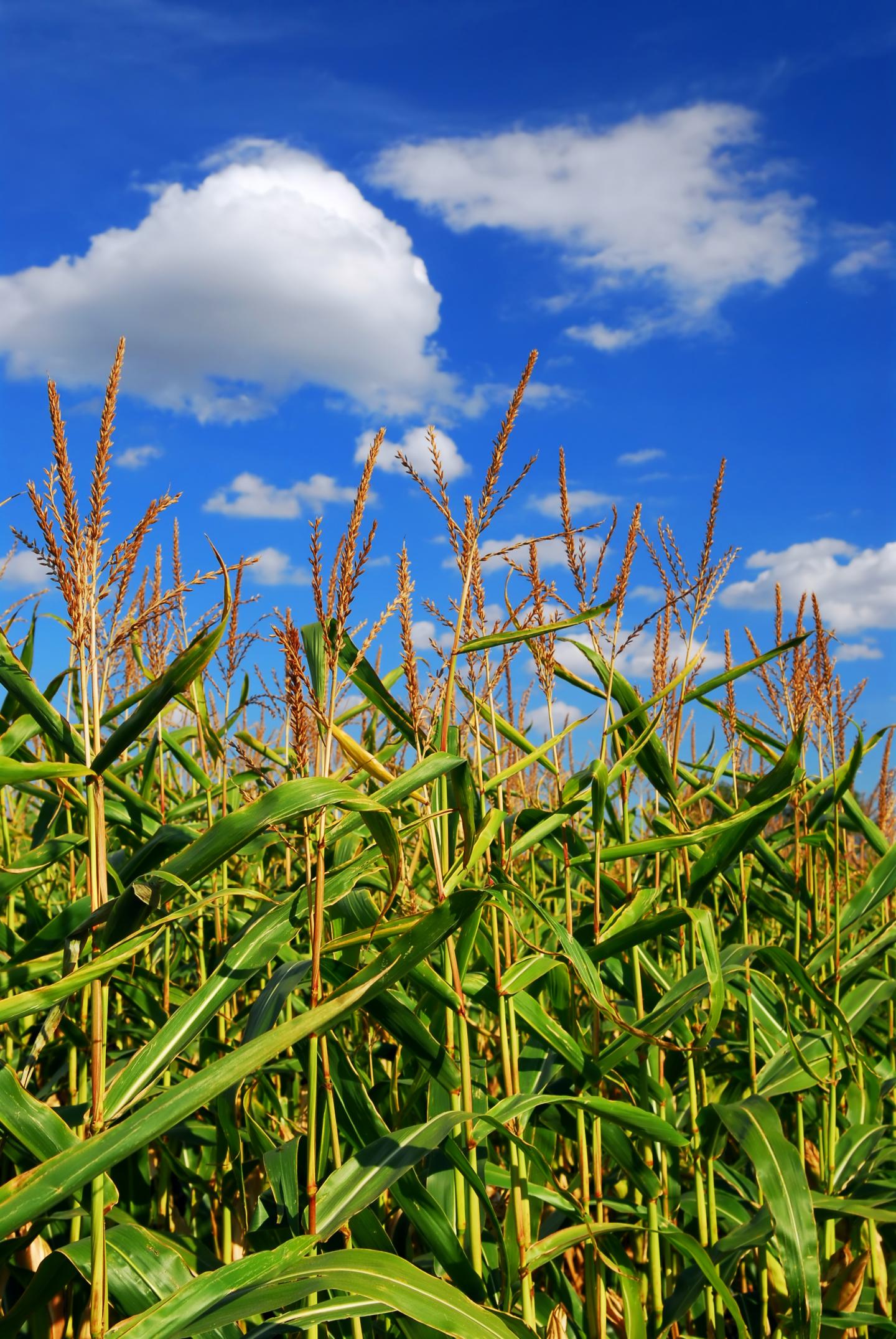
Credit: Donald Danforth Plant Science Center
ST. LOUIS, MO, October 11, 2017 – The Donald Danforth Plant Science Center, one of the world's largest independent plant science institutes, today announced a five-year, $3.4 million grant from the National Science Foundation (NSF) to improve the productivity of maize. The project led by Andrea Eveland, Ph.D., assistant member at the Danforth Center, will develop novel methods for predicting a plant's phenotype from its genetic code and precisely manipulating plant architecture traits in maize that enhance yield potential. The collaborative project brings together expertise in molecular genetics, developmental genomics and statistics to meet the food and fuel demands of a growing population.
Maize is a cereal crop with the highest dollar value in the U.S. and abroad. Maize yields have increased eight-fold in the past century due largely to selecting for optimal architecture at increased planting densities. However, yield gains have plateaued in recent years.
"Developing the next generation of high-yielding varieties will require a detailed knowledgebase of the complex gene networks that control plant morphology, which can be applied to breeding or engineering optimal plant architectures," said Eveland. "Since the networks controlling different aspects of growth and development are tightly interconnected, it is essential that we understand how manipulation of one trait affects others at the molecular level. This precise level of control is largely coordinated by the non-genic regions of the genome, which we know very little about. With this project, we hope to make significant advances in decoding gene regulatory mechanisms connecting important agronomic traits."
Plant architecture, the number and arrangement of organs (e.g. branches, leaves, flowers) on a plant, is central to crop productivity and has been a primary target in the domestication and improvement of many crops. For example, breeding for upright leaves allows light capture within the lower canopy in dense fields, while optimizing the structure of the grain-bearing panicle improves seed set, grain fill and harvestability. In maize, genes that control leaf angle also affect panicle architecture, so understanding how these traits are connected at the molecular level will enable greater precision in decoupling target outcomes from undesirable effects.
The multi-disciplinary team also includes Alexander Lipka, Ph.D., of the University of Illinois at Urbana-Champaign, Patrick Brown, Ph.D., of the University of California, Davis and Sarah Hake, Ph.D., of the University of California, Berkeley. By integrating molecular and quantitative approaches, the group will define the gene networks that control leaf angle and panicle architecture in maize and map key regulatory loci as targets for manipulating these traits using genome editing technologies. New methods for incorporating biological network information in genomic selection models to predict phenotype from genotype will also be explored.
"One of the things that excites me the most about this grant is the exploration of multivariate statistical genotype-to-phenotype models that we plan to undertake," said Lipka. "These models will enable us to distinguish between which genomic regions harbor genes responsible for variation in both leaf angle and panicle architecture and which genomic regions contain genes responsible for only one of these two classes of traits. It is our aim to make these and other statistical approaches we use through the course of this project available to the research community."
The project will also include an education component featuring interactive curriculum in quantitative genetics and genomics for high school and rural community college teachers and students.
###
About The Donald Danforth Plant Science Center
Founded in 1998, the Donald Danforth Plant Science Center is a not-for-profit research institute with a mission to improve the human condition through plant science. Research, education and outreach aim to have impact at the nexus of food security and the environment, and position the St. Louis region as a world center for plant science. The Center's work is funded through competitive grants from many sources, including the National Institutes of Health, U.S. Department of Energy, National Science Foundation, and the Bill & Melinda Gates Foundation. Follow us on Twitter at @DanforthCenter.
Media Contact
Melanie Bernds
[email protected]
314-587-1647