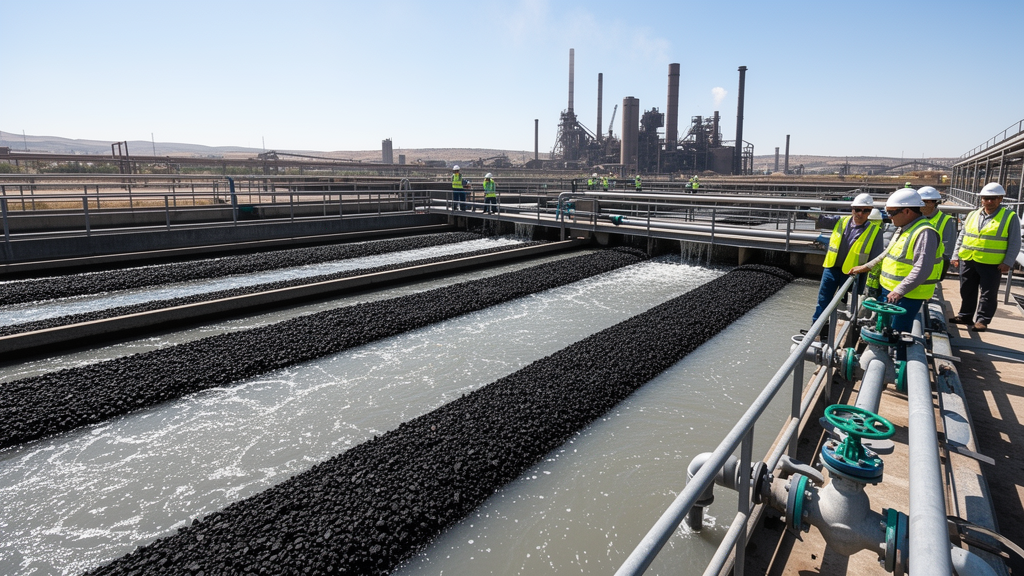
Researchers have shown that biochar made from chicken manure, produced in a large-scale pyrolysis system capable of processing 15 tons of material per day, can remove zinc from real zinc smelter wastewater with high efficiency. In experimental validation using the actual industrial effluent, the unmodified biochar reduced the zinc concentration from 1,871.7 mg/L to 50.3 mg/L, corresponding to a removal efficiency of 97.3%.
The study, published in BMC Chemistry, evaluated the material, termed chicken manure-based biochar or CMBC, under controlled laboratory conditions as well as with real wastewater. In batch adsorption experiments, the maximum experimentally observed zinc adsorption amount was 36.37 mg/g. Kinetic data were better described by the Elovich model, while equilibrium data fit the Langmuir model, indicating favorable adsorption behavior toward zinc ions.
Physicochemical characterization suggested that zinc removal did not rely on a single mechanism. Based on the release of exchangeable cations, ion exchange was estimated to account for 37.4% of the zinc removed. X-ray diffraction analysis and a decrease in dissolved phosphate concentration pointed to the possible formation of zinc-containing phosphate phases, and FT-IR and XPS analyses indicated possible interactions between zinc and oxygen-containing functional groups on the biochar surface.
To identify the conditions that most influence performance, the team used response surface methodology. This analysis identified reaction time, temperature, and biochar dose as statistically significant factors affecting zinc removal, whereas pH was not statistically significant within the range investigated. Under optimized conditions, the predicted removal efficiency was 99.2%, and the experimental validation with real smelter wastewater achieved 97.3%.
The wastewater itself posed a demanding test. The authors state that these findings highlight the potential of unmodified CMBC produced using a large-scale pyrolysis system for treating highly zinc-contaminated industrial wastewater.
The multiple removal pathways identified by characterization may also matter for practical performance. Ion exchange, possible phosphate-phase precipitation, and surface interactions with oxygen-containing functional groups together suggest that the material captures zinc through several concurrent processes rather than a single binding mode, which the authors link to the observed removal behavior.
As with any adsorption study, the reported results reflect the conditions tested. The removal efficiency of 97.3% was achieved under the optimized experimental conditions with the specific wastewater examined, and the 99.2% figure is a model prediction rather than a measured outcome.
For zinc smelters and other metal-processing industries facing stringent limits on zinc in their effluents, the approach represents a candidate technology worth further evaluation.
Subject of Research: Chicken manure-derived biochar for removing zinc from zinc smelter wastewater
Article Title: Large-scale chicken manure-derived biochar for efficient zinc removal from real zinc smelter wastewater
Article References: Lee, J.-I., Im, E.-C., Lee, C.-G., Isinkaralar, K., & Park, S.-J. (2026). Large-scale chicken manure-derived biochar for efficient zinc removal from real zinc smelter wastewater. BMC Chemistry. https://doi.org/10.1186/s13065-026-01950-7
Image Credits: AI Generated
DOI: 10.1186/s13065-026-01950-7
Keywords: biochar, chicken manure, zinc removal, wastewater treatment, pyrolysis, adsorption, heavy metals, smelter wastewater, ion exchange, response surface methodology, Large-scale, chicken
News Source: Bethany Barker. (October 28, 2026). Chicken Manure Biochar Strips Zinc from Smelter Wastewater at Scale. Scienmag.