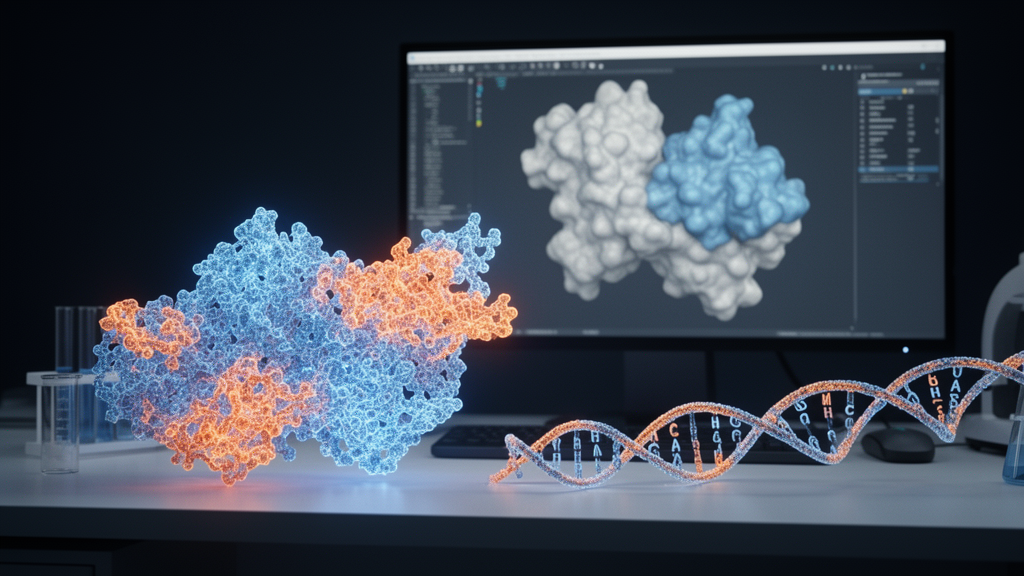
Researchers have designed a computational mRNA vaccine candidate against Puumala virus, the rodent-borne orthohantavirus that causes nephropathia epidemica, a generally mild-to-moderate form of hemorrhagic fever with renal syndrome. The construct, named PV-GNProtecta, was built entirely through immunoinformatics and structural modeling, and its authors stress that every finding remains predictive until laboratory experiments are carried out. No vaccine against Puumala virus has been approved by the U.S. Food and Drug Administration, which the researchers cite as the motivation for exploring new design frameworks.
The study, published in Genomics & Informatics, was led by Tanvir Hossain, Abdullah Al Mahmud and colleagues under senior author Md. Habib Ullah Masum. The team selected two viral proteins as targets: the glycoprotein, which mediates viral attachment and entry and is a major target of neutralizing antibodies, and the nucleocapsid protein, which is highly conserved among orthohantaviruses and triggers a strong early antibody response during acute infection. Protein sequences were retrieved from UniProt, and multiple sequence alignments of 93 glycoprotein and 100 nucleoprotein sequences from strains worldwide were performed with Clustal Omega, followed by phylogenetic analysis in MEGA X.
Epitope prediction formed the core of the design. Using the Immune Epitope Database tools with a percentile rank cutoff below 1.00, the researchers identified candidate MHC class I and MHC class II T-cell epitopes, while continuous B-cell epitopes were predicted with ABCpred using a 16-residue window and a score cutoff of 0.51. Each candidate was then filtered for antigenicity with VaxiJen v2.0 at the viral-model threshold of 0.4, for allergenicity with AllerTOP v2.1, and for toxicity with ToxinPred. Twelve epitopes survived this multi-level screening: four MHC I, four MHC II, and four linear B-cell epitopes, drawn from both proteins.
Population coverage analysis with the IEDB Population Coverage tool predicted that the selected T-cell epitopes would reach at or near 100 percent of most global regions, with South Africa showing the lowest predicted coverage at 95.27 percent. Conservancy analysis, however, revealed heterogeneous conservation: glycoprotein-derived epitopes ranged from 38.71 to 100 percent and nucleoprotein-derived epitopes from 51.00 to 100 percent across the analyzed Puumala virus variants. The authors note that epitope selection therefore rested on a combination of conservation data and predicted immunological properties rather than conservation alone.
The assembled construct contains 352 amino acids with a molecular mass of 38.60 kilodaltons. Epitopes were arranged in three consecutive blocks joined by lysine-rich KKK linkers, with a rigid EAAAK linker integrating the adjuvant. The adjuvant is the 50S ribosomal protein L7/L12 from Mycobacterium tuberculosis, preceded at the N-terminus by a Pan HLA-DR-binding epitope, PADRE, intended to provide broad CD4 T-helper stimulation. A 6xHis tag, a Kozak sequence, a tissue plasminogen activator leader sequence, and human beta-globin and alpha-globin untranslated regions were added to support expression and mRNA stability. ProtParam analysis returned an instability index of 27.30, an aliphatic index of 77.73, a GRAVY value of about -0.61, and an isoelectric point of 9.31, alongside predicted high antigenicity, non-allergenicity and non-toxicity. A BLASTp search against the human RefSeq protein database found no significant similarity to human proteins.
Structural modeling began with AlphaFold 3, which generated five candidate models; the selected model received a QMEAN Z-score of -6.85. Refinement in GalaxyWEB improved the MolProbity score from 2.682 to 1.149 and raised Ramachandran favored-region occupancy from 86.0 to 98.6 percent, yielding a refined QMEAN Z-score of -2.71 and an ERRAT score of 91.4. Final validation via PDBsum placed 95.5 percent of the 352 residues in the most favored Ramachandran regions, with 0.3 percent in disallowed zones. Disulfide-by-design analysis flagged nine possible cysteine-substitution pairs, of which four were prioritized based on favorable geometry and energy. ElliPro predicted 13 discontinuous B-cell epitopes with scores between 0.526 and 0.967.
To probe immune-receptor engagement, the team docked the construct against human TLR4 using ClusPro 2.0, selecting a model with a lowest-energy score of -1060.6 kilojoules per mole. PDBsum analysis of the docked complex counted 263 non-bonded contacts, 33 hydrogen bonds and 4 salt bridges. MM-GBSA via HawkDock estimated a binding free energy of -166.99 kilocalories per mole, dominated by electrostatic and van der Waals terms, while PRODIGY predicted a binding free energy of -17.6 kilocalories per mole and a dissociation constant of 1.3 x 10^-13 molar at 25 degrees Celsius. Separate HDOCK docking placed the four CD8 epitopes into an MHC I molecule and the four CD4 epitopes into an MHC II molecule, with docking scores ranging from -146.24 to -196.47 and -152.50 to -197.86 kilojoules per mole, respectively.
A 100-nanosecond molecular dynamics simulation of the vaccine-TLR4 complex in Desmond, run under the NPT ensemble at 300 K, suggested dynamic equilibration after an initial rise. Mean RMSD was 14.37 angstroms, stabilizing within roughly 12 to 17 angstroms after the first 10 nanoseconds; mean RMSF was 5.48 angstroms and mean radius of gyration 40.26 angstroms, with average hydrogen bond counts of 719.50 across the full simulated system. Principal component analysis attributed 52.29 percent of variance to the first component, with the top three components accounting for 76.19 percent. Endpoint MM-GBSA comparisons of the 0- and 100-nanosecond frames gave binding free energies of -321.20 and -201.49 kilocalories per mole, a difference the authors report as an estimated change in energetic state rather than a measured affinity.
Downstream computational steps addressed manufacturability and predicted immune response. Codon optimization with JCat for Escherichia coli K-12 produced a 1156-nucleotide sequence with a codon adaptation index of 1 and 46.59 percent GC content, virtually cloned into the pET-28a(+) plasmid. C-ImmSim immune simulation over three doses predicted early IgM peaks, sustained IgG1 and IgG2 titers, transient IL-2 and IFN-gamma elevations, and expanding B-cell, helper T-cell and memory cytotoxic T-cell populations. RNAfold predicted a minimum free energy of -285.20 kilocalories per mole for the mRNA secondary structure. The authors caution that these outputs cannot confirm intracellular stability, translational efficiency or delivery feasibility, and they specifically flag that a bacterial adjuvant protein expressed from an mRNA vaccine raises unresolved safety and reactogenicity questions.
Throughout, the researchers frame PV-GNProtecta as a computationally prioritized candidate rather than a validated vaccine. They acknowledge that docking cannot demonstrate receptor activation, that immune simulation cannot establish protective memory, and that a single 100-nanosecond trajectory with endpoint-only MM-GBSA limits confidence in the dynamic findings. In vitro and in vivo studies of antigen expression, immunogenicity, safety and protective efficacy are, in their view, the necessary next step before any claim of clinical relevance can be made for this dual-antigen mRNA design against Puumala virus.
Subject of Research: Immunoinformatics design and in silico evaluation of an mRNA multi-epitope vaccine candidate against Puumala virus
Article Title: Design and in silico evaluation of PV-GNProtecta: an mRNA multi-epitope vaccine candidate against Puumala virus using immunoinformatics and structural analysis
Article References: Hossain, T., Al Mahmud, A., Afrin, M., Rahman, S., Tahia, S. S., Mahdeen, A. A., & Masum, M. H. U. (2026). Design and in silico evaluation of PV-GNProtecta: an mRNA multi-epitope vaccine candidate against Puumala virus using immunoinformatics and structural analysis. Genomics & Informatics, 24(1), Article 19. https://doi.org/10.1186/s44342-026-00081-8
Image Credits: AI Generated
DOI: 10.1186/s44342-026-00081-8
Keywords: Puumala virus, mRNA vaccine, multi-epitope vaccine, immunoinformatics, reverse vaccinology, molecular docking, molecular dynamics simulation, TLR4, nephropathia epidemica, epitope prediction, MM-GBSA, computational vaccine design
News Source: Kristina Jarvis. (October 28, 2026). Computational mRNA vaccine design targets Puumala virus glycoprotein and nucleoprotein. Scienmag.