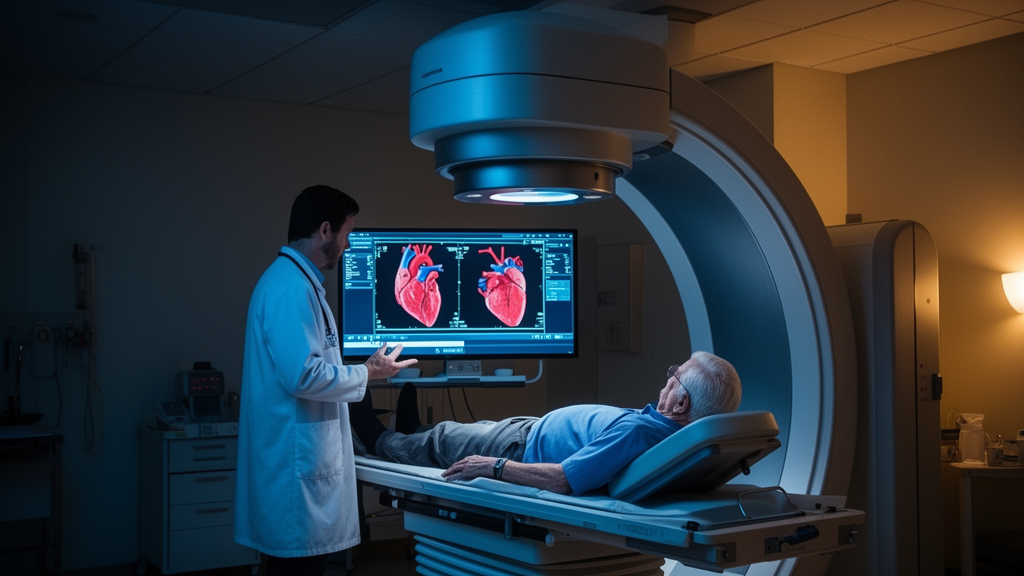
Nuclear medicine is quietly becoming one of the most important disciplines in the fight against cardiac amyloidosis, a condition long notorious for slipping past clinicians until damage is done. A new short communication published in EJNMMI Reports, authored by Mahdi Zirakchian Zadeh and Medhat M. Osman, distills the findings of a recent article collection in the European Journal of Nuclear Medicine and Molecular Imaging into a snapshot of a field in rapid transition. The commentary, published on 19 October 2026 as an open access paper in volume 10, argues that the specialty is shifting from a purely diagnostic role toward quantitative disease characterization, risk stratification, and treatment assessment.
Cardiac amyloidosis results from the extracellular deposition of misfolded proteins within the myocardium and is an increasingly recognized cause of heart failure with preserved ejection fraction. Delayed diagnosis remains a major contributor to adverse outcomes, a problem that has defined the clinical landscape for decades. Until 2016, endomyocardial biopsy was the only reliable diagnostic method. That changed with the introduction of amyloid-avid bone scintigraphy, which enabled a non-biopsy diagnosis of transthyretin cardiac amyloidosis, or ATTR-CM, in appropriate clinical settings. Single-photon emission computed tomography combined with computed tomography, known as SPECT/CT, further improves localization and diagnostic accuracy, while whole-body imaging may add information on systemic disease burden.
Among the most striking developments highlighted in the collection is work on fluorine-18 florbetazine, a promising amyloid-targeting positron emission tomography tracer. Because conventional bone scintigraphy is mainly sensitive for ATTR amyloidosis, a tracer that can visualize light-chain, or AL, amyloidosis would fill a significant gap. Building on the shared beta-sheet structure of amyloid seen in both cardiac amyloidosis and Alzheimer’s disease, florbetazine showed high-affinity binding to both AL and ATTR deposits in preclinical studies, along with favorable kinetics. In early human data, background myocardial activity was low, while a patient with biopsy-proven AL disease demonstrated intense cardiac uptake on delayed PET/CT, supporting potential clinical utility. The commentary is careful to note that these PET tracers remain investigational, are not part of routine clinical practice, and will require larger prospective multicenter studies to define their role, particularly for AL amyloidosis and equivocal cases.
Total-body carbon-11 PiB PET/CT extends the molecular imaging concept to the whole body, reframing cardiac amyloidosis from an isolated cardiomyopathy into a systemic disease. A study in the EJNMMI collection showed significant amyloid deposition not only in the heart but also in organs such as the bone marrow, lungs, and spleen, with clear inter-organ connectivity patterns. Importantly, higher extracardiac amyloid burden was associated with worse survival, underscoring the prognostic value of this whole-body approach. Representative images from patients with biopsy-confirmed active systemic amyloidosis show diffuse abnormal radiotracer uptake across the heart, lungs, kidneys, spleen, liver, and thyroid, reflecting widespread systemic involvement. According to the commentary, total-body PET provides a more integrated view of disease burden and may improve risk stratification and understanding of disease progression.
Hybrid and multimodality strategies add another layer. Studies combining carbon-11 PiB PET/CT with technetium-99m DPD scintigraphy show that the two modalities offer complementary insights: bone scintigraphy remains highly specific for ATTR cardiac amyloidosis, while PET enables more direct assessment of overall amyloid burden across different subtypes. This dual approach improves diagnostic accuracy, supports better subtype differentiation, and adds prognostic value. In current clinical practice, the commentary stresses, bone scintigraphy remains the cornerstone of noninvasive ATTR diagnosis, whereas hybrid PET approaches serve primarily as research tools with potential future applications in disease characterization and subtype differentiation.
On the established side of the field, multiple studies show that SPECT/CT improves diagnostic accuracy compared with planar imaging, particularly in equivocal Perugini grade 1 cases. In these scenarios, planar imaging can be misleading, because uptake often reflects blood pool activity or adjacent structures rather than true myocardial involvement. In one cohort, SPECT/CT confirmed true myocardial uptake in only a small minority of grade 1 cases, with most representing non-specific activity. Thoracic SPECT/CT allows better localization, reduces false positives, and improves diagnostic confidence. Beyond localization, quantitative SPECT/CT enables a more objective assessment of myocardial tracer uptake and may complement visual interpretation. Together, these findings reinforce SPECT/CT as the preferred imaging approach for accurate diagnosis and localization in patients with suspected ATTR cardiac amyloidosis.
Imaging is also edging into the treatment arena. Studies have explored the impact of disease-modifying therapy, particularly tafamidis, on scintigraphic markers in ATTR cardiac amyloidosis. In one study comparing 19 patients on tafamidis with 9 controls, myocardial tracer uptake on technetium-99m pyrophosphate scintigraphy showed a significant reduction during the first year of therapy, followed by stabilization over time, indicating an early therapeutic effect with sustained disease control in hereditary ATTR cardiomyopathy. Genotype-specific data in patients with the Ala97Ser mutation showed initial decreases in uptake transitioning into long-term stability, reinforcing the potential of scintigraphy as a biomarker of response. Studies using technetium-99m DPD scintigraphy similarly suggest that changes in tracer uptake may reflect treatment effects over time. The authors caution, however, that quantitative scintigraphic assessment remains investigational, that no standardized imaging criteria currently exist for defining treatment response, and that larger prospective studies are required before serial quantitative imaging can enter routine practice.
Artificial intelligence is emerging as a powerful accelerant. Recent multi-center studies demonstrate that AI can detect and quantify cardiac amyloidosis across multiple tracers, scanners, and institutions. In a multi-center study using over 500 labeled patients and 3,215 additional scans, a deep learning model accurately detected and scored ATTR cardiac amyloidosis across multiple tracers and scanners, achieving areas under the curve above 0.9. Such automated approaches may improve diagnostic consistency and enable earlier detection. AI has also been applied to high-risk populations such as patients with severe aortic stenosis, in whom cardiac amyloidosis is often underdiagnosed. Among 263 patients with severe aortic stenosis, ATTR cardiac amyloidosis was present in 10.3 percent, and AI models using pre-TAVI data showed good diagnostic performance, with 4D-CT strain achieving the highest accuracy. Despite these promising results, the commentary emphasizes that AI algorithms require external validation, standardized implementation, and prospective multicenter evaluation before widespread clinical adoption.
The overlap between transthyretin cardiac amyloidosis and severe aortic stenosis receives dedicated attention. Computed tomography-derived aortic valve calcium scoring can assist in localizing radionuclide signal and improving scintigraphy interpretation. In 263 patients with ATTR-CM, aortic valve calcification was present in 58 percent and strongly predicted aortic stenosis severity. Both the calcium score and visual grading were independent predictors of mortality, highlighting their prognostic value and supporting targeted screening strategies in patients considered for transcatheter aortic valve replacement. Beyond the left ventricle, emerging data emphasize right ventricular amyloid burden: in 76 patients with ATTR cardiac amyloidosis, diffuse increased right ventricular uptake on quantitative SPECT/CT was associated with more advanced disease and worse biomarkers, and in 53 patients, increased right and left ventricular uptake predicted adverse cardiac events. Soft tissue tracer uptake, including in subcutaneous fat, correlates with systemic amyloid burden and independently predicts mortality, though the commentary notes this remains an area of active investigation rather than established practice.
Early detection is another frontier. Pre-symptomatic screening combining genetic testing and scintigraphy has been explored, particularly in hereditary transthyretin amyloidosis. In a study of 100 asymptomatic relatives of patients, scintigraphy detected cardiac amyloidosis in 8.2 percent, while 20.5 percent carried pathogenic mutations without imaging evidence, supporting combined genetic and scintigraphic screening for early detection of ATTR. These strategies remain investigational and should currently be interpreted within specialized clinical and research settings. Meanwhile, editorials and survey-based studies highlight considerable variability in acquisition protocols, reconstruction methods, quantitative assessment, and reporting across institutions, making standardization and harmonization of quantitative methodologies essential for reproducibility. Many emerging technologies, including amyloid PET, quantitative SPECT biomarkers, whole-body PET, and artificial intelligence, are currently available only in specialized centers. The collective message of the collection is that nuclear medicine is evolving from a predominantly diagnostic discipline toward an increasingly quantitative, prognostic, and therapy-guiding specialty, with the potential to substantially improve personalized care for patients with cardiac amyloidosis as these approaches mature through standardization and prospective validation.
Subject of Research: Nuclear medicine imaging advances for cardiac amyloidosis
Article Title: Expanding role of nuclear medicine in cardiac amyloidosis: insights from the EJNMMI collection
Article References: Zirakchian Zadeh, M., & M. Osman, M. (2026). Expanding role of nuclear medicine in cardiac amyloidosis: insights from the EJNMMI collection. EJNMMI Reports, 10(1), Article 43. https://doi.org/10.1186/s41824-026-00326-3
Image Credits: AI Generated
DOI: 10.1186/s41824-026-00326-3
Keywords: cardiac amyloidosis, nuclear medicine, ATTR amyloidosis, amyloid PET, SPECT/CT, bone scintigraphy, artificial intelligence, tafamidis, aortic stenosis, whole-body PET, risk stratification, early detection
News Source: Ophelia Keating. (October 28, 2026). Nuclear medicine moves to the center of cardiac amyloidosis care. Scienmag.