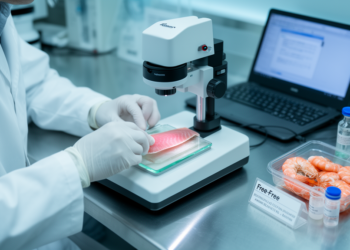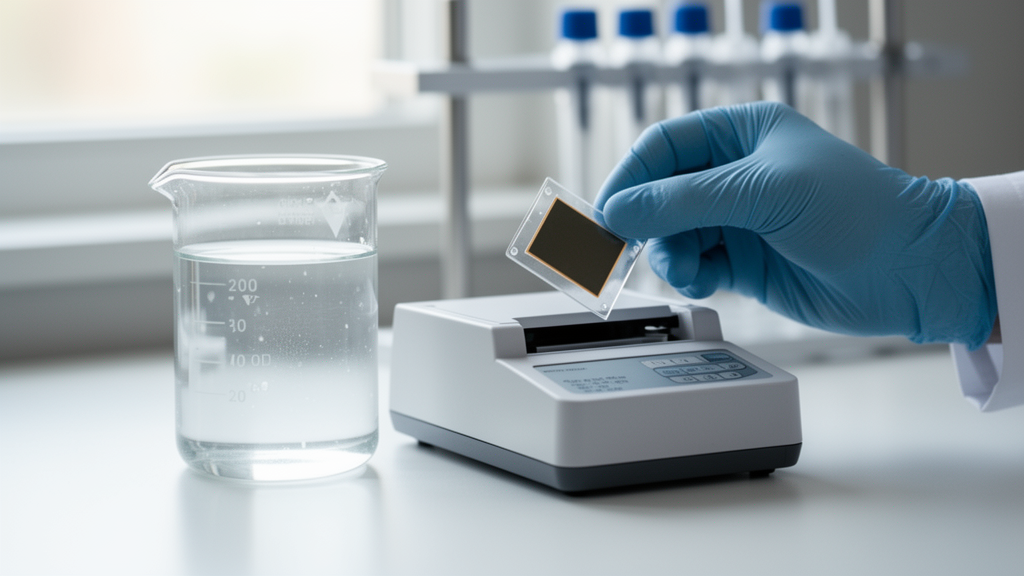
Pharmaceuticals and personal care products, known collectively as PPCPs, have become one of the most persistent classes of environmental pollutants in the world’s water systems. Prescription and non-prescription medications, antibiotics, analgesics, hormones, perfumes and cosmetic ingredients are now routinely detected in surface water, groundwater, sediments and even living organisms at concentrations ranging from nanograms to micrograms per liter. Wastewater treatment plants, which were never designed to strip out these chemically diverse compounds, act as the main conduits delivering them into rivers and lakes, and conventional treatment leaves both residual drugs and their transformation products behind. A newly published review in the journal Discover Nano argues that a family of two-dimensional materials called MXenes could transform how scientists monitor this invisible contamination, offering electrochemical and bio-inspired sensors capable of detecting PPCPs at ultra-trace levels in complex aquatic matrices.
MXenes are transition metal carbides and nitrides, typically produced by selectively etching aluminum from layered ceramic precursors such as titanium aluminum carbide. The most studied member, Ti3C2Tx, combines metallic conductivity exceeding 10,000 siemens per centimeter in delaminated pristine films with a large surface area and a tunable array of surface terminations, including oxygen, hydroxyl and fluorine groups. According to the review’s authors, Seyed Morteza Naghib, Mohammad Ali Khorasani, Fariborz Sharifianjazi and Ketevan Tavamaishvili, this combination of electronic properties and hydrophilic surface chemistry allows strong adsorption and rapid charge-transfer kinetics with pharmaceutical residues, making MXenes unusually well suited to electrochemical sensing. The authors report that studies published between 2023 and 2025 found functionalized Ti3C2Tx and Nb2CTx MXenes reaching detection limits below 10 to the power of minus 10 molar for non-steroidal anti-inflammatory drugs, antidepressants and UV filters, with performance exceeding that of graphene and molybdenum disulfide based nanosensors tested under identical conditions.
The review distinguishes itself, in the authors’ framing, by pulling together previously separate strands of MXene research into a framework centered specifically on PPCP detection in real aquatic environments. Earlier reviews covered MXene electrochemical sensing as a broad analytical field or focused on gases, heavy metals and pesticides, while work on MXene biosensors has largely targeted clinical biomarkers and diagnostics. What has been missing, the authors contend, is a systematic treatment of bio-inspired recognition, surface functionalization, antifouling strategies, matrix effects and the difficult transition from controlled laboratory measurements to monitoring of actual rivers, lakes and wastewater streams.
Among the most striking design advances are sensors that borrow recognition chemistry from living systems. Peptide-functionalized Ti3C2Tx nanosheets modeled on fish olfactory receptor proteins reportedly achieved sub-picomolar selectivity for musk compounds found in personal care products. Molecular imprinting on MXene substrates creates artificial antibody-like recognition sites with low cross-reactivity, below 5 percent for structural analogs, and dissociation constants in the nanomolar range. Enzyme-mimicking MXene-hemin nanoconjugates display peroxidase-like activity with a turnover number of roughly 10,000 per second, enabling colorimetric drug detection with a visual readout suitable for portable field testing. Hybrid platforms combining horseradish peroxidase and gold nanoparticles on Ti3C2Tx showed detection ranges from femtomolar to micromolar concentrations, with correlation values above 0.99 across multiple pharmacological classes and response times of a few seconds in practical wastewater tests.
Signal amplification through noble metal nanoparticles represents another major thread. In-situ formation of gold and platinum nanoparticles on Ti3C2Tx surfaces enhances redox signals relative to pure MXene electrodes, producing hybrid architectures with detection limits down to the picomolar level and linear ranges spanning more than six orders of magnitude. Multi-metal systems such as Au-Pd decorated MXenes provide greater catalytic efficiency for pharmaceutical oxidation without electrode fouling in complex aquatic samples. Molecularly imprinted polymer layers on reduced graphene oxide and Ti3C2Tx hybrids have been applied to selective acetaminophen determination, while interdigitated MXene electrode arrays have demonstrated dynamic ranges of 0.05 to 1000 nanograms per milliliter with sub-nanogram detection limits for multiple drug classes simultaneously.
Real-world performance, however, depends heavily on the water matrix, and the review is notably candid about this limitation. Natural and wastewater samples contain natural organic matter, humic and fulvic acids, salts, suspended particles and competing ions that can foul sensor surfaces, compete for binding sites, alter the electric double layer at the electrode interface and shift the protonation states of both MXene terminations and target analytes. MXenes are also inherently vulnerable to oxidative degradation in water, as dissolved oxygen and protons attack the nanosheets and erode their conductivity over time. The authors emphasize that many published detection limits were obtained under ideal buffer conditions and that systematic, quantitative data on signal suppression as a function of humic acid concentration or ionic strength remain scarce. A very low laboratory detection limit, they caution, must not be read as proof of equal field effectiveness.
Countermeasures are emerging. Zwitterionic polymer coatings such as sulfobetaine methacrylate and mussel-inspired polydopamine layers protect MXene surfaces from oxidation and nonspecific fouling while providing anchoring points for further functionalization. Polydopamine interlayers allowed sensors to self-renew active binding sites between measurements, retaining more than 92 percent of sensitivity after 800 adsorption-desorption cycles. Conducting polymer intercalation, particularly with polypyrrole, simultaneously boosts conductivity and suppresses biofouling through steric hindrance. In one reported application, Ti3C2Tx-polydopamine composites detected the anticonvulsant carbamazepine in wastewater effluent at low detection limits, with in-situ testing at hospital wastewater treatment facilities showing good recovery rates without any preconcentration steps. Machine-learning-assisted calibration, tested against liquid chromatography tandem mass spectrometry benchmarks on 120 blind environmental samples, achieved a mean absolute error of 0.04 nanomolar across a six-order-of-magnitude dynamic range.
Field translation is beginning, though tentatively. Portable MXene-based organic electrochemical transistors deployed at surface water sites reportedly detected the anti-inflammatory drug diclofenac at sub-nanomolar concentrations with good agreement to laboratory mass spectrometry data. Multiplexed devices functionalized with different MXene composites can now detect four PPCP categories at once, spanning antibiotics, analgesics, hormones and UV filters, with low cross-talk between channels. In a European multi-city wastewater epidemiology project cited by the authors, MXene sensors showed agreement with chromatographic measurements, suggesting a role as real-time monitors of community pharmaceutical exposure that standard chromatographic infrastructure cannot easily match. The review also reports that MXene-MOF hybrid sensors maintained functionality after six months of continuous operation in prototype wastewater treatment facilities.
Substantial obstacles remain before such sensors become routine regulatory tools. Production of high-quality MXenes still relies heavily on hydrofluoric acid etching, with corrosion-resistant reactors, hazardous waste disposal and multi-step purification driving up costs, although fluoride-free molten-salt and electrochemical etching routes are under development. Batch-to-batch variation in surface termination composition, sensitive to etch time, temperature and acid strength, can shift baseline currents and alter analyte adsorption, yet systematic per-batch surface characterization is recorded inconsistently in the literature. Long-term ecotoxicology is poorly characterized: short-term tests show low acute toxicity in human cell lines, but longer exposures at elevated concentrations have produced oxidative stress and mitochondrial damage, and early studies suggest Ti3C2Tx nanosheets may accumulate in the gut tissues of the water flea Daphnia magna. No disposal procedures or emission thresholds for MXenes yet exist, and the authors argue that risk assessment must cover the whole sensor, including polymers and precious metals in composites, not just the bare material.
The review concludes that MXene-based electrochemical and bio-inspired platforms hold genuine promise for sensitive, selective and rapid PPCP monitoring, but that current conclusions about their effectiveness apply only to certain pharmaceutical classes and specific water matrices. Antibiotics, analgesics and some hormones are well covered, while many personal care ingredients, transformation products and electrochemically weak compounds remain largely untested, and full validation in raw surface waters, drinking water sources and groundwater is limited. The authors call for cross-matrix validation, standardized comparison with reference methods, multi-analyte testing at environmentally relevant concentrations, extensive aging studies and regulatory harmonization. If those gaps close, they argue, MXene sensors coupled with artificial intelligence and wireless networks could become central instruments in protecting aquatic ecosystems and public health.
Subject of Research: MXene-based bioinspired nanomaterials for ultra-trace biosensing of pharmaceuticals and personal care products in aquatic environments
Article Title: MXene-bioinspired nanomaterials for biosensing of pharmaceuticals and personal care products in complex aquatic systems at ultra-trace levels
Article References: Naghib, S. M., Khorasani, M. A., Sharifianjazi, F., & Tavamaishvili, K. (2026). MXene-bioinspired nanomaterials for biosensing of pharmaceuticals and personal care products in complex aquatic systems at ultra-trace levels. Discover Nano, 21(1), Article 559. https://doi.org/10.1186/s11671-026-05013-7
Image Credits: AI Generated
DOI: 10.1186/s11671-026-05013-7
Keywords: MXene, biosensors, PPCPs, water pollution, electrochemical sensing, molecular imprinting, antifouling coatings, wastewater monitoring, Ti3C2Tx, environmental analytical chemistry, nanotoxicology, ultra-trace detection
News Source: Denise Maddox. (October 28, 2026). MXene Biosensors Track Drug Pollution in Water at Ultra-Trace Levels. Scienmag.