• HOME
  • NEWS
  • EXPLORE
    • CAREER
      • Companies
      • Jobs
    • EVENTS
    • iGEM
      • News
      • Team
    • PHOTOS
    • VIDEO
    • WIKI
  • BLOG
  • COMMUNITY
    • FACEBOOK
    • INSTAGRAM
    • TWITTER
Wednesday, October 28, 2026
BIOENGINEER.ORG
No Result
View All Result
  • Login
  • HOME
  • NEWS
  • EXPLORE
    • CAREER
      • Companies
      • Jobs
        • Lecturer
        • PhD Studentship
        • Postdoc
        • Research Assistant
    • EVENTS
    • iGEM
      • News
      • Team
    • PHOTOS
    • VIDEO
    • WIKI
  • BLOG
  • COMMUNITY
    • FACEBOOK
    • INSTAGRAM
    • TWITTER
No Result
View All Result
Bioengineer.org
No Result
View All Result
Home NEWS Science News Biology

Injectable chitosan hydrogels loaded with plant-derived silver nanoparticles speed burn wound healing in mice

by
October 28, 2026
in Biology
Reading Time: 2 mins read
0
Injectable chitosan hydrogels loaded with plant-derived silver nanoparticles speed burn wound healing in mice

Injectable chitosan hydrogels loaded with plant-derived silver nanoparticles speed burn wound healing in mice

Share on FacebookShare on TwitterShare on LinkedinShare on RedditShare on Telegram

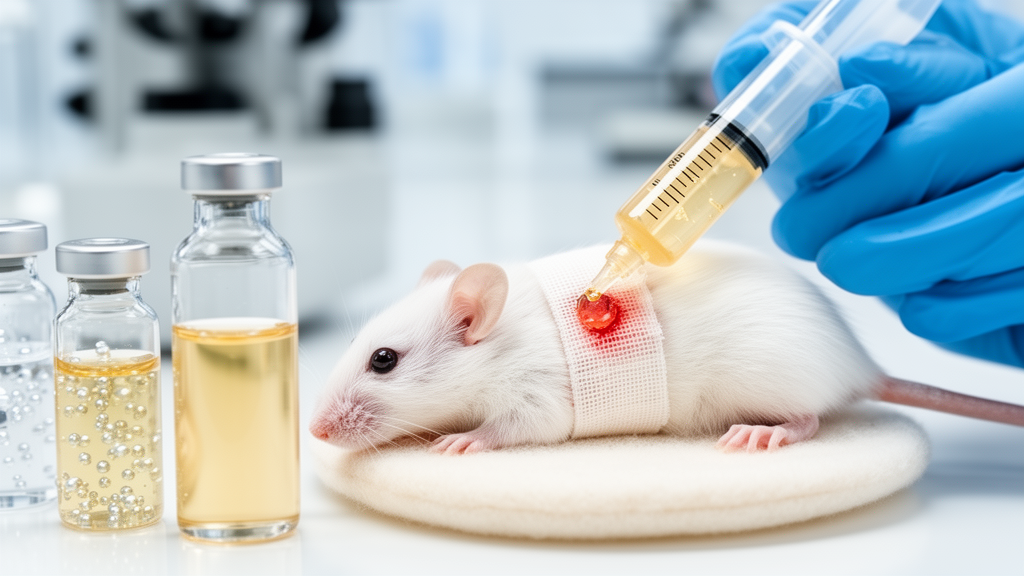
Researchers have combined silver nanoparticles made from plant extracts with an injectable, temperature-sensitive chitosan hydrogel and shown that the formulation speeds the repair of second-degree burn wounds in mice. The study, published in Frontiers in Bioengineering and Biotechnology, reports that hydrogels loaded with either castor bean (Ricinus communis) or aloe vera (Aloe barbadensis) leaf-derived nanoparticles achieved nearly complete wound contraction by day 14 and full closure by day 21 in a female BALB/c mouse model.

The hydrogels were built from chitosan mixed with glycerol-2-phosphate, a combination that remains liquid at room temperature but gels rapidly near body temperature, allowing the material to be injected and to conform to the shape of a wound bed. Three formulations were tested: a plain hydrogel (Ch-HI) and two versions carrying the biogenic silver nanoparticles, designated Ch/Rc-AgNP-HI and Ch/Ab-AgNP-HI. The nanoparticle-loaded gels showed near-physiological pH, porous morphology, gradual release of silver-containing species over 30 hours, and slow matrix erosion over 21 days.

In laboratory tests, the nanoparticle-loaded hydrogels showed antibacterial activity against Escherichia coli and Staphylococcus aureus, and they preserved the viability of HFF-1 fibroblast cells above the 70 percent cytotoxicity threshold across concentrations of 1 to 50 micrograms per milliliter. The authors note that embedding silver nanoparticles in a hydrogel addresses a known limitation of applying them directly to wounds, where they can aggregate, release their payload too quickly, and cause local toxicity.

In the mouse burn model, animals received 50 microliters of formulation daily for three consecutive days. The two nanoparticle-loaded hydrogels achieved wound contraction of 99.34 percent (plus or minus 0.4 percent) and 98.75 percent (plus or minus 0.6 percent) by day 14, with complete closure by day 21. Microbial surveillance found no detectable bacterial growth in any group, meaning the model tested repair of non-infected burns rather than treatment of established infection. Histological and biochemical analyses showed improved re-epithelialization, collagen organization, hydroxyproline deposition and dry matter recovery.

The authors present the phytogenic nanoparticle-loaded injectable hydrogels as promising platforms for non-infected burn wound repair, with antibacterial potential demonstrated so far only in vitro. Further work would be needed to establish safety and efficacy in infected wounds and in humans.

Subject of Research: Injectable chitosan hydrogels loaded with plant-derived silver nanoparticles for burn wound repair

Article Title: Biogenic silver nanoparticle-loaded injectable thermosensitive chitosan hydrogels accelerate repair of non-infected burn wounds

Article References: Ahsan, A., Aslam, Q.-U.-A., Gao, G. F., & Tian, W.-X. (2026). Biogenic silver nanoparticle-loaded injectable thermosensitive chitosan hydrogels accelerate repair of non-infected burn wounds. Frontiers in Bioengineering and Biotechnology, 14, Article 1990402. https://doi.org/10.3389/fbioe.2026.1990402

Image Credits: AI Generated

DOI: 10.3389/fbioe.2026.1990402

Keywords: silver nanoparticles, chitosan hydrogel, burn wounds, wound healing, Ricinus communis, Aloe barbadensis, drug delivery, antibacterial, tissue engineering, mouse model, Biogenic, silver

News Source: Gregory Coleman. (October 28, 2026). Injectable chitosan hydrogels loaded with plant-derived silver nanoparticles speed burn wound healing in mice. Scienmag.
Tags: Aloe barbadensisantibacterialBiogenicburn woundschitosan hydrogelDrug deliverymouse modelRicinus communissilversilver nanoparticlesTissue EngineeringWound Healing
Share12Tweet7Share2ShareShareShare1

Related Posts

Antarctic Pond Bacterium Survives Calcium Levels Once Thought Fatal to Life

Antarctic Pond Bacterium Survives Calcium Levels Once Thought Fatal to Life

October 28, 2026
Scientists engineer pH-sensitive liposomes that release drugs in acidic tumor environments

Scientists engineer pH-sensitive liposomes that release drugs in acidic tumor environments

October 28, 2026

Long-read sequencing reveals the hidden genome of ovarian cancer

October 28, 2026

Blocked protein cleanup reroutes toxic TDP-43 cargo through extracellular vesicles

October 28, 2026

POPULAR NEWS

  • Neutrophils Shift Metabolism in a Triple-Negative Breast Cancer Coculture Model

    Neutrophils Shift Metabolism in a Triple-Negative Breast Cancer Coculture Model

    29 shares
    Share 12 Tweet 7
  • Melatonin eases drought injury in maize seedlings, with effects differing by dose

    29 shares
    Share 12 Tweet 7
  • One-Week Smartphone Intervention for Autistic Adults Falls Short in First Trial

    29 shares
    Share 12 Tweet 7
  • Two New Waxcap Mushrooms Discovered in Southeast China

    29 shares
    Share 12 Tweet 7

About

We bring you the latest biotechnology news from best research centers and universities around the world. Check our website.

Follow us

Recent News

New DARPA-funded project aims to cut AI energy use by up to half

Antarctic Pond Bacterium Survives Calcium Levels Once Thought Fatal to Life

Hidden Hunger in Aging Bodies: Malnutrition and Sarcopenia Strike Even Those With Excess Weight

Subscribe to Blog via Email

Enter your email address to subscribe to this blog and receive notifications of new posts by email.

Join 85 other subscribers
  • Contact Us

Bioengineer.org © Copyright 2023 All Rights Reserved.

Welcome Back!

Login to your account below

Forgotten Password?

Retrieve your password

Please enter your username or email address to reset your password.

Log In
No Result
View All Result
  • Homepages
    • Home Page 1
    • Home Page 2
  • News
  • National
  • Business
  • Health
  • Lifestyle
  • Science

Bioengineer.org © Copyright 2023 All Rights Reserved.