Patients with primary Sjögren’s syndrome whose disease affects their blood counts show a distinctive pattern of immune alterations in the bloodstream, according to a study published in Arthritis Research & Therapy. The research, published on 28 October 2026, found that hematologic involvement in this autoimmune condition is associated with changes in both peripheral immune cells and circulating cytokines, with lower absolute Th1-cell counts and elevated levels of multiple cytokines remaining evident even after accounting for leukopenia.
The study included 145 patients with primary Sjögren’s syndrome, who were classified according to whether they had hematologic involvement. Of these, 47 patients had hematologic involvement and 98 did not. The researchers compared clinical and laboratory characteristics, peripheral lymphocyte subsets, immunoglobulins and circulating cytokines between the two groups. Compared with patients without hematologic involvement, those with it exhibited higher erythrocyte sedimentation rates and higher serum IgG levels, along with lower absolute counts of multiple peripheral lymphocyte subsets. Circulating levels of IL-2, IL-4, IL-10, IL-17, IFN-γ and TNF-α were also higher in the group with hematologic involvement.
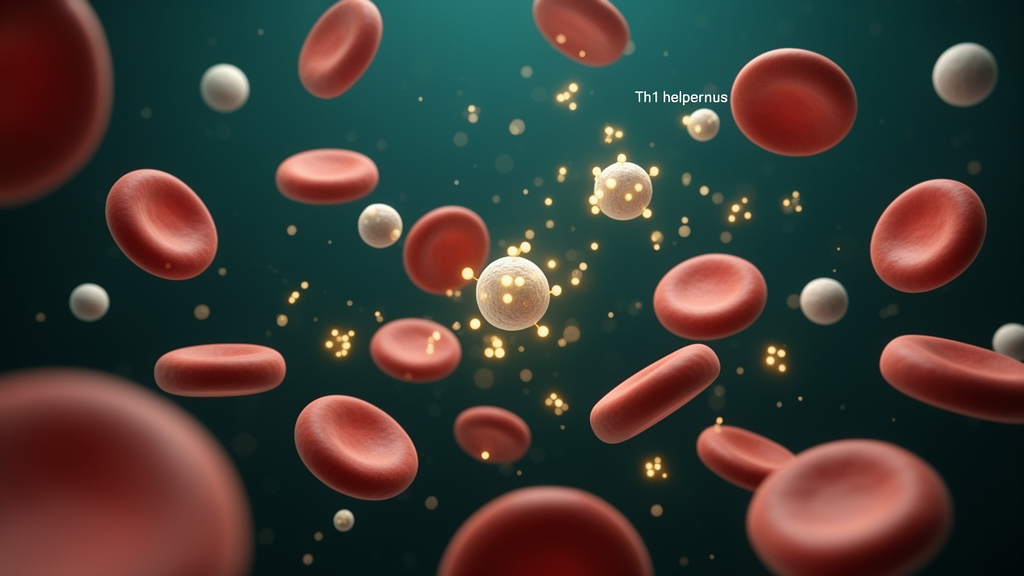
To address this, the researchers performed a sensitivity analysis excluding patients with leukopenia, leaving 123 patients: 25 with hematologic involvement and 98 without. In this subgroup, differences in most absolute lymphocyte counts were attenuated, suggesting that leukopenia accounts for much of the apparent reduction in several immune-cell populations. However, one finding persisted: the absolute Th1-cell count remained significantly lower in the hematologic involvement group, at a median of 72.70 cells per microlitre (interquartile range 41.61–151.37) compared with 135.87 cells per microlitre (interquartile range 60.02–218.96) in the non-involved group, a difference that reached statistical significance with P = 0.032.
In contrast to the immune-cell counts, differences in multiple circulating cytokines remained evident in the sensitivity analysis even after patients with leukopenia were excluded. This suggests that the elevated cytokine levels observed in patients with hematologic involvement are not simply a consequence of reduced white blood cell counts. Multivariable logistic regression analysis further showed that higher erythrocyte sedimentation rate and lower absolute Th1-cell counts were significantly associated with hematologic involvement, identifying these two factors as the measures most closely linked to the condition in this cohort.
To characterise how these peripheral immune parameters relate to one another, the researchers performed Spearman correlation analysis combined with hierarchical clustering. This revealed two relatively distinct correlation patterns, corresponding to lymphocyte-related and cytokine-related components, indicating that the cellular and soluble signalling dimensions of the peripheral immune response in these patients vary largely independently of one another.
The authors conclude that hematologic involvement in patients with primary Sjögren’s syndrome is associated with alterations in peripheral immune cells and circulating cytokines. Because lower absolute Th1-cell counts and higher levels of multiple circulating cytokines remained evident after excluding patients with leukopenia, the study suggests that these alterations may represent peripheral immune features associated with hematologic involvement rather than artefacts of low white cell counts. The findings come from a single cross-sectional comparison of 145 patients, and the sensitivity analysis subgroup with hematologic involvement was relatively small at 25 patients, so the results describe associations observed in this cohort rather than establishing predictive or causal relationships. As the article was shared early as a peer-reviewed, accepted manuscript, it is citable with a permanent DOI and remains subject to further editorial edits before the final version of record is published.
Subject of Research: Peripheral immune cell and cytokine alterations associated with hematologic involvement in primary Sjögren's syndrome
Article Title: Peripheral immune cell and circulating cytokine alterations associated with hematologic involvement in primary Sjögren’s syndrome
Article References: Xie, Y., Su, R., Fan, Y., Gao, C., & Wang, C. (2026). Peripheral immune cell and circulating cytokine alterations associated with hematologic involvement in primary Sjögren’s syndrome. Arthritis Research & Therapy. https://doi.org/10.1186/s13075-026-03930-7
Image Credits: AI Generated
DOI: 10.1186/s13075-026-03930-7
Keywords: primary Sjögren's syndrome, hematologic involvement, Th1 cells, cytokines, leukopenia, lymphocyte subsets, IgG, erythrocyte sedimentation rate, logistic regression, autoimmunity, Peripheral, immune
News Source: Ophelia Keating. (October 28, 2026). Lower Th1 cell counts and raised cytokines mark blood involvement in Sjögren’s syndrome. Scienmag.