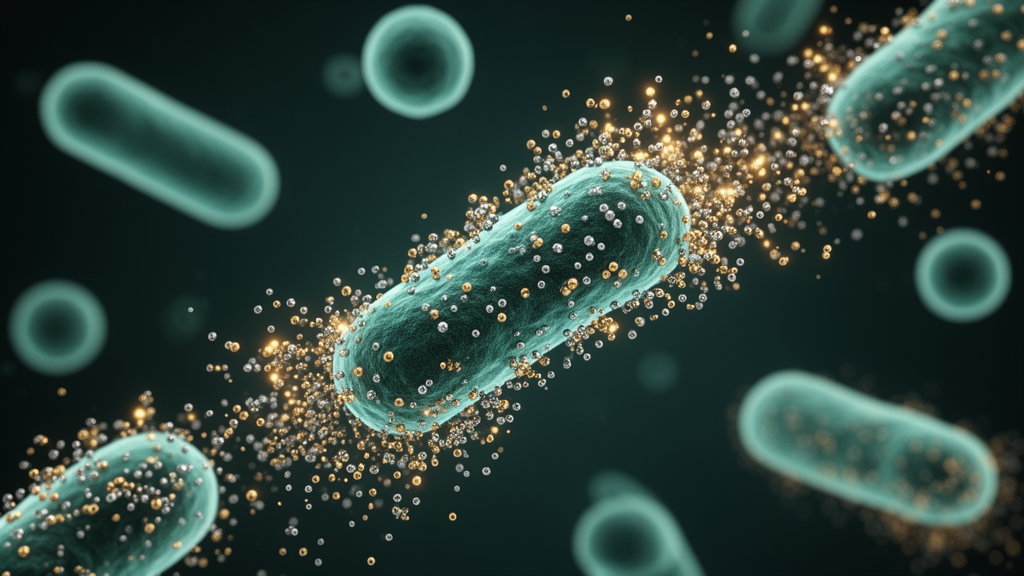
Microorganisms such as bacteria, fungi, and algae can act as natural biofactories for producing silver and gold nanoparticles, according to a mini review published in Applied Microbiology and Biotechnology. The article, authored by Ajit Kumar Passari, Monserrat Manzo-Ruiz, Beatriz Ruiz-Villafán, Romina Rodríguez-Sanoja, and Sergio Sánchez, was published on 28 October 2026 and is open access.
The review describes microbial synthesis as a sustainable and biocompatible alternative to conventional nanoparticle production methods. Microbes produce stable silver and gold nanoparticles through enzymatic reduction and biomolecule-mediated capping, processes that the authors highlight as key advantages of biological over chemical and physical synthesis routes.
Because the work is a review of existing literature rather than a new experimental study, it does not report novel laboratory findings. Instead, it consolidates current knowledge on how microbial nanoparticle biosynthesis works, which characterization techniques are used to assess the resulting particles, and where those particles have been applied in biomedical research.
The biomedical applications covered include antimicrobial, anticancer, antioxidant, drug-delivery, imaging, and wound-healing functionalities. The review’s key points state that diverse microorganisms act as natural nanofactories capable of producing stable silver and gold nanoparticles, and that these particles exhibit broad biomedical potential.
Despite this promise, the authors identify substantial obstacles that remain before microbial nanoparticles can reach routine clinical use. These include concerns about toxicity, consistency, process scalability, batch-to-batch variation, and regulatory compliance. The review emphasizes that these challenges are significant and unresolved.
To address these gaps, the authors call for a thorough assessment of nanoparticle physicochemical properties, biosafety, and therapeutic effectiveness as a crucial step toward advancing clinical applications. They stress that standardized assessments are needed to enable reliable, scalable production.
The overall conclusion of the review is that microbial nanotechnology offers a promising avenue for biomedical use, but that further refinement is required. The authors frame the field as one with demonstrated potential in laboratory settings whose translation into clinical practice depends on overcoming the technical and regulatory hurdles they describe.
Readers should note that the published version is an early-release, peer-reviewed accepted manuscript that is citable and carries a permanent DOI, but remains subject to further edits before the final Version of Record replaces it.
As a synthesis of the field, the article positions microbial synthesis of silver and gold nanoparticles as an active research area at the intersection of microbiology, nanoscience, and medicine, one whose future impact will depend on rigorous biosafety evaluation and standardized production practices rather than on any single new experimental result reported in the review itself.
Subject of Research: Microbial synthesis of silver and gold nanoparticles and their biomedical applications
Article Title: Progress in the microbial synthesis and biomedical applications of silver and gold nanoparticles
Article References: Passari, A. K., Manzo-Ruiz, M., Ruiz-Villafán, B., Rodríguez-Sanoja, R., & Sánchez, S. (2026). Progress in the microbial synthesis and biomedical applications of silver and gold nanoparticles. Applied Microbiology and Biotechnology. https://doi.org/10.1007/s00253-026-14081-9
Image Credits: AI Generated
DOI: 10.1007/s00253-026-14081-9
Keywords: silver nanoparticles, gold nanoparticles, microbial synthesis, nanobiotechnology, antimicrobial, anticancer, drug delivery, wound healing, biosafety, green synthesis, bacteria, fungi
News Source: Gregory Coleman. (October 28, 2026). Microbes Emerge as Sustainable Biofactories for Silver and Gold Nanoparticles in Biomedicine. Scienmag.