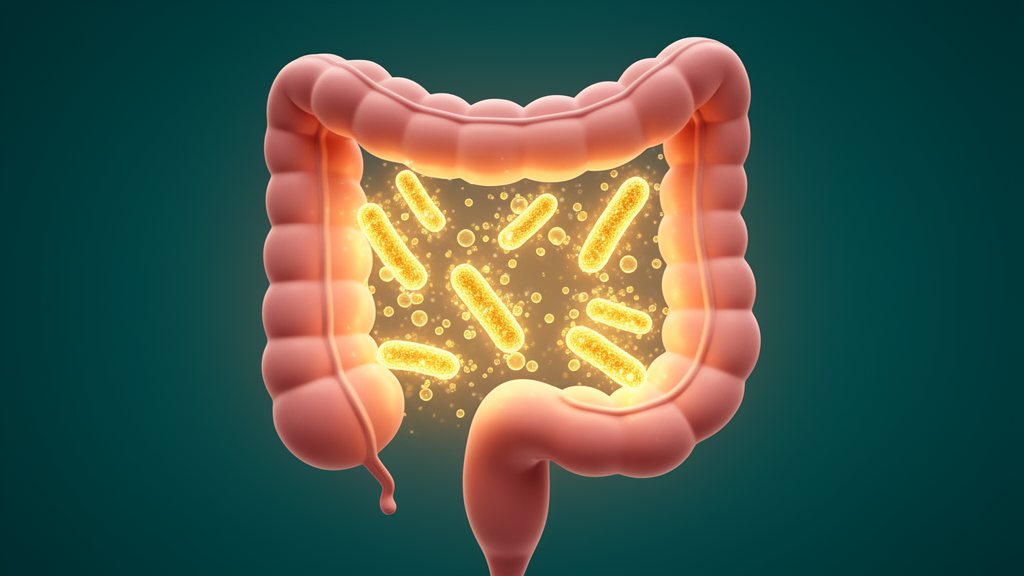
A high-fat diet can quietly erode the lining of the colon, loosening the barriers that keep gut bacteria and their toxic components out of the bloodstream. A new study in mice now reports that adding butyrate, a short-chain fatty acid produced when gut microbes ferment dietary fiber, to a high-fat diet eased several signs of that damage while reshaping the gut microbial community and raising levels of a microbe-derived molecule called indole-3-acetic acid. The work, published in Frontiers in Endocrinology, also points to a specific signaling pathway in intestinal cells that may help explain how the metabolite exerts its effects, though the authors stress that key causal links still need to be confirmed in living animals.
The research team, led by investigators at the First Affiliated Hospital of Xi’an Jiaotong University in collaboration with Leiden University Medical Center, used APOE*3-Leiden.CETP mice, a well-established translational model for diet-induced metabolic dysfunction. Male mice were fed a high-fat diet deriving 60 percent of calories from lard fat and containing 0.25 percent cholesterol, with or without 5 percent sodium butyrate by weight, for nine weeks. The researchers then measured metabolic outcomes, circulating lipopolysaccharide (LPS), colonic tissue structure, inflammatory gene expression, and the status of tight junction proteins that seal the gaps between epithelial cells.
The results were striking across multiple fronts. Butyrate-treated mice gained less body weight and accumulated less fat mass than controls, while lean mass was unaffected. Their glucose tolerance improved and fasting plasma glucose fell, although plasma triglycerides and total cholesterol did not change. In the colon itself, histological analysis revealed deeper crypts and a thicker muscular layer, which the authors interpret as favorable structural remodeling, and the large intestine was longer in butyrate-fed animals while the small intestine was not.
Perhaps most importantly for barrier function, LPS levels dropped markedly in both portal vein blood and blood drawn from the heart, indicating reduced exposure to gut-derived endotoxin in the circulation. Among the tight junction genes examined, butyrate supplementation left Zo-1 and Ocln messenger RNA untouched but significantly increased Cldn2 expression at both the mRNA and protein levels. That last detail matters because CLDN2 is often described as a pore-forming tight junction protein associated with greater permeability during intestinal inflammation, and the authors argue that its increase here likely reflects context-dependent reorganization of the tight junction complex during barrier adaptation under severe dietary stress rather than a simple change in canonical sealing markers.
To probe the molecular underpinnings, the team performed RNA sequencing on colonic tissue. The analysis identified 583 differentially expressed genes, 338 upregulated and 245 downregulated in the butyrate group. Among the upregulated genes were Reg3b and Reg3g, which encode antimicrobial peptides involved in epithelial defense, and quantitative PCR confirmed that Reg3a, Reg3b, Reg3g, and Reg4 were all elevated. Immunohistochemical staining showed stronger REG3γ and REG4 signals in butyrate-treated colons. Gene set variation analysis revealed a reduced inflammatory response signature, corroborated by lower colonic Tnf-α and Il-1b expression, alongside an increased peroxisome-related signature and higher Pparg mRNA and PPARγ protein levels.
A crucial twist emerged when the researchers turned to Caco-2 cells, a widely used intestinal epithelial cell line. When the cells were exposed directly to sodium butyrate at concentrations of 1 to 5 millimolar for 12 hours, doses that did not compromise cell viability, the expression of PPARG, REG4, and CLDN2 actually decreased in a dose-dependent manner. That is the opposite of what happened in the colons of living mice, and it told the investigators that the in vivo benefits could not be explained by a direct, cell-autonomous effect of butyrate on epithelial cells. Something in the broader intestinal environment, most plausibly the microbial ecosystem, had to be involved.
To test that idea, the team ran a fecal microbiota transplantation experiment. Donor mice received the high-fat diet with or without butyrate for three weeks, and their freshly collected fecal microbes were transferred three times per week for 15 weeks into recipient mice that had first been depleted of their own microbiota with an antibiotic cocktail. Fecal DNA content fell by more than 90 percent after antibiotic treatment and returned to donor-comparable levels one week after transplantation, confirming the procedure worked. Recipients of butyrate-shaped microbiota gained less weight and fat mass, showed improved glucose tolerance, developed deeper colonic crypts and a thicker muscular layer, expressed more CLDN2, Reg-family genes, and PPARγ, and produced less colonic TNF-α and IL-1b than recipients of control microbiota. In short, several of the metabolic and colonic barrier phenotypes were transferable through the microbiota alone.
Metagenomic sequencing of cecal contents then revealed what had changed. Overall microbial diversity, measured by Chao1 and Simpson indices and by principal component analysis, did not differ significantly between groups, meaning butyrate did not broadly restructure the community. But targeted analysis showed that Bacteroidota and the genus Bacteroides were enriched in butyrate recipients, with Bacteroides uniformis and Bacteroides thetaiotaomicron emerging as the top-enriched species. Both species have previously been linked to the production of indole-3-acetic acid, a tryptophan-derived microbial metabolite. Functional annotation of the metagenomic data showed increased abundance of indolepyruvate ferredoxin oxidoreductase, an enzyme that catalyzes a step in microbial IAA biosynthesis, and its activity correlated positively with the abundance of both Bacteroides species. Consistently, direct LC/MS measurement showed that butyrate treatment significantly elevated colonic IAA levels.
The final piece came from cell experiments with IAA itself. In Caco-2 cells, IAA at 100 to 500 micromolar increased PPARG, CLDN2, and REG4 mRNA in a dose-dependent fashion and raised CLDN2 and PPARG protein levels. The PPARγ agonist pioglitazone mimicked the upregulation of REG4 and CLDN2, and when the researchers knocked down PPARG using siRNA, the IAA-induced increases in both genes were neutralized or markedly attenuated, with the IAA-driven rise in CLDN2 protein abolished. Together these experiments support a PPARγ-dependent pathway through which IAA promotes expression of barrier-related epithelial genes, adding a potential route, distinct from the better-known AhR- and PXR-mediated mechanisms, by which microbial indole metabolites may influence the gut lining.
The authors are careful about what the study does and does not establish. Intestinal permeability was not measured directly with functional assays such as FITC-dextran tracing or Ussing chambers, so conclusions about mucosal homeostasis rest on converging indirect indicators including histology, circulating LPS, inflammatory markers, and barrier-associated gene expression. The FMT design demonstrates that butyrate-shaped microbiota can contribute to and transfer the observed phenotypes, but it does not prove the microbiota is strictly required, and the metagenomic and metabolomic findings, while consistent with a microbial source of IAA, do not yet establish causation; the authors suggest that mono-colonization studies, defined microbial consortia, or isotope-labeled tryptophan tracing would help. In vivo IAA supplementation experiments are also still needed, and Caco-2 cells differ from physiological mouse colonic epithelium in ways that could shape the response. Even so, the study sketches a coherent mechanistic framework: dietary butyrate remodels the gut microbial ecosystem in a way that favors IAA-producing Bacteroides, colonic IAA rises, and epithelial PPARγ signaling responds by upregulating genes tied to defense and barrier adaptation. If future work confirms the causal chain, strategies that boost endogenous butyrate production or promote IAA-generating microbial configurations could become plausible avenues for protecting the gut barrier in the context of diet-induced metabolic disease.
Subject of Research: Effects of dietary butyrate on high-fat diet-induced colonic barrier dysfunction, gut microbiota remodeling, and microbial indole-3-acetic acid metabolism in mice
Article Title: Dietary butyrate alleviates high-fat diet-induced colonic mucosal impairment accompanied by increased gut-derived indole-3-acetic acid and enhanced PPARγ signaling
Article References: Li, G., Dong, S., Liu, C., Yan, H., Yang, J., Rensen, P. C. N., Shi, B., & Wang, Y. (2026). Dietary butyrate alleviates high-fat diet-induced colonic mucosal impairment accompanied by increased gut-derived indole-3-acetic acid and enhanced PPARγ signaling. Frontiers in Endocrinology, 17, Article 1971187. https://doi.org/10.3389/fendo.2026.1971187
Image Credits: AI Generated
DOI: 10.3389/fendo.2026.1971187
Keywords: butyrate, gut microbiota, intestinal barrier, indole-3-acetic acid, PPARγ, high-fat diet, colonic mucosa, fecal microbiota transplantation, Bacteroides, metagenomics, Caco-2 cells, metabolic dysfunction
News Source: Daisy Hatcher. (October 28, 2026). Gut Microbe Metabolite May Explain How Butyrate Protects the High-Fat-Diet Colon. Scienmag.