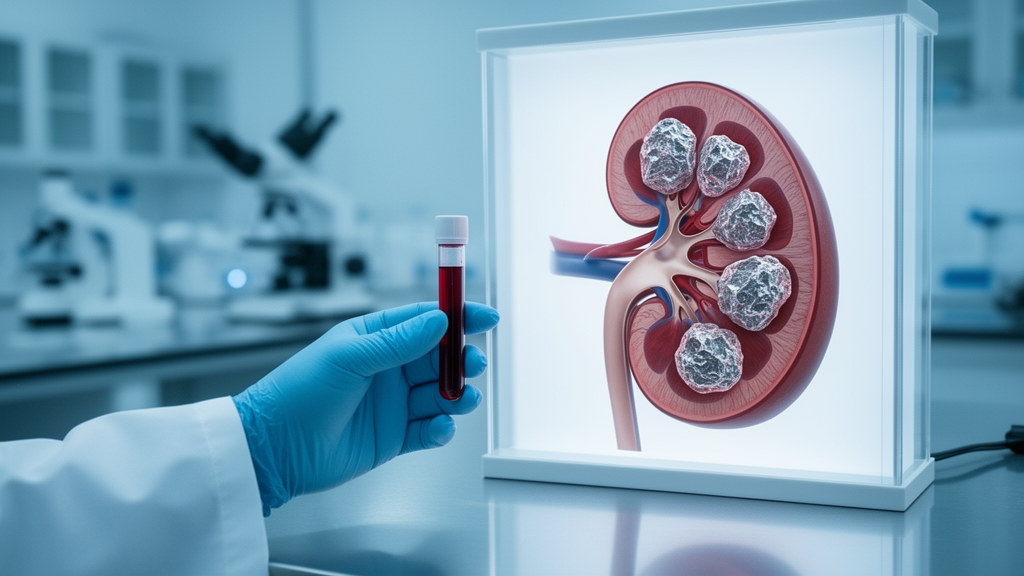
Adults with the highest levels of cadmium in their blood were significantly more likely to report having had kidney stones, according to a large cross-sectional analysis of nationally representative US survey data. The study, published in Food, Nutrition and Health, drew on 17,274 adults from the National Health and Nutrition Examination Survey (NHANES) 2013–2016 cycles and found that people in the top quarter of blood cadmium concentrations had 55% higher odds of kidney stones than those in the lowest quarter, after a comprehensive statistical adjustment for demographic, clinical and dietary factors.
The research team, led by Dan Liang and Mei Yang with co-author Chang Liu, set out to address a question that previous studies had left unresolved. Cadmium is a heavy metal and common environmental pollutant that the body absorbs mainly through the gastrointestinal tract, and it accumulates in the kidneys with a biological half-life of 10 to 30 years, because humans lack an effective mechanism to excrete cadmium bound to metallothionein. Earlier research had produced conflicting results: some analyses linked cadmium exposure to kidney stones, while a large Swedish prospective cohort of more than 68,000 participants followed for 12 years found no association between dietary cadmium and stone prevalence.
To build the analytic cohort, the researchers started with 59,842 NHANES participants and progressively excluded anyone under 18 years of age, those with incomplete blood cadmium data, those lacking kidney stone information, participants with a baseline diagnosis of chronic kidney disease, and individuals with missing or zero sample weights. The exclusions of people with pre-existing chronic kidney disease were designed to reduce the possibility of reverse causality, in which kidney damage itself might alter cadmium handling in the body. The final cohort of 17,274 adults had a mean age of 47.55 years, was slightly majority female, and had a mean blood cadmium level of 0.46 micrograms per litre.
Blood cadmium was measured in whole blood samples using inductively coupled plasma mass spectrometry at the National Center for Environmental Health, part of the Centers for Disease Control and Prevention. Samples were diluted with a mixture containing tetramethylammonium hydroxide and Triton X-100 to release metal ions bound to red blood cells and improve measurement accuracy. Values below the lower limit of detection were imputed by dividing that limit by the square root of two. The outcome measure was self-reported: participants were asked whether they had ever had kidney stones, and those answering affirmatively were classified as having nephrolithiasis.
The overall prevalence of kidney stones in the cohort was 8.85%, and prevalence rose steadily across blood cadmium quartiles, from 8.16% in the lowest quartile to 8.54%, 8.81% and 10.20% in the highest. In the fully adjusted model, which accounted for age, sex, race, education, income, body mass index, hypertension, diabetes, smoking and drinking status, serum uric acid, cholesterol, triglycerides, HbA1c and a range of dietary intakes, the top quartile showed an odds ratio of 1.55 compared with the bottom quartile, a difference that was statistically significant with a confidence interval of 1.01 to 2.39.
Intriguingly, when blood cadmium was treated as a continuous variable, no significant association with kidney stones emerged at all. The unadjusted odds ratio per unit increase was 1.07 and the fully adjusted odds ratio was 1.05, neither statistically significant. This discrepancy prompted the researchers to explore whether the relationship might be non-linear rather than absent. Restricted cubic spline analysis, a technique that models curved dose–response patterns, revealed a statistically significant non-linear association, with an overall p-value of 0.0188 and a non-linearity p-value of 0.041.
Threshold analysis sharpened that picture considerably. Using a two-piecewise linear regression model, the researchers identified a structural inflection point at a blood cadmium concentration of 0.975 micrograms per litre. Below that threshold, no significant association with kidney stones was observed, with an odds ratio of 0.797. Above it, the likelihood of kidney stones rose sharply, increasing by 82.9% with an odds ratio of 1.829 and a confidence interval of 1.119 to 2.989. The authors suggest this threshold effect explains why the significant signal appeared primarily in the highest quartile of exposure, and they note it is biologically plausible given what is known about cadmium nephrotoxicity.
Subgroup analyses stratified by age, sex, body mass index, diabetes, hypertension, smoking status and alcohol consumption found no statistically significant interactions, suggesting the association was broadly consistent across these population strata. The researchers also observed that participants in the highest cadmium quartile tended to have higher serum creatinine, total cholesterol and urinary albumin-to-creatinine ratio, but lower estimated glomerular filtration rate and lower intakes of several vitamins, minerals and water, and were more likely to be female, to have lower household income and to have hypertension.
The mechanisms by which cadmium might contribute to stone formation remain incompletely understood, but the paper reviews several plausible pathways drawn from prior research. Cadmium accumulates in renal tubular cells and can disrupt mitochondrial electron transport, generate reactive oxygen species and induce oxidative damage. Experimental work suggests cadmium activates inflammatory signalling through the TNF-alpha/NF-kB pathway and the NLRP3 inflammasome, triggering cell death that leaves behind debris and damaged basement membranes that can act as nucleation sites for calcium oxalate crystals. Cadmium exposure has also been associated with increased urinary calcium excretion, and hypercalciuria is a well-established risk factor for calcium stone formation. Prior studies have found that urinary cadmium levels of 2 micrograms per gram or higher were linked to a threefold higher likelihood of kidney stones, and that cadmium concentrations within stones themselves correlate positively with calcium oxalate monohydrate.
The authors are careful to emphasise the limits of what this study can show. Because the design is cross-sectional and the kidney stone outcome was a self-reported lifetime history measured at the same time as blood cadmium, the analysis cannot establish that cadmium exposure preceded stone formation, and reverse causation cannot be ruled out. Blood cadmium primarily reflects recent or ongoing exposure rather than cumulative body burden, introducing potential exposure misclassification. Self-reported diagnosis carries recall bias, the NHANES dataset lacks information on stone composition, and occupational cadmium exposure, an important source of high-level exposure, could not be controlled for. The findings apply to the US adult population and may not generalise to other countries. The researchers conclude that elevated blood cadmium is positively associated with the likelihood of kidney stones in US adults, and they call for large-scale longitudinal studies to validate the finding and establish whether causality exists, noting that while observational results cannot directly guide clinical practice, environmental cadmium exposure warrants further attention as a factor associated with nephrolithiasis.
Subject of Research: The association between blood cadmium concentration and the likelihood of kidney stones in US adults
Article Title: The association between blood cadmium concentration and the likelihood of kidney stones: a population-based study
Article References: Liang, D., Liu, C., & Yang, M. (2026). The association between blood cadmium concentration and the likelihood of kidney stones: a population-based study. Food, Nutrition and Health, 3(1), Article 38. https://doi.org/10.1007/s44403-026-00087-8
Image Credits: AI Generated
DOI: 10.1007/s44403-026-00087-8
Keywords: blood cadmium, kidney stones, NHANES, cross-sectional study, nephrolithiasis, heavy metal exposure, dose-response, threshold effect, oxidative stress, renal health, environmental pollutant, epidemiology
News Source: Phoebe Ingram. (October 28, 2026). Higher Blood Cadmium Levels Linked to Greater Odds of Kidney Stones in US Adults. Scienmag.