Credit: John A. Downing
Looks can be deceiving.
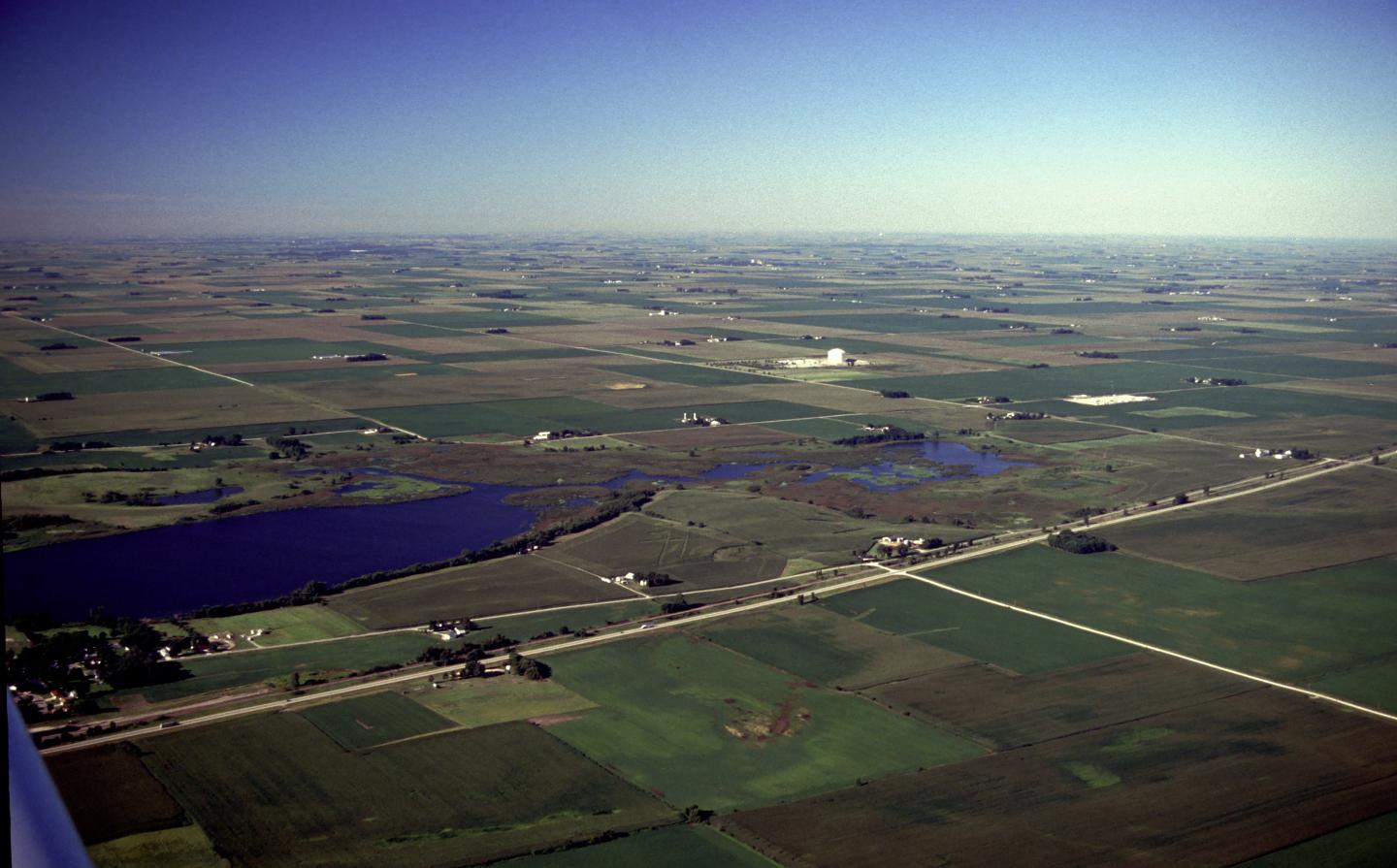
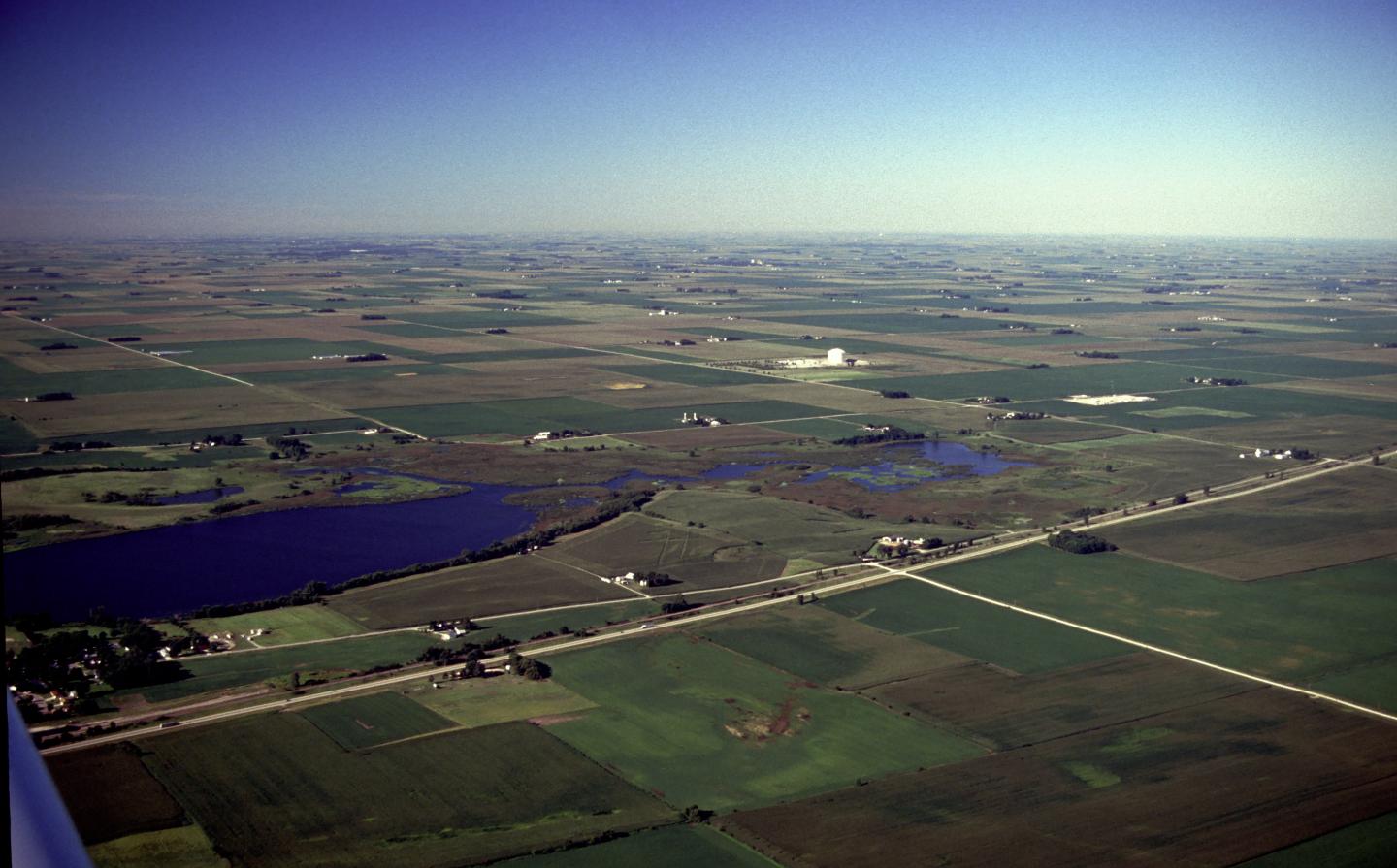
Look at a hundred lakes in the agricultural heartland of the United States and you will likely see green lakes surrounded by green fields. The nitrogen and phosphorus in agricultural fertilizers that help crops grow also fuel the growth of algae and cyanobacteria that in excess can turn lakes the color of pea soup.
Yet when scientists looked at 13 years of data from 139 lakes in intensively agricultural areas of Iowa they saw lakes that were surprisingly clear despite extremely high nutrient concentrations.
In a study published October 9, 2017 in the journal Inland Waters scientists from the University of Minnesota Duluth and Minnesota Sea Grant report that the lakes were so excessively fertilized that most of that algae and cyanobacteria containing the green pigment chlorophyll were killed.
"One of the dangers here is mistaking increased water clarity for improved water quality," said Chris Filstrup, lead author of the study and a research associate with the UMD Large Lakes Observatory and Minnesota Sea Grant. "In fact, the water quality in these instances is worse than in lakes that have more algae, yet lower levels of nutrients."
Regulatory agencies have often used water clarity as an indicator of water quality. The results of this study suggest that approach may not necessarily work in all regions.
The excessive nutrient levels happen when rain and snowmelt wash phosphorus and nitrogen from agricultural fields, feed lots, suburban lawns and urban centers into lakes and other water bodies. This novel phenomenon defies the generalization that even extreme concentrations of phosphorus and nitrogen continue to fuel algae growth.
"In some of the Iowa lakes in our study we noted phosphorus levels 10 times what we'd expect to see in a northern Minnesota lake," said Filstrup. "We were astonished to see that the nitrogen levels were more than 30 times higher."
Such extreme nutrient levels appear to destroy existing algae and cyanobacteria resulting in an increase in water clarity. The concept is similar to the way applying too much fertilizer on land can damage, if not kill, plants and render soil barren.
"We thought that the low appearance of algae at high nitrogen concentrations might be due to imbalances of other nutrients, or too much shade for algae to grow, or that some algae are less green or that zooplankton eat more algae when there's a lot of nitrogen," said co-author John A. Downing, director of Minnesota Sea Grant, a scientist at the UMD Large Lakes Observatory and a professor in the UMD Department of Biology. "But none of those hypotheses panned out. The only explanation that makes sense, so far, is that high nitrogen is bad for algae."
The reduction in algae is likely the result of the interplay of phosphorus, nitrogen, the landscape and sunlight, which when combined causes the excessive nitrate particles in the water column to form reactive oxygen species that damage or kill algae by bursting their cell walls and membranes, say Filstrup and Downing.
"You might think of it like hydrogen peroxide," said Filstrup. "Pouring hydrogen peroxide on a cut causes bacteria to burst. That's why it fizzes. In lakes, the reactive oxygen species that can form from nitrate don't fizz but they can destroy organic matter, potentially including phytoplankton."
As demand for agricultural products continues to grow and with that an increased use of fertilizers, the authors hope this study will serve as an instructive example for other agricultural regions that are experiencing or are at risk of extreme nutrient loading.
"Applying too much nitrogen to fields, lawns and gardens wastes money, leads to unhealthy lakes and even damages the Gulf of Mexico. Growing crops and managing animal waste according to best management practices is essential," said Downing.
###
CONTACT: Chris Filstrup, Inland Lakes Specialist, Minnesota Sea Grant; Research Associate, Large Lakes Observatory, University of Minnesota Duluth, [email protected], 218-726-6055.
John A. Downing, Director, Minnesota Sea Grant; Professor of Biology, Department of Biology and scientist Large Lakes Observatory, University of Minnesota Duluth; [email protected], 218-726-8715.
Marie Thoms, Public Relations and Communications, Minnesota Sea Grant, [email protected], office: 218-726-8710, mobile: 907-460-1841.
INLAND WATERS
"Relationship of chlorophyll to phosphorus and nitrogen in nutrient-rich lakes." DOI: 10.1080/20442041.2017.1375176 http://dx.doi.org/10.1080/20442041.2017.1375176
ABOUT MINNESOTA SEA GRANT
Minnesota Sea Grant facilitates interaction among the public and scientists to enhance communities, the environment and economies along Lake Superior and Minnesota's inland waters by identifying information needs, fostering research, and communicating results. We are part of the National Oceanic and Atmospheric Administration Sea Grant Program, which supports 33 similar programs in coastal states throughout the United States and Puerto Rico. Supported through the NOAA Office of Oceanic and Atmospheric Research and the University of Minnesota, the program partners with local, regional and national organizations and is an integral member of the Great Lakes Sea Grant Network.
The paper, "Relationship of chlorophyll to phosphorus and nitrogen in nutrient-rich lakes," is available upon request from the University of Minnesota Sea Grant; [email protected], (218) 726-8106, ask for journal reprint 641.
FUNDING
Funding for this research was provided by the Iowa Department of Natural Resources (Award # 2014ESDGSBMBalm0004) and by the National Science Foundation (DEB-1021525; EF-1065649).
Media Contact
Marie Thoms
[email protected]
218-726-8710
@UMNews
http://www.umn.edu
Original Source
http://www.seagrant.umn.edu/news/2017/10/09 http://dx.doi.org/10.1080/20442041.2017.1375176