

• HOME
  • NEWS
  • EXPLORE
    • CAREER
      • Companies
      • Jobs
    • EVENTS
    • iGEM
      • News
      • Team
    • PHOTOS
    • VIDEO
    • WIKI
  • BLOG
  • COMMUNITY
    • FACEBOOK
    • INSTAGRAM
    • TWITTER
Wednesday, October 28, 2026
BIOENGINEER.ORG
No Result
View All Result
  • Login
  • HOME
  • NEWS
  • EXPLORE
    • CAREER
      • Companies
      • Jobs
        • Lecturer
        • PhD Studentship
        • Postdoc
        • Research Assistant
    • EVENTS
    • iGEM
      • News
      • Team
    • PHOTOS
    • VIDEO
    • WIKI
  • BLOG
  • COMMUNITY
    • FACEBOOK
    • INSTAGRAM
    • TWITTER
No Result
View All Result
Bioengineer.org
No Result
View All Result
Home NEWS Science News Health

Shorter PET/CT scans may miss prostate cancer recurrence signs in some patients

by
October 28, 2026
in Health
Reading Time: 2 mins read
0
Shorter PET/CT scans may miss prostate cancer recurrence signs in some patients

Shorter PET/CT scans may miss prostate cancer recurrence signs in some patients

Share on FacebookShare on TwitterShare on LinkedinShare on RedditShare on Telegram

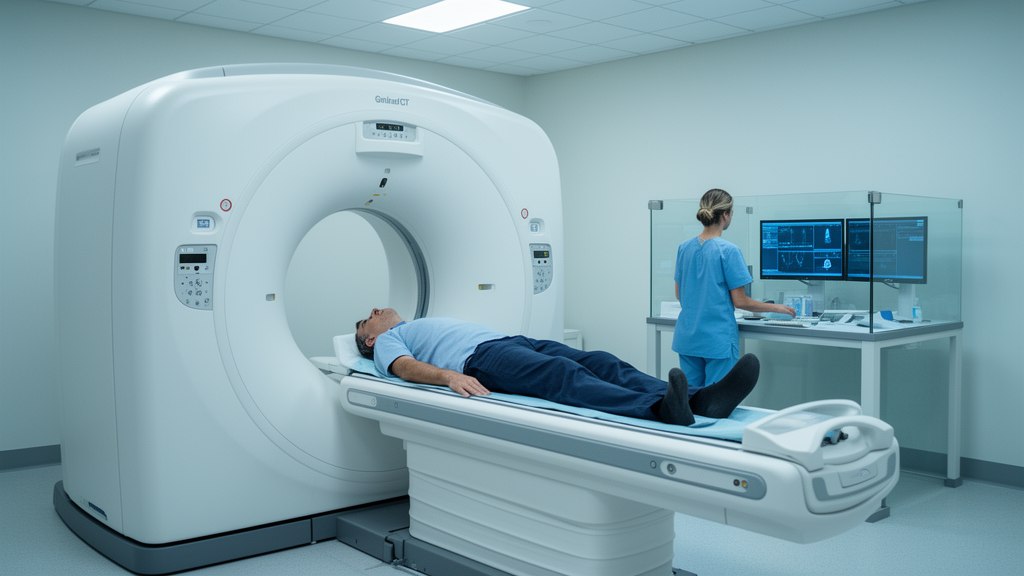
A shortened scanning range for prostate-specific membrane antigen PET/CT could save substantial scanner time, but a new retrospective study suggests the trade-off depends heavily on how far the scan is cut back and on each patient’s PSA level. The research, published in BMC Medical Imaging, examined what would be lost if a true whole-body scan were retrospectively trimmed into shorter, more conventional protocols.

The study, led by Falk Gühne and colleagues at a single center, included 200 patients with biochemically recurrent prostate cancer after initial curative therapy. All of them had undergone a 68Ga-PSMA PET/CT scan extending from the vertex of the skull to the toes, a true whole-body acquisition. The researchers then used retrospective subdivision into hypothetical partial-body measurement protocols to see which tumor manifestations would have gone undetected.

The rationale is practical. Most PET/CT scanners operate by measuring several bed positions or continuous motion with a limited axial field of view, so shortening the scan area saves time. The question was how much diagnostic information that time saving would cost.

Of the 200 patients, who had a median PSA of 1.1 ng/mL, 128 patients, or 64 percent, showed at least one structural correlate of biochemically recurrent prostate cancer in the true whole-body scan. The overall detection rate did not change for limited classic PET protocols or for chest/abdomen/pelvis measurements, but the picture changed for shorter protocols.

PSA emerged as a potentially useful guide for deciding how far the scan area could be restricted prospectively. Patients with PSA values of 0.75 ng/mL or below showed no diagnostic gain from whole-body imaging. In this cohort, that means a limitation to a chest/abdomen/pelvis scan would have been possible without losing information in 45 percent of patients.

The authors conclude that for a resource-saving use of routine PSMA PET/CT, a scan from the vertex to the mid-thigh appears sufficient for detecting relevant metastases. For patients with low PSA levels, a more focused protocol that includes only the chest/abdomen/pelvis region can be considered.

As a retrospective single-center analysis of 200 patients, the findings describe what would have been missed under hypothetical shortened protocols rather than outcomes from prospectively assigned scan ranges, and the authors note that PSA may contribute to prospective restriction of the scan area. Even so, the results offer a concrete framework for centers weighing scan time against diagnostic completeness in the follow-up of biochemically recurrent prostate cancer.

Subject of Research: The effect of reducing the scan extent of 68Ga-PSMA PET/CT on tumor detection in biochemically recurrent prostate cancer.

Article Title: Impact of reduced scan extent on tumor detection in 68Ga-PSMA PET/CT for biochemical recurrence of prostate cancer

Article References: Gühne, F., Küppers, A., Kühnel, C., Seifert, P., & Freesmeyer, M. (2026). Impact of reduced scan extent on tumor detection in 68Ga-PSMA PET/CT for biochemical recurrence of prostate cancer. BMC Medical Imaging, 26(1), Article 535. https://doi.org/10.1186/s12880-026-02940-w

Image Credits: AI Generated

DOI: 10.1186/s12880-026-02940-w

Keywords: PSMA PET/CT, prostate cancer, biochemical recurrence, whole-body imaging, scan protocols, PSA, tumor detection, field of view, chest abdomen pelvis, pelvic imaging, medical imaging, Impact

News Source: Nathaniel Bowman. (October 28, 2026). Shorter PET/CT scans may miss prostate cancer recurrence signs in some patients. Scienmag.


Tags: biochemical recurrencechest abdomen pelvisfield-of-viewimpactMedical Imagingpelvic imagingProstate CancerPSAPSMA PET/CTscan protocolstumor detectionwhole-body imaging
Share12Tweet7Share2ShareShareShare1

Related Posts

Systematic review maps end-of-life psychosocial and spiritual needs in physical disability

Systematic review maps end-of-life psychosocial and spiritual needs in physical disability

October 28, 2026
Text Message Campaign Reached Only a Third of Patients Overdue for Colorectal Cancer Screening

Text Message Campaign Reached Only a Third of Patients Overdue for Colorectal Cancer Screening

October 28, 2026

FOXO1 Emerges as Candidate Regulator and Biomarker in Hip Dysplasia

October 28, 2026

Regulators, developers and clinicians in Shenzhen voice concerns over medical AI governance

October 28, 2026

POPULAR NEWS

  • Systematic review maps end-of-life psychosocial and spiritual needs in physical disability

    Systematic review maps end-of-life psychosocial and spiritual needs in physical disability

    29 shares
    Share 12 Tweet 7
  • Text Message Campaign Reached Only a Third of Patients Overdue for Colorectal Cancer Screening

    29 shares
    Share 12 Tweet 7
  • FOXO1 Emerges as Candidate Regulator and Biomarker in Hip Dysplasia

    29 shares
    Share 12 Tweet 7
  • Regulators, developers and clinicians in Shenzhen voice concerns over medical AI governance

    29 shares
    Share 12 Tweet 7

About

We bring you the latest biotechnology news from best research centers and universities around the world. Check our website.

Follow us

Recent News

Systematic review maps end-of-life psychosocial and spiritual needs in physical disability

Text Message Campaign Reached Only a Third of Patients Overdue for Colorectal Cancer Screening

FOXO1 Emerges as Candidate Regulator and Biomarker in Hip Dysplasia

Subscribe to Blog via Email

Enter your email address to subscribe to this blog and receive notifications of new posts by email.

Join 85 other subscribers
  • Contact Us

Bioengineer.org © Copyright 2023 All Rights Reserved.

Welcome Back!

Login to your account below

Forgotten Password?

Retrieve your password

Please enter your username or email address to reset your password.

Log In
No Result
View All Result
  • Homepages
    • Home Page 1
    • Home Page 2
  • News
  • National
  • Business
  • Health
  • Lifestyle
  • Science

Bioengineer.org © Copyright 2023 All Rights Reserved.
