• HOME
  • NEWS
  • EXPLORE
    • CAREER
      • Companies
      • Jobs
    • EVENTS
    • iGEM
      • News
      • Team
    • PHOTOS
    • VIDEO
    • WIKI
  • BLOG
  • COMMUNITY
    • FACEBOOK
    • INSTAGRAM
    • TWITTER
Thursday, October 29, 2026
BIOENGINEER.ORG
No Result
View All Result
  • Login
  • HOME
  • NEWS
  • EXPLORE
    • CAREER
      • Companies
      • Jobs
        • Lecturer
        • PhD Studentship
        • Postdoc
        • Research Assistant
    • EVENTS
    • iGEM
      • News
      • Team
    • PHOTOS
    • VIDEO
    • WIKI
  • BLOG
  • COMMUNITY
    • FACEBOOK
    • INSTAGRAM
    • TWITTER
No Result
View All Result
Bioengineer.org
No Result
View All Result
Home NEWS Science News Health

Brain Phantom Study Puts Amyloid PET Correction Methods to the Test

by
October 28, 2026
in Health, Technology
Reading Time: 2 mins read
0
Brain Phantom Study Puts Amyloid PET Correction Methods to the Test

Brain Phantom Study Puts Amyloid PET Correction Methods to the Test

Share on FacebookShare on TwitterShare on LinkedinShare on RedditShare on Telegram

A new short communication in EJNMMI Physics, published on 15 October 2026, reports a controlled way to measure that distortion and to judge how well existing correction methods fix it.

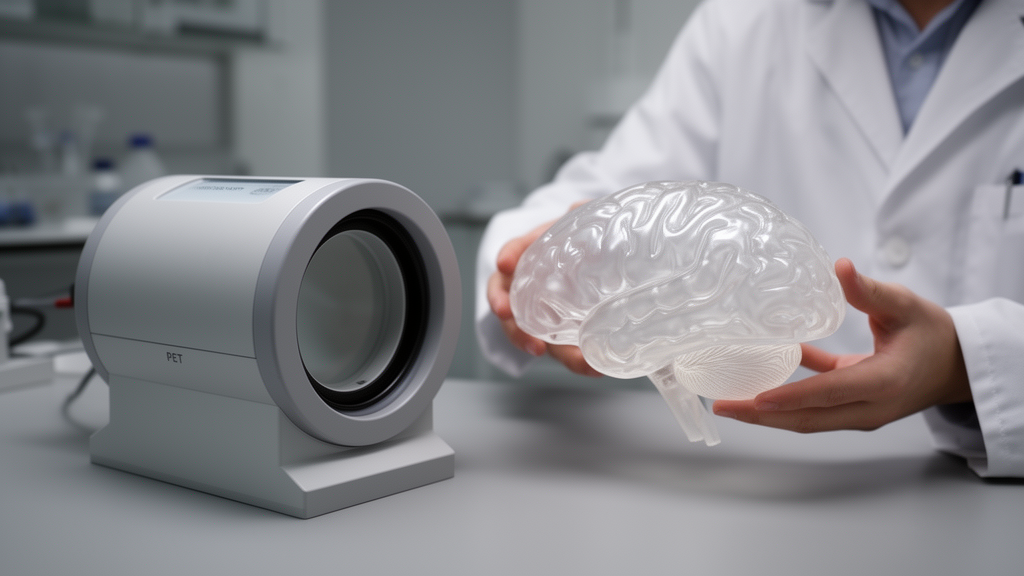
The research team, led by Maria Agnese Pirozzi and Mario Quarantelli with colleagues including Eugenio Di Giorgio, Anna Prinster, Luigi Mansi, Bruno Alfano and Marco Spadafora, used an anatomical brain phantom called StepBrain (SB).

The phantom was scanned to simulate clinical amyloid PET studies across a range of gray-to-white matter ratios (GWR) from 0 to 120 percent. This range was designed to reproduce the clinical spectrum of amyloid uptake patterns, from amyloid-negative to strongly positive scans, giving the researchers a known ground truth against which measurement error could be calculated.

From the simulated scans, the team derived two widely used quantitative measures: the gray-to-white matter ratio and the Standardized Uptake Value Ratio (SUVR), normalized to the cerebellum. Both were computed from an atlas-based volume-of-interest set, first on uncorrected images and then after applying partial volume effect correction (PVEc).

Four correction approaches were compared: a two-compartment method (2C), a three-compartment method (3C), a modified three-compartment method (m3C), and the geometric transfer matrix (GTM) technique.

The results were striking. Uncorrected GWR values showed a mean absolute inaccuracy of 14.1 percent, and uncorrected SUVR values were off by 19.8 percent on average. After applying the correction methods, these errors fell to as low as 6.1 percent for GWR and 7.6 percent for SUVR.

Accuracy and precision differed significantly among the four correction methods for both outcome measures, with linear mixed models analysis yielding F statistics above 95 in all comparisons. The modified three-compartment method and the geometric transfer matrix delivered the highest accuracy and precision of the approaches tested.

According to the authors, the 3C-, m3C- and GTM-based corrections significantly improved tracer ratio accuracy without a relevant loss of precision, supporting their use in the quantitative analysis of clinical amyloid PET studies. Because the StepBrain phantom reproduced realistic amyloid PET distributions while providing an exact ground truth, it offers a practical validation platform for correction algorithms before they are applied to patient data.

As a phantom-based simulation study, the work does not itself establish clinical performance in patients, but it provides a rigorous benchmark for the methods that underpin amyloid burden measurement in both research and clinical PET practice.

Subject of Research: Validation of partial volume effect correction methods for amyloid PET using an anatomical brain phantom.

Article Title: Application of an anatomical brain phantom in the evaluation of partial volume effect correction of amyloid PET studies

Article References: Pirozzi, M. A., Di Giorgio, E., Prinster, A., Mansi, L., Alfano, B., Spadafora, M., & Quarantelli, M. (2026). Application of an anatomical brain phantom in the evaluation of partial volume effect correction of amyloid PET studies. EJNMMI Physics. https://doi.org/10.1186/s40658-026-00956-3

Image Credits: AI Generated

DOI: 10.1186/s40658-026-00956-3

Keywords: amyloid PET, partial volume effect, brain phantom, SUVR, gray-to-white matter ratio, GTM, nuclear medicine, quantitative imaging, Alzheimer's research, image correction, Application, anatomical

News Source: Cassandra Pierce. (October 28, 2026). Brain Phantom Study Puts Amyloid PET Correction Methods to the Test. Scienmag.


Tags: Alzheimer's researchamyloid PETanatomicalapplicationbrain phantomgray-to-white matter ratioGTMimage correctionnuclear medicinepartial volume effectquantitative imagingSUVR
Share12Tweet7Share2ShareShareShare1

Related Posts

LLM Chatbot Uses Game Theory to Pick the Right Therapy Move for Stressed Students

LLM Chatbot Uses Game Theory to Pick the Right Therapy Move for Stressed Students

October 29, 2026
Generative AI in Cancer Care: Mapping Review Finds Rapid Growth, Weak Evidence

Generative AI in Cancer Care: Mapping Review Finds Rapid Growth, Weak Evidence

October 29, 2026

AI-Crafted Discharge Nutrition Plans Boost Short-Term Dietary Intake After Gastrointestinal Cancer Surgery

October 29, 2026

Siblings of Autistic Children Face Elevated Mental Health Risks in Landmark Cohort

October 29, 2026

POPULAR NEWS

  • A2 milk review links indigenous cattle genetics to premium rural dairy markets

    A2 milk review links indigenous cattle genetics to premium rural dairy markets

    29 shares
    Share 12 Tweet 7
  • New Algorithm Maps Every Optimal RNA Fold Across Branching Parameters

    29 shares
    Share 12 Tweet 7
  • Vaccination and Biosecurity Lead the Field in Cutting Livestock Antibiotic Dependence

    29 shares
    Share 12 Tweet 7
  • Chrome-free leather biodegrades faster in soil, reshaping microbial communities

    29 shares
    Share 12 Tweet 7

About

We bring you the latest biotechnology news from best research centers and universities around the world. Check our website.

Follow us

Recent News

LLM Chatbot Uses Game Theory to Pick the Right Therapy Move for Stressed Students

Generative AI in Cancer Care: Mapping Review Finds Rapid Growth, Weak Evidence

Botanists Fix Two Centuries of Naming Confusion in the Wormwood Genus Artemisia

Subscribe to Blog via Email

Enter your email address to subscribe to this blog and receive notifications of new posts by email.

Join 85 other subscribers
  • Contact Us

Bioengineer.org © Copyright 2023 All Rights Reserved.

Welcome Back!

Login to your account below

Forgotten Password?

Retrieve your password

Please enter your username or email address to reset your password.

Log In
No Result
View All Result
  • Homepages
    • Home Page 1
    • Home Page 2
  • News
  • National
  • Business
  • Health
  • Lifestyle
  • Science

Bioengineer.org © Copyright 2023 All Rights Reserved.