

• HOME
  • NEWS
  • EXPLORE
    • CAREER
      • Companies
      • Jobs
    • EVENTS
    • iGEM
      • News
      • Team
    • PHOTOS
    • VIDEO
    • WIKI
  • BLOG
  • COMMUNITY
    • FACEBOOK
    • INSTAGRAM
    • TWITTER
Friday, October 30, 2026
BIOENGINEER.ORG
No Result
View All Result
  • Login
  • HOME
  • NEWS
  • EXPLORE
    • CAREER
      • Companies
      • Jobs
        • Lecturer
        • PhD Studentship
        • Postdoc
        • Research Assistant
    • EVENTS
    • iGEM
      • News
      • Team
    • PHOTOS
    • VIDEO
    • WIKI
  • BLOG
  • COMMUNITY
    • FACEBOOK
    • INSTAGRAM
    • TWITTER
No Result
View All Result
Bioengineer.org
No Result
View All Result
Home NEWS Science News Health

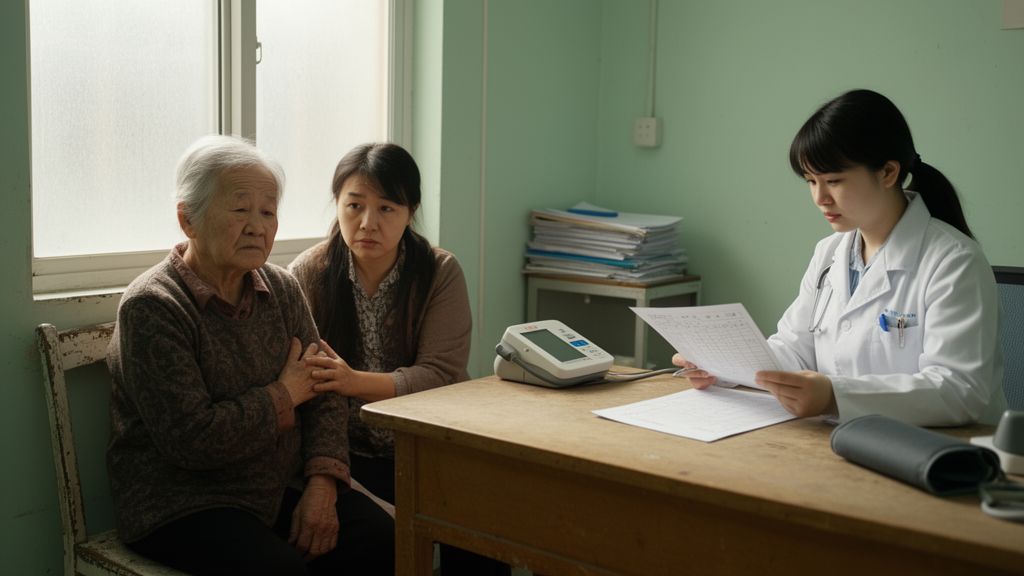
Beijing primary care struggles to deliver integrated post-diagnostic dementia care

by
October 28, 2026
in Health
Reading Time: 2 mins read
0
Beijing primary care struggles to deliver integrated post-diagnostic dementia care

Beijing primary care struggles to deliver integrated post-diagnostic dementia care

Share on FacebookShare on TwitterShare on LinkedinShare on RedditShare on Telegram

General practitioners and family caregivers in urban Beijing face overlapping barriers to providing integrated dementia care after diagnosis, according to a qualitative study published in BMC Primary Care.

The analysis identified seven themes with 16 sub-themes, mapped onto the model’s six dimensions of integrated care. At the clinical level, the researchers found insufficient proactivity and integration in clinical services, with care described as reactive rather than anticipatory. At the professional level, there was a lack of institutional guidance for interprofessional collaboration, leaving doctors and other providers without a clear framework for working together around a shared patient.

At the organisational level, existing inter-organisational collaboration mechanisms were found to be ineffective, and at the system level, top-level design was judged to fail to meet practical needs. Functional gaps compounded these problems: the study reports significant obstacles to information continuity and a lack of workable dementia care pathways, meaning that records and referrals do not follow patients smoothly between providers and that caregivers lack navigable routes to support services.

The final dimension concerned values. The authors found that person-centred care remains superficial in practice, with misaligned incentives cited among the barriers alongside fragmented information continuity and weak coordination between professionals and organisations. Importantly, the study characterises the functional gaps in information, navigation, and practical tools as compounding the clinical, professional, and organisational barriers rather than operating in isolation, so that problems in one dimension reinforce those in others.

The study’s authors conclude that practice and policy should prioritise GP-led care planning, formal care-navigation roles, dementia-sensitive payment models, and shared information systems in order to address these interrelated barriers. Such measures, they suggest, could strengthen the continuity and integration of post-diagnostic dementia care in China, where primary care is the preferred setting for integrated dementia support but faces substantial structural and operational obstacles.

The authors note that the identified barriers correspond to the dimensions of the Rainbow Model of Integrated Care, providing a structured account of where Beijing’s primary care system falls short of proactive, continuous, and coordinated post-diagnostic dementia support, and where policy attention may be directed.

Subject of Research: Barriers to integrated post-diagnostic dementia care in urban Beijing primary care

Article Title: Intersecting challenges in integrated post-diagnostic dementia care in urban Beijing primary care: a qualitative study using the Rainbow Model of Integrated Care

Article References: Zhu, C., Li, H., Shao, S., Feng, Z., Li, H., Du, J., & Zhang, J. (2026). Intersecting challenges in integrated post-diagnostic dementia care in urban Beijing primary care: a qualitative study using the Rainbow Model of Integrated Care. BMC Primary Care. https://doi.org/10.1186/s12875-026-03586-x

Image Credits: AI Generated

DOI: 10.1186/s12875-026-03586-x

Keywords: dementia, primary care, Beijing, qualitative study, integrated care, caregivers, general practitioners, care pathways, health policy, Rainbow Model of Integrated Care, Intersecting, challenges

News Source: Ophelia Keating. (October 28, 2026). Beijing primary care struggles to deliver integrated post-diagnostic dementia care. Scienmag.


Tags: Beijingcare pathwayscaregiverschallengesdementiageneral practitionersHealth PolicyIntegrated CareIntersectingprimary carequalitative studyRainbow Model of Integrated Care
Share12Tweet7Share2ShareShareShare1

Related Posts

ZNF207 shields glutamine transporter ASCT2 from degradation to fuel liver cancer growth

ZNF207 shields glutamine transporter ASCT2 from degradation to fuel liver cancer growth

October 30, 2026
Most Ethiopian HIV patients on dolutegravir therapy show good knowledge, survey finds

Most Ethiopian HIV patients on dolutegravir therapy show good knowledge, survey finds

October 30, 2026

Serum and urine protein biomarkers may sharpen prostate cancer detection beyond PSA

October 30, 2026

One gene locus flags atrial fibrillation risk after major surgery, UK Biobank study finds

October 30, 2026

POPULAR NEWS

  • Microbial Sources and Stress Shape the Hidden Endophytes of an Invasive Plant

    Microbial Sources and Stress Shape the Hidden Endophytes of an Invasive Plant

    29 shares
    Share 12 Tweet 7
  • Firebreaks Leave Lasting Scars in Grasslands While Wildfire Heals Fast

    29 shares
    Share 12 Tweet 7
  • ZNF207 shields glutamine transporter ASCT2 from degradation to fuel liver cancer growth

    29 shares
    Share 12 Tweet 7
  • Systematic review maps sustainability tensions in offshore wind development

    29 shares
    Share 12 Tweet 7

About

We bring you the latest biotechnology news from best research centers and universities around the world. Check our website.

Follow us

Recent News

Microbial Sources and Stress Shape the Hidden Endophytes of an Invasive Plant

Firebreaks Leave Lasting Scars in Grasslands While Wildfire Heals Fast

ZNF207 shields glutamine transporter ASCT2 from degradation to fuel liver cancer growth

Subscribe to Blog via Email

Enter your email address to subscribe to this blog and receive notifications of new posts by email.

Join 86 other subscribers
  • Contact Us

Bioengineer.org © Copyright 2023 All Rights Reserved.

Welcome Back!

Login to your account below

Forgotten Password?

Retrieve your password

Please enter your username or email address to reset your password.

Log In
No Result
View All Result
  • Homepages
    • Home Page 1
    • Home Page 2
  • News
  • National
  • Business
  • Health
  • Lifestyle
  • Science

Bioengineer.org © Copyright 2023 All Rights Reserved.
